
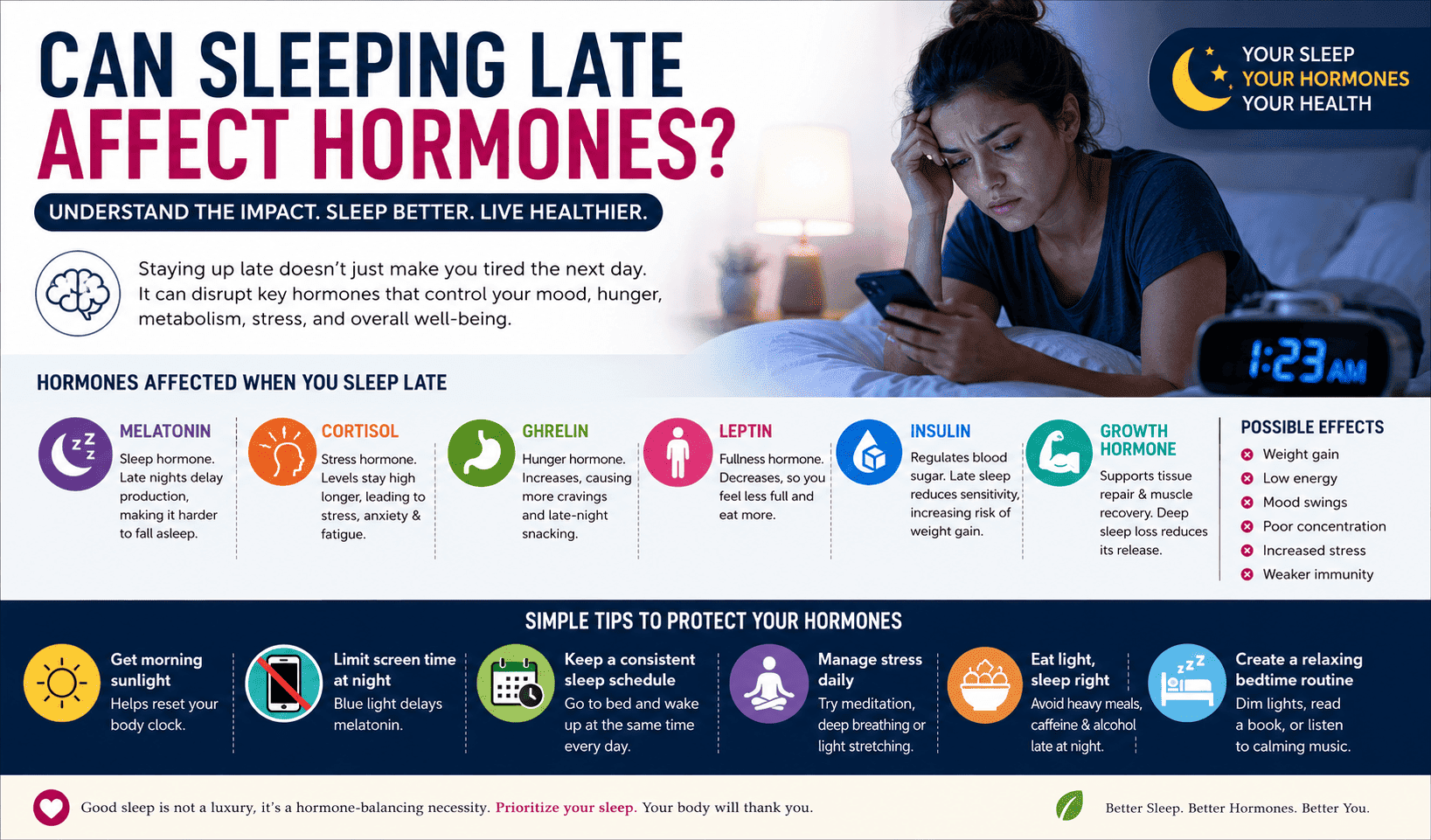
Many people stay up late to finish work, watch videos, scroll social media, or simply because they can’t fall asleep early. At first, sleeping late may seem harmless. However, if you constantly go to bed after midnight, you may notice changes in your energy levels, mood, weight, appetite, and overall well-being.
What many Americans don’t realize is that sleep timing plays a major role in hormone regulation. Even if you get enough hours of sleep, consistently sleeping late can disrupt your body’s natural rhythm and affect important hormones that control stress, metabolism, hunger, recovery, and mood.
This guide explains how sleeping late affects hormones, the symptoms to watch for, and practical ways to restore a healthier sleep schedule.
Quick Answer
Yes, sleeping late can affect hormones by disrupting your body’s circadian rhythm. Consistently going to bed late may alter cortisol, melatonin, insulin, growth hormone, leptin, and ghrelin levels. These hormonal changes can contribute to fatigue, weight gain, mood swings, increased hunger, poor sleep quality, and reduced overall wellness.
What Does It Mean When Sleeping Late Affects Hormones?
Your body follows an internal clock known as the circadian rhythm. This clock helps regulate:
- Sleep and wake cycles
- Hormone production
- Body temperature
- Digestion
- Metabolism
- Energy levels
When you regularly sleep late, your body receives mixed signals about when to release key hormones.
Think of hormones as messengers. If those messages are delivered at the wrong time, various systems throughout the body may not function optimally.
Even if you sleep for 7–8 hours, irregular sleep timing can still impact hormone balance.
Also Read : Can lack of sleep affect digestion?
Symptoms of Hormonal Disruption from Sleeping Late
Hormonal changes caused by late bedtimes often develop gradually.
Early Symptoms
- Morning fatigue
- Difficulty waking up
- Increased hunger
- Brain fog
- Low motivation
- Mood changes
- Reduced concentration
- Afternoon energy crashes
Advanced Symptoms
- Weight gain
- Increased belly fat
- Sleep problems
- Higher stress levels
- Anxiety symptoms
- Reduced exercise performance
- Frequent cravings
- Poor recovery
- Reduced productivity
Many people experience these symptoms without realizing sleep timing may be contributing.
How Sleeping Late Affects Key Hormones
Several important hormones rely on a healthy sleep schedule.
1. Melatonin Disruption
Melatonin is often called the sleep hormone.
Normally:
- Melatonin rises in the evening
- Peaks during the night
- Decreases in the morning
Sleeping late while exposing yourself to screens and bright lights may delay melatonin production.
Possible Effects
- Difficulty falling asleep
- Poor sleep quality
- Irregular sleep cycles
- Morning grogginess
2. Cortisol Imbalance
Cortisol helps regulate:
- Stress response
- Energy
- Alertness
Normally cortisol:
- Rises in the morning
- Gradually decreases throughout the day
Late bedtimes can interfere with this natural pattern.
Possible Symptoms
- Fatigue
- Increased stress
- Mood swings
- Poor concentration
3. Leptin & Ghrelin Changes
These hormones control appetite.
Leptin
Signals fullness.
Ghrelin
Signals hunger.
When sleep schedules become irregular:
- Leptin may decrease
- Ghrelin may increase
This combination may lead to:
- Increased cravings
- Larger portions
- Late-night snacking
- Weight gain
4. Insulin Sensitivity Changes
Insulin helps regulate blood sugar.
Consistently sleeping late may affect insulin sensitivity, making it harder for the body to manage glucose efficiently.
Possible effects include:
- Energy crashes
- Increased hunger
- Sugar cravings
- Metabolic challenges
5. Growth Hormone Reduction
Growth hormone helps with:
- Recovery
- Muscle repair
- Tissue healing
A significant amount is released during deep sleep.
Poor sleep timing may reduce sleep quality and affect this natural recovery process.
Also Read : Can poor sleep affect weight gain?
Hormone Comparison Table
| Hormone | Main Function | Possible Effect of Sleeping Late |
|---|---|---|
| Melatonin | Sleep regulation | Delayed sleep cycle |
| Cortisol | Stress & energy | Fatigue and stress imbalance |
| Leptin | Fullness signals | Increased appetite |
| Ghrelin | Hunger signals | More cravings |
| Insulin | Blood sugar control | Reduced sensitivity |
| Growth Hormone | Recovery and repair | Slower recovery |
Causes & Risk Factors
Several modern lifestyle habits contribute to late sleeping patterns.
Excess Screen Time
Phones, tablets, and TVs emit blue light that may delay melatonin production.
Many Americans spend hours on devices before bed, making it harder to fall asleep naturally.
Chronic Stress
Stress is one of the most common causes of late bedtimes.
Stress may cause:
- Racing thoughts
- Anxiety
- Difficulty relaxing
Caffeine Consumption
Drinking caffeine too late in the day may interfere with sleep timing.
Sources include:
- Coffee
- Energy drinks
- Pre-workout supplements
- Certain sodas
Irregular Work Schedules
Shift workers and individuals with changing schedules often experience disrupted circadian rhythms.
Poor Sleep Habits
Common examples include:
- Late-night scrolling
- Sleeping in on weekends
- Inconsistent bedtimes
- Watching TV in bed
Also Read : What causes night sweats while sleeping?
Best Treatment Options
The goal is to restore a consistent sleep-wake cycle.
1. Gradually Move Bedtime Earlier
Avoid drastic changes.
Instead:
- Move bedtime earlier by 15–30 minutes every few days.
This approach is usually easier to maintain.
2. Increase Morning Sunlight Exposure
Natural sunlight helps regulate circadian rhythm.
Helpful Habit
Spend 10–20 minutes outside shortly after waking up.
This may help improve nighttime melatonin production.
3. Reduce Evening Light Exposure
Dim lights in the evening and limit screen use before bed.
Consider:
- Night mode settings
- Blue light filters
- Reading instead of scrolling
4. Create a Consistent Sleep Schedule
Going to bed and waking up at similar times daily helps train the body’s internal clock.
Consistency often matters more than perfection.
5. Address Underlying Stress
Stress management may improve both sleep quality and hormone balance.
Helpful options include:
- Meditation
- Journaling
- Deep breathing
- Walking
- Relaxation techniques
Diet & Lifestyle Tips
What you eat can influence both sleep and hormone health.
Foods That May Support Hormone Health
- Fatty fish
- Eggs
- Oats
- Bananas
- Greek yogurt
- Almonds
- Leafy greens
- Kiwi
These foods support overall wellness and may help promote healthy sleep.
Hydration Tips
Proper hydration supports:
- Energy levels
- Metabolism
- Recovery
Aim for consistent hydration throughout the day rather than drinking excessive amounts before bed.
Also Read : What are the symptoms of sleep debt?
Foods & Habits to Avoid
Foods to Limit Before Bed
- Sugary snacks
- Heavy meals
- Fried foods
- Excess alcohol
Habits to Avoid
- Late-night screen use
- Irregular bedtimes
- Excess caffeine
- Working in bed
These habits may contribute to poor sleep timing.
Daily Routine Improvements
Morning
- Wake up at a consistent time
- Get sunlight exposure
- Drink water
Afternoon
- Stay active
- Avoid excessive caffeine
Evening
- Dim lights
- Relax before bed
- Avoid stimulating activities
Small changes performed consistently often produce the best results.
When to See a Doctor
Consult a healthcare professional if you experience:
- Chronic insomnia
- Severe fatigue
- Persistent weight gain
- Mood changes
- Excessive daytime sleepiness
- Sleep apnea symptoms
- Difficulty maintaining a normal sleep schedule
These symptoms may indicate an underlying sleep or health condition.
Who Is Most at Risk?
1. Office Workers
Late work hours and screen exposure often contribute to delayed sleep schedules.
2. College Students
Irregular schedules and late-night studying commonly affect sleep timing.
3. Shift Workers
Changing work hours may disrupt circadian rhythms significantly.
4. Women
Hormonal fluctuations may make women more sensitive to sleep disruption.
5. Adults Under Chronic Stress
Stress can increase the likelihood of sleeping late and developing poor sleep habits.
Frequently Asked Questions
1. Can sleeping late affect hormones even if I sleep 8 hours?
Yes. Hormones respond not only to sleep duration but also to sleep timing and consistency.
2. Which hormone is most affected by sleeping late?
Melatonin is often one of the first hormones affected because it regulates the sleep-wake cycle.
3. Can sleeping late cause weight gain?
It may contribute to weight gain by affecting appetite hormones like leptin and ghrelin.
4. How can I reset my sleep schedule naturally?
Consistent wake times, morning sunlight, reduced screen exposure, and gradual bedtime adjustments may help.
5. Can poor sleep affect cortisol levels?
Yes. Poor sleep timing and sleep quality may interfere with healthy cortisol patterns.

Simple sleep optimization techniques can help improve recovery and focus.
Conclusion
Sleeping late can affect several important hormones that regulate sleep, stress, appetite, metabolism, and recovery. Over time, these changes may contribute to fatigue, increased cravings, mood changes, and reduced overall wellness.
The good news is that many of these effects can be improved through consistent sleep schedules, better sleep habits, stress management, healthy nutrition, and improved sleep environments.
Prioritizing sleep timing—not just sleep duration—can be one of the most effective ways to support hormone health and long-term well-being.
Medically reviewed information sourced from trusted health organizations.
References
- National Institutes of Health (NIH). Sleep and Sleep Disorders.
https://www.nhlbi.nih.gov/health/sleep - Sleep Foundation. Sleep Health Resources.
https://www.sleepfoundation.org/ - Centers for Disease Control and Prevention (CDC). Sleep and Sleep Disorders.
https://www.cdc.gov/sleep/ - Mayo Clinic. Sleep Disorders Overview.
https://www.mayoclinic.org/
Reviewed by: Dzarro Editorial Team
Fact-checked using trusted medical and scientific sources.
Last Updated: June 13, 2026

Sandip Choudhary is a Health & Wellness Researcher and Content Creator specializing in sleep, digestive health, preventive wellness, and evidence-based health education. He has been creating online content and researching health-related topics for several years, focusing on translating complex medical information into practical guidance for everyday readers.
With a strong background in SEO and content strategy, Sandip ensures that every article is optimized for both search engines and real users. His goal is to provide reliable, clear, and helpful information that supports healthier living.
Disclaimer: The content published is for informational purposes only and is not a substitute for professional medical advice.