
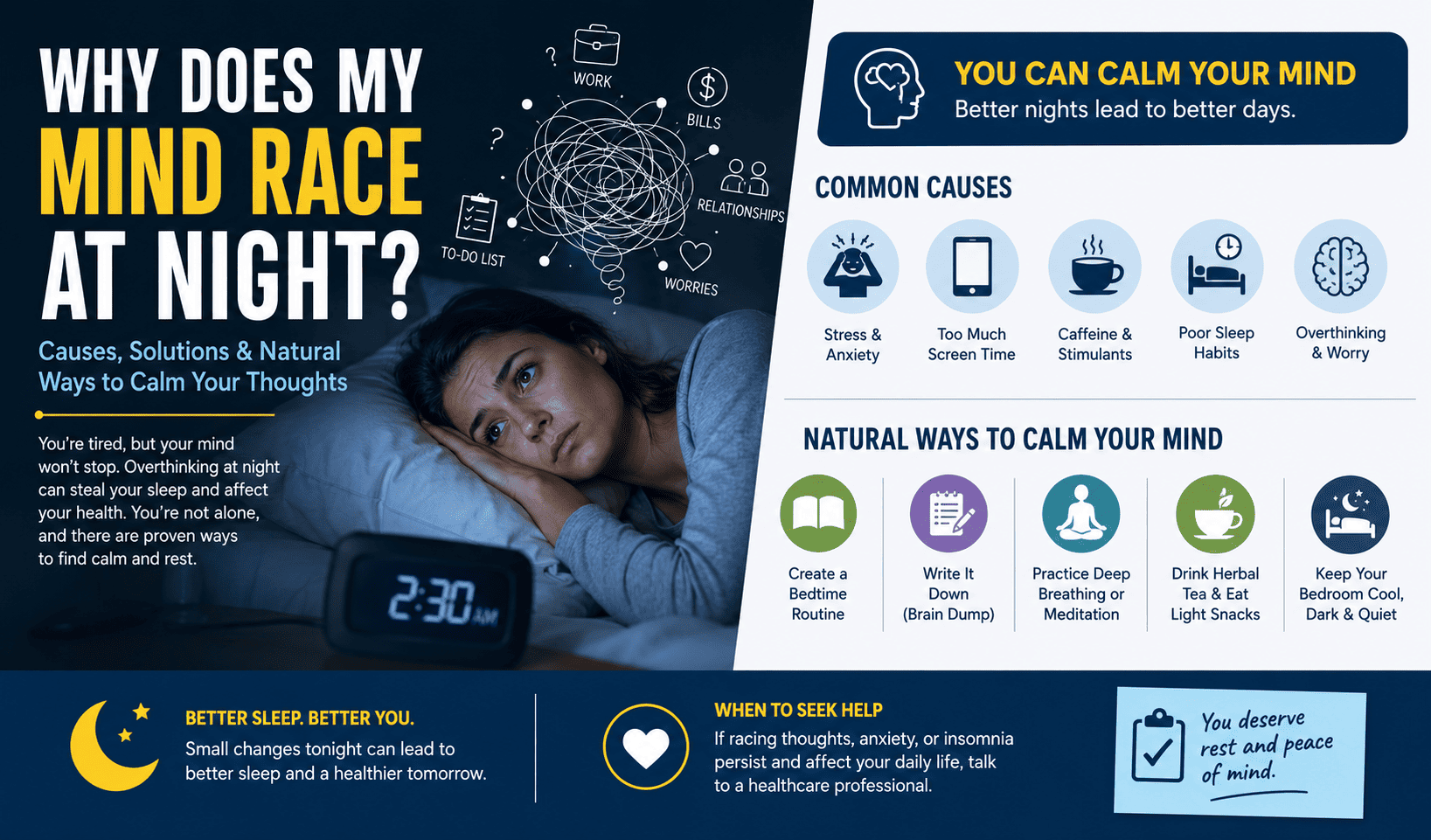
Have you ever climbed into bed feeling exhausted, only to find your mind suddenly becoming more active than it was all day? You replay conversations, think about tomorrow’s responsibilities, worry about finances, relationships, health, or work deadlines. Hours pass, and sleep feels impossible.
If this sounds familiar, you’re not alone. Millions of Americans struggle with racing thoughts at night. While occasional overthinking is normal, frequent nighttime mental activity can interfere with sleep quality, increase stress, and affect overall well-being.
The good news is that understanding why your mind races at night can help you take practical steps to calm your thoughts and improve sleep naturally.
Quick Answer
Racing thoughts at night are often caused by stress, anxiety, overstimulation, poor sleep habits, excessive screen time, caffeine, or unresolved worries. When the body begins to relax before sleep, mental distractions become more noticeable. Improving sleep routines, reducing stress, and creating a calming bedtime environment can help quiet an overactive mind.
What Does It Mean When Your Mind Races at Night?
A racing mind refers to a rapid stream of thoughts that feel difficult to control.
These thoughts may involve:
- Daily responsibilities
- Work concerns
- Financial stress
- Health worries
- Future planning
- Past conversations
- Random ideas
During the day, distractions keep the brain occupied. At night, when everything becomes quiet, these thoughts often become more noticeable.
For many people, nighttime overthinking is closely linked to stress, anxiety, and poor sleep habits.
Also Read : Why do I feel anxious before bedtime?
Common Symptoms of a Racing Mind at Night
Nighttime mental activity can affect both sleep and daytime performance.
Early Symptoms
- Difficulty falling asleep
- Overthinking conversations
- Replaying events from the day
- Feeling mentally alert despite physical tiredness
- Restlessness
- Mild anxiety before bed
Advanced Symptoms
- Chronic insomnia
- Frequent nighttime waking
- Morning fatigue
- Brain fog
- Irritability
- Daytime anxiety
- Difficulty concentrating
- Increased stress levels
If left unaddressed, persistent sleep disruption can affect overall health and quality of life.
Why Does My Mind Race at Night?
There is rarely a single cause. Several factors often work together.
1. Stress and Anxiety
Stress is one of the most common reasons people experience racing thoughts before bed.
When stress levels are high, the body releases stress hormones that keep the brain alert.
Common stress triggers include:
- Work pressure
- Financial concerns
- Family responsibilities
- Health worries
- Relationship challenges
Even when you’re physically tired, your mind may remain active.
2. Lack of Mental Downtime
Many Americans stay busy throughout the day.
Common activities include:
- Emails
- Social media
- Work meetings
- Streaming content
- Constant notifications
When bedtime arrives, the brain finally has a chance to process everything.
This can lead to:
- Overthinking
- Mental replaying
- Worry loops
3. Excessive Screen Time
Phones, tablets, and computers may contribute to nighttime mental stimulation.
Screen exposure before bed can:
- Increase alertness
- Delay melatonin production
- Make relaxation more difficult
Social media scrolling can also trigger emotional reactions and additional mental activity.
4. Caffeine and Stimulants
Caffeine can remain in the body for several hours.
Even afternoon consumption may affect:
- Sleep quality
- Relaxation
- Mental calmness
Common sources include:
- Coffee
- Energy drinks
- Soda
- Pre-workout supplements
5. Poor Sleep Schedule
Irregular sleep routines may disrupt the body’s internal clock.
Examples include:
- Staying up late
- Sleeping in on weekends
- Shift work
- Frequent schedule changes
These habits may make it harder for the brain to enter a relaxed sleep state.
6. Anxiety Disorders
Occasional worry is normal.
However, people with anxiety disorders may experience:
- Constant mental chatter
- Worst-case thinking
- Difficulty relaxing
- Sleep anxiety
Nighttime often becomes the period when anxiety symptoms feel strongest.
Also Read : Can sleeping late affect hormones?
Racing Thoughts vs Anxiety: What’s the Difference?
| Feature | Racing Thoughts | Anxiety Disorder |
|---|---|---|
| Occasional worry | Common | Common |
| Triggered by stress | Often | Often |
| Constant excessive worry | Sometimes | Frequent |
| Physical anxiety symptoms | Mild | More noticeable |
| May affect sleep | Yes | Yes |
| Requires professional evaluation | Sometimes | Often |
Not everyone with racing thoughts has an anxiety disorder, but persistent symptoms may warrant evaluation.
Best Treatment Options for Racing Thoughts at Night
The goal is to calm the nervous system and create a sleep-friendly routine.
1. Create a Wind-Down Routine
The brain needs time to transition from activity to rest.
Helpful bedtime activities include:
- Reading
- Light stretching
- Journaling
- Deep breathing
- Listening to calming music
A consistent routine signals that it’s time for sleep.
2. Try a Brain Dump Exercise
Many people find relief by writing down thoughts before bed.
Spend 5–10 minutes recording:
- Tasks for tomorrow
- Worries
- Ideas
- Reminders
This can help reduce mental clutter.
3. Limit Screen Time
Try reducing screen exposure at least 30–60 minutes before bed.
Instead of scrolling:
- Read a book
- Take a warm shower
- Practice relaxation exercises
This helps support healthy melatonin production.
4. Practice Deep Breathing
Slow breathing may help calm the nervous system.
Simple technique:
- Inhale for 4 seconds
- Hold for 4 seconds
- Exhale for 6 seconds
Repeat several times.
Many people find this helpful before sleep.
5. Improve Sleep Environment
A calm bedroom can make relaxation easier.
Consider:
- Cool room temperature
- Comfortable bedding
- Minimal noise
- Dim lighting
Creating a sleep-friendly environment supports better rest.
6. Consider Professional Support
If anxiety or racing thoughts become overwhelming, professional guidance may help.
Support options include:
- Counseling
- Cognitive behavioral therapy
- Stress management programs
Treatment should always be individualized.
Also Read : What are the symptoms of sleep debt?
Diet & Lifestyle Tips
What you do during the day often affects nighttime thinking.
Foods That May Support Relaxation
- Bananas
- Oatmeal
- Almonds
- Walnuts
- Kiwi
- Herbal tea
- Greek yogurt
These foods may support healthy sleep habits.
Stay Hydrated
Mild dehydration may contribute to:
- Headaches
- Fatigue
- Discomfort
Maintain hydration throughout the day.
Foods & Drinks to Avoid Before Bed
- Energy drinks
- Excess coffee
- Alcohol
- Sugary desserts
- Heavy meals
These may increase stimulation or disrupt sleep quality.
Daily Routine Improvements
Morning
- Get sunlight exposure
- Stay active
- Avoid oversleeping
Afternoon
- Limit caffeine
- Take short movement breaks
- Manage stress proactively
Evening
- Reduce screen time
- Dim lights
- Follow a consistent bedtime routine
Small improvements can produce significant long-term benefits.
When Should You See a Doctor?
Seek medical advice if:
- Racing thoughts occur most nights
- Sleep problems last several weeks
- Anxiety interferes with daily life
- You experience panic attacks
- Depression symptoms develop
- Fatigue becomes severe
- Sleep quality continues to decline
A healthcare professional can help identify underlying causes and recommend appropriate treatment options.
Who Is Most at Risk?
1. Office Workers
High workloads and constant digital exposure may increase nighttime mental activity.
2. College Students
Academic pressure and irregular schedules can affect sleep quality.
3. Parents
Family responsibilities often contribute to stress and overthinking.
4. Women
Hormonal changes may sometimes affect sleep and stress levels.
5. Individuals With Anxiety
People with anxiety disorders commonly report racing thoughts before bed.
Frequently Asked Questions
1. Why does my brain become more active at night?
During quiet periods, the brain has fewer distractions, making worries and unfinished thoughts more noticeable.
2. Can anxiety cause racing thoughts before sleep?
Yes. Anxiety is one of the most common causes of nighttime overthinking and sleep difficulties.
3. How can I stop overthinking at night?
A consistent bedtime routine, journaling, relaxation techniques, and limiting screen time may help calm the mind.
4. Can caffeine cause racing thoughts?
Yes. Caffeine can increase alertness and may contribute to difficulty relaxing at bedtime.
5. Is it normal to think a lot before sleep?
Occasional overthinking is common. However, persistent racing thoughts that affect sleep may require further evaluation.

Quality sleep habits play an important role in overall wellness and productivity.
Conclusion
If you’ve ever wondered, “Why does my mind race at night?” the answer often involves a combination of stress, anxiety, lifestyle habits, and sleep-related factors.
While occasional nighttime overthinking is normal, persistent racing thoughts can affect sleep quality, energy levels, and overall well-being. Fortunately, simple changes such as reducing screen time, managing stress, improving sleep habits, and creating a relaxing bedtime routine can make a meaningful difference.
If symptoms continue despite healthy lifestyle changes, speaking with a healthcare professional can help identify underlying causes and provide additional support.
Medically reviewed information sourced from trusted health organizations.
References
- National Institutes of Health (NIH). Sleep and Sleep Disorders.
https://www.nhlbi.nih.gov/health/sleep - Sleep Foundation. Sleep Health Resources.
https://www.sleepfoundation.org/ - Centers for Disease Control and Prevention (CDC). Sleep and Sleep Disorders.
https://www.cdc.gov/sleep/ - Mayo Clinic. Sleep Disorders Overview.
https://www.mayoclinic.org/
Reviewed by: Dzarro Editorial Team
Fact-checked using trusted medical and scientific sources.
Last Updated: June 13, 2026

Sandip Choudhary is a Health & Wellness Researcher and Content Creator specializing in sleep, digestive health, preventive wellness, and evidence-based health education. He has been creating online content and researching health-related topics for several years, focusing on translating complex medical information into practical guidance for everyday readers.
With a strong background in SEO and content strategy, Sandip ensures that every article is optimized for both search engines and real users. His goal is to provide reliable, clear, and helpful information that supports healthier living.
Disclaimer: The content published is for informational purposes only and is not a substitute for professional medical advice.