
Have you ever felt exhausted even after sleeping in on the weekend? Do you struggle to focus at work, rely heavily on caffeine, or feel constantly drained throughout the day? If so, you may be experiencing sleep debt.
Sleep debt is increasingly common in the United States, where busy schedules, stress, screen time, and poor sleep habits often prevent people from getting enough quality rest. While missing an hour or two of sleep occasionally may not seem serious, sleep debt can build up over time and affect your physical health, mental performance, mood, and overall well-being.
This guide explains the symptoms of sleep debt, what causes it, who is most at risk, and how to recover naturally.
Quick Answer
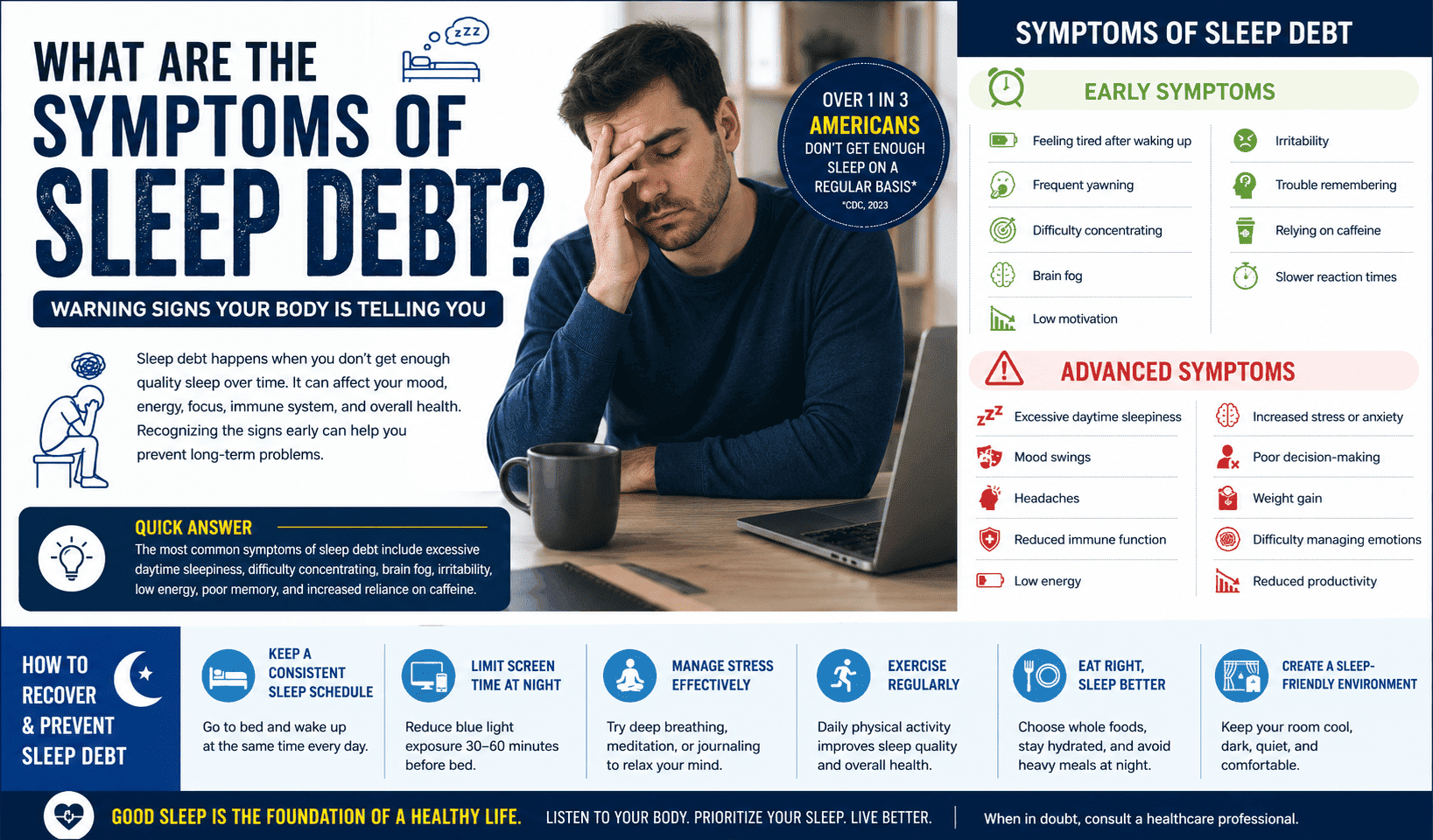
The most common symptoms of sleep debt include excessive daytime sleepiness, difficulty concentrating, brain fog, irritability, low energy, poor memory, and increased reliance on caffeine. Long-term sleep debt may also affect mood, immune function, productivity, metabolism, and overall health if left unaddressed.
What Is Sleep Debt?
Sleep debt refers to the difference between the amount of sleep your body needs and the amount you actually get.
For example:
- Your body needs 8 hours per night
- You only sleep 6 hours
After one night, you have a sleep debt of 2 hours.
If this continues for several days, the debt accumulates.
Unlike financial debt, sleep debt cannot always be fixed with a single night of extra sleep. Recovery often requires consistent improvements in sleep habits over time.
Also Read : How long should a healthy nap be?
Symptoms of Sleep Debt
Sleep debt affects people differently depending on age, lifestyle, stress levels, and overall health.
Early Symptoms
These warning signs often appear first:
- Feeling tired shortly after waking up
- Frequent yawning
- Difficulty concentrating
- Brain fog
- Reduced productivity
- Increased caffeine cravings
- Low motivation
- Mild irritability
- Trouble remembering details
- Slower reaction times
Many people dismiss these symptoms as stress or a busy schedule when sleep debt may actually be the cause.
Advanced Symptoms
If sleep debt continues, symptoms can become more noticeable:
- Excessive daytime sleepiness
- Mood swings
- Anxiety or increased stress
- Depression symptoms
- Frequent headaches
- Reduced immune function
- Increased appetite
- Weight gain
- Poor decision-making
- Difficulty managing emotions
- Reduced work performance
Chronic sleep debt can significantly impact quality of life.
Common Signs You May Have Sleep Debt
You may be experiencing sleep debt if:
- You need multiple alarms to wake up
- You sleep significantly longer on weekends
- You feel tired throughout the day
- You regularly consume large amounts of caffeine
- You fall asleep quickly whenever you sit quietly
- You struggle to stay alert during meetings or driving
These signs often indicate that your body is not getting enough restorative sleep.
Also Read : Can lack of sleep affect digestion?
Causes & Risk Factors of Sleep Debt
Sleep debt can develop from a variety of lifestyle, environmental, and health factors.
1. Busy Work Schedules
Long work hours remain one of the leading causes of sleep debt in America.
Common examples include:
- Overtime shifts
- Multiple jobs
- Late-night work
- Remote work boundaries
Many professionals sacrifice sleep to meet deadlines.
2. Poor Sleep Habits
Inconsistent sleep schedules can prevent adequate recovery.
Examples include:
- Staying up late on weekdays
- Sleeping in on weekends
- Excessive screen time before bed
- Irregular bedtime routines
3. Stress & Anxiety
Stress can make it difficult to:
- Fall asleep
- Stay asleep
- Reach deep sleep stages
Many people spend enough time in bed but still accumulate sleep debt because sleep quality is poor.
4. Sleep Disorders
Certain medical conditions may contribute to sleep debt.
Examples include:
- Sleep apnea
- Insomnia
- Restless leg syndrome
- Circadian rhythm disorders
These conditions often reduce sleep quality even if total sleep time appears adequate.
5. Lifestyle Factors
Several habits may contribute to sleep debt:
- Excess caffeine
- Alcohol consumption
- Lack of exercise
- Poor nutrition
- Excessive screen exposure
Sleep Debt vs Normal Fatigue
| Factor | Sleep Debt | Normal Fatigue |
|---|---|---|
| Cause | Lack of sleep over time | Temporary tiredness |
| Duration | Days or weeks | Usually short-term |
| Recovery | Requires improved sleep habits | Often improves with rest |
| Daytime sleepiness | Common | Less severe |
| Brain fog | Frequent | Occasional |
| Impact on health | Significant | Usually mild |
This comparison helps distinguish occasional tiredness from a larger sleep problem.
Best Treatment Options for Sleep Debt
The most effective treatment for sleep debt is restoring consistent, high-quality sleep.
1. Prioritize Sleep Consistency
Going to bed and waking up at the same time every day helps regulate your internal clock.
Benefits:
- Improved sleep quality
- Better recovery
- Reduced daytime fatigue
- More stable energy levels
Consistency matters more than sleeping in occasionally.
2. Improve Sleep Environment
A healthy sleep environment supports deeper sleep.
Helpful Tips:
- Keep the room cool
- Reduce noise
- Use blackout curtains
- Choose comfortable bedding
- Limit electronics in the bedroom
Small environmental improvements can make a noticeable difference.
3. Reduce Evening Screen Time
Blue light from devices may suppress melatonin production.
Try:
- Turning off screens 30–60 minutes before bed
- Reading instead of scrolling
- Using dim lighting in the evening
4. Manage Stress Effectively
Stress management is essential for recovery.
Helpful techniques include:
- Meditation
- Deep breathing
- Journaling
- Evening walks
- Yoga
Reducing stress often improves sleep quality naturally.
5. Address Underlying Sleep Disorders
If symptoms persist despite healthy habits, professional evaluation may be necessary.
Treatment may help identify:
- Sleep apnea
- Chronic insomnia
- Other sleep-related conditions
Also Read : What foods improve sleep quality naturally?
Diet & Lifestyle Tips
Your daily habits significantly influence sleep quality.
What to Eat
Certain foods may support healthy sleep:
- Bananas
- Almonds
- Oatmeal
- Kiwi
- Greek yogurt
- Salmon
- Herbal tea
These foods provide nutrients associated with relaxation and recovery.
Stay Hydrated
Proper hydration supports:
- Energy levels
- Brain function
- Overall wellness
Avoid drinking excessive amounts right before bedtime.
What to Avoid
Foods & Drinks
- Energy drinks
- Excess caffeine
- Sugary snacks
- Alcohol
- Heavy late-night meals
These may interfere with sleep quality.
Daily Routine Improvements
Morning
- Get sunlight exposure
- Wake up consistently
- Drink water
Daytime
- Exercise regularly
- Take movement breaks
- Avoid excessive caffeine
Evening
- Create a relaxing bedtime routine
- Reduce screen exposure
- Keep bedroom temperature comfortable
When to See a Doctor
Seek medical advice if you experience:
- Persistent fatigue despite adequate sleep
- Loud snoring
- Breathing pauses during sleep
- Frequent nighttime waking
- Chronic insomnia
- Severe daytime sleepiness
- Difficulty functioning at work or school
These symptoms may indicate a sleep disorder requiring professional evaluation.
Who Is at Risk?
1. Office Workers
Long hours, screen exposure, and work stress can contribute to sleep debt.
2. College Students
Late-night studying and irregular schedules often reduce sleep duration.
3. Parents
Interrupted sleep and caregiving responsibilities may increase sleep debt.
4. Shift Workers
Night shifts commonly disrupt circadian rhythms.
5. Adults Over 50
Age-related changes in sleep patterns may increase vulnerability to sleep debt.
6. Individuals With Anxiety
Stress and racing thoughts can interfere with restorative sleep.
Frequently Asked Questions
1. What is sleep debt?
Sleep debt is the difference between the sleep your body needs and the sleep you actually get over time.
2. Can you recover from sleep debt?
Yes. Most people can improve sleep debt by consistently getting adequate, high-quality sleep.
3. How long does it take to recover from sleep debt?
Recovery depends on how much sleep has been lost and how long the problem has existed. Consistent sleep improvements are usually necessary.
4. Is sleeping in on weekends enough to fix sleep debt?
Not always. Weekend sleep may help temporarily, but long-term recovery typically requires consistent sleep habits.
5. Can sleep debt affect mental health?
Yes. Chronic sleep debt may contribute to stress, anxiety, mood changes, and reduced emotional resilience.

Maintaining healthy sleeping patterns supports long-term physical and mental health.
Conclusion
Sleep debt is more than simply feeling tired. Over time, it can affect energy, focus, mood, immunity, productivity, and overall health.
The most common symptoms include excessive daytime sleepiness, brain fog, poor concentration, irritability, and increased reliance on caffeine. Fortunately, many people can reduce sleep debt through consistent sleep schedules, better sleep environments, stress management, and healthier lifestyle habits.
If fatigue persists despite improving your sleep routine, consult a healthcare professional to identify possible underlying sleep disorders and create a personalized plan for recovery.
Medically reviewed information sourced from trusted health organizations.
References
- National Institutes of Health (NIH). Sleep and Sleep Disorders.
https://www.nhlbi.nih.gov/health/sleep - Sleep Foundation. Sleep Health Resources.
https://www.sleepfoundation.org/ - Centers for Disease Control and Prevention (CDC). Sleep and Sleep Disorders.
https://www.cdc.gov/sleep/ - Mayo Clinic. Sleep Disorders Overview.
https://www.mayoclinic.org/
Reviewed by: Dzarro Editorial Team
Fact-checked using trusted medical and scientific sources.
Last Updated: June 13, 2026

Sandip Choudhary is a Health & Wellness Researcher and Content Creator specializing in sleep, digestive health, preventive wellness, and evidence-based health education. He has been creating online content and researching health-related topics for several years, focusing on translating complex medical information into practical guidance for everyday readers.
With a strong background in SEO and content strategy, Sandip ensures that every article is optimized for both search engines and real users. His goal is to provide reliable, clear, and helpful information that supports healthier living.
Disclaimer: The content published is for informational purposes only and is not a substitute for professional medical advice.