

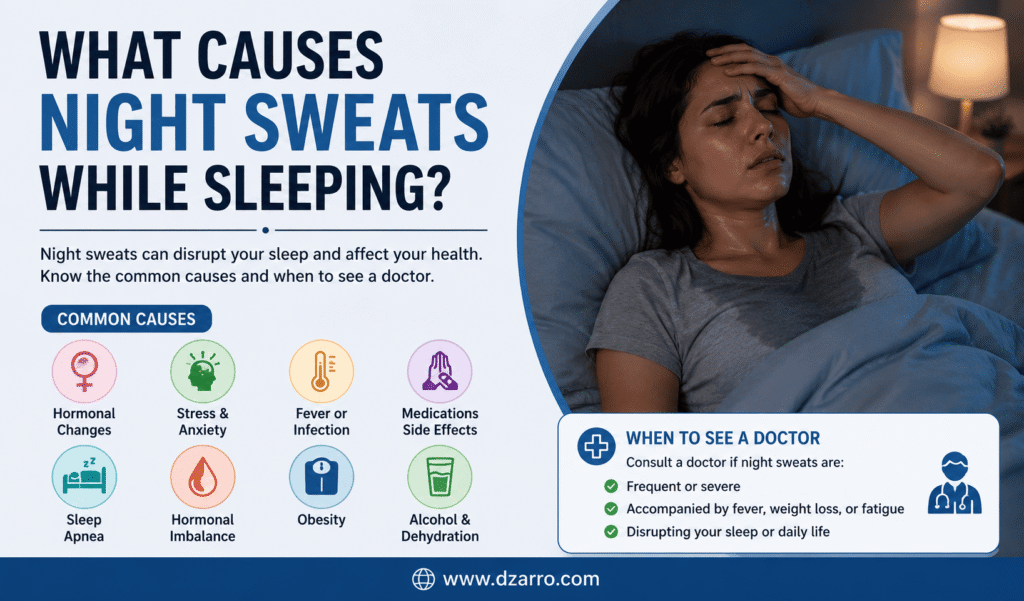
Night sweats while sleeping are episodes of excessive sweating that soak your clothes or bedding even when your bedroom isn’t hot. They can be caused by hormonal changes, infections, medications, stress, sleep disorders, or certain medical conditions. While occasional night sweats are usually harmless, frequent episodes accompanied by fever, weight loss, or swollen lymph nodes should be evaluated by a healthcare provider.
Common Causes of Night Sweats While Sleeping
| Common Cause | Risk Level |
|---|---|
| Hormonal changes | Common |
| Stress & anxiety | Common |
| Medications | Common |
| Sleep apnea | Common |
| Infections | Moderate |
| Hyperthyroidism | Moderate |
| Diabetes (low blood sugar) | Moderate |
| Alcohol | Common |
| Spicy foods | Common |
| Certain cancers | Rare but serious |
Waking up drenched in sweat can be uncomfortable, confusing, and sometimes concerning. If you’re asking, what causes night sweats while sleeping?, you’re not alone. Night sweats are a common complaint among adults in the United States and can happen for many different reasons. In some cases, they’re related to the temperature of your bedroom or heavy blankets. In other cases, they may signal an underlying medical condition, hormonal change, medication side effect, or infection.
Most people experience occasional night sweats at some point. However, if they occur frequently, disrupt your sleep, or are accompanied by symptoms like fever, unexplained weight loss, or persistent fatigue, it’s important to talk with a healthcare provider.
This guide explains the most common causes of night sweats, when they should be taken seriously, and practical ways to reduce them naturally.
Also Read : Can Seasonal Changes Affect Your Sleep Cycle?
What Causes Night Sweats While Sleeping?
Night sweats refer to episodes of excessive sweating during sleep that soak your clothing or bedding, even when your room is comfortably cool. Unlike simply feeling warm, true night sweats are usually more intense and often occur repeatedly.
Many factors can trigger night sweats, ranging from lifestyle habits to serious medical conditions.
Hormonal Changes
Hormonal fluctuations are among the leading causes of night sweats.
Women experiencing menopause often develop hot flashes that continue into the night. These episodes occur because declining estrogen levels affect the body’s temperature regulation. Perimenopause can also trigger night sweats years before menopause officially begins.
Pregnancy and postpartum hormonal changes may also increase nighttime sweating as the body adjusts to rapidly changing hormone levels.
Although less common, men may experience night sweats related to low testosterone levels or hormone therapy.
Also Read : Can caffeine affect sleep even hours later?
Night Sweats in Women
Night sweats in women are often linked to hormonal changes, but they can also be triggered by certain medical conditions, medications, or lifestyle factors. Fluctuations in estrogen levels affect the body’s temperature regulation, making women more likely to experience excessive sweating during sleep at different stages of life.
Menopause and perimenopause are among the most common causes of night sweats in women. As estrogen levels decline, many women experience sudden hot flashes and episodes of sweating that can interrupt sleep. These symptoms may begin several years before menopause during the perimenopausal stage and continue afterward.
Pregnancy can also lead to night sweats due to hormonal shifts, an increased metabolic rate, and changes in blood circulation. Many women notice these symptoms during the first and third trimesters, although they often improve after childbirth.
Other hormonal conditions, such as polycystic ovary syndrome (PCOS) or hormonal imbalances, may contribute to night sweats in some women. In addition, certain birth control pills or hormone-related medications can occasionally affect body temperature regulation, causing excessive sweating during the night.
Some women also experience night sweats while breastfeeding. After delivery, estrogen levels decrease while the body works to eliminate excess fluid retained during pregnancy, making nighttime sweating relatively common in the early postpartum weeks.
Although occasional night sweats are usually not a cause for concern, women should consult a healthcare provider if symptoms are frequent, severe, or occur alongside unexplained weight loss, persistent fever, swollen lymph nodes, or other unusual symptoms. A medical evaluation can help identify whether the underlying cause is hormonal or related to another health condition.
Also Read : Why Do I Wake Up at the Same Time Every Night?
Night Sweats During Pregnancy
Night sweats during pregnancy are a common symptom and are usually caused by normal hormonal changes rather than a serious medical condition. Many pregnant women notice increased sweating at night, particularly during the first and third trimesters, as the body adapts to pregnancy and works harder to regulate its temperature.
During the first trimester, levels of hormones such as estrogen and progesterone change rapidly. These hormonal fluctuations can affect the body’s internal thermostat, leading to hot flashes and episodes of excessive sweating while sleeping. Increased blood flow and a faster metabolism may also contribute to feeling warmer than usual.
In the third trimester, night sweats may become more noticeable because of the baby’s growth, increased body weight, and a higher metabolic rate. These physical changes can make it more difficult for the body to stay cool during sleep, especially in a warm bedroom or when using heavy bedding.
Although hormonal changes are the most common reason for night sweats during pregnancy, staying well hydrated, wearing lightweight sleepwear, using breathable bedding, and keeping the bedroom cool may help reduce discomfort. Maintaining good sleep hygiene can also improve overall sleep quality.
Most pregnancy-related night sweats are temporary and improve after delivery as hormone levels gradually return to normal. However, pregnant women should contact their healthcare provider if night sweats are persistent or are accompanied by fever, chills, unexplained weight loss, severe dizziness, difficulty breathing, chest pain, or signs of infection. These symptoms may indicate an underlying medical condition that requires prompt evaluation. Always seek medical advice if you are concerned about new or worsening symptoms during pregnancy.
Night Sweats in Men
Night sweats in men can result from a variety of factors, ranging from temporary lifestyle habits to underlying medical conditions. While occasional sweating during sleep is usually harmless, frequent or persistent night sweats may indicate a health issue that should be evaluated by a healthcare provider.
One possible cause is low testosterone (low T). Testosterone levels naturally decline with age, and some men may experience hormonal changes that contribute to night sweats, fatigue, reduced muscle mass, and a lower sex drive. A healthcare provider can determine whether hormone levels are contributing to these symptoms.
Stress and anxiety are also common triggers. Emotional stress activates the body’s fight-or-flight response, which can increase body temperature and sweating during sleep. Men experiencing chronic stress or anxiety may notice recurring episodes of night sweats, especially during periods of poor sleep.
Lifestyle habits such as drinking alcohol, particularly in the evening, may also increase the likelihood of waking up sweaty. Alcohol can affect the body’s ability to regulate temperature and may disrupt normal sleep patterns.
Another common cause is sleep apnea, a sleep disorder in which breathing repeatedly stops and starts during sleep. Men with obstructive sleep apnea may experience loud snoring, daytime fatigue, and excessive nighttime sweating. Because untreated sleep apnea can increase the risk of heart disease and other complications, medical evaluation is important.
Obesity may also contribute to night sweats. Excess body weight can make it more difficult for the body to regulate temperature during sleep and is also associated with a higher risk of sleep apnea.
Finally, certain medications, including some antidepressants, hormone therapies, and drugs that affect body temperature, may cause night sweats as a side effect. If night sweats begin after starting a new medication, discuss your symptoms with your healthcare provider before making any changes to your treatment plan.
Also Read : How much sleep do adults over 40 need?
Infections
The body’s immune response to infection frequently includes fever and sweating.
Common infections that may cause night sweats include:
- Influenza
- COVID-19
- Tuberculosis
- Pneumonia
- Endocarditis
- HIV infection
During an infection, your body’s temperature rises to help fight invading organisms. As the fever breaks, excessive sweating helps cool the body.
Persistent night sweats with fever should always be evaluated by a healthcare professional.
Night Sweats in Children
Night sweats in children are usually not a sign of a serious health problem and are often caused by common illnesses or environmental factors. Many children may wake up with damp pajamas or bedding after a night of sweating, especially during periods of illness or hot weather. However, persistent or severe night sweats should not be ignored.
A viral infection, such as the common cold, influenza (flu), or another respiratory illness, is one of the most common causes of night sweats in children. As the body fights an infection, changes in body temperature may lead to increased sweating during sleep. Fever can also trigger excessive sweating, particularly when the temperature begins to fall as the child recovers.
Sometimes, the cause is much simpler. An overheated bedroom, heavy blankets, or warm sleepwear can make children sweat excessively at night. Keeping the bedroom at a comfortable temperature (around 60–67°F or 16–19°C) and dressing children in lightweight, breathable clothing may help reduce nighttime sweating.
In rare cases, frequent night sweats may be associated with underlying medical conditions, such as bacterial infections, hormonal disorders, autoimmune diseases, or certain cancers like lymphoma. Although these causes are uncommon, they should be considered if night sweats are persistent and accompanied by other concerning symptoms.
Parents should contact a healthcare provider if their child has night sweats that occur regularly, are accompanied by persistent fever, unexplained weight loss, swollen lymph nodes, chronic cough, difficulty breathing, extreme fatigue, or poor growth, or if the child appears unusually ill. A medical evaluation can help determine the underlying cause and ensure appropriate treatment if needed. Most cases, however, are temporary and resolve once the child recovers from a common illness or the sleeping environment is adjusted.
Also Read : Why do I wake up sweating at night?
Medications
Several prescription and over-the-counter medications list excessive sweating as a possible side effect.
Common examples include:
- Antidepressants (especially SSRIs and SNRIs)
- Steroids
- Fever-reducing medications like acetaminophen
- Diabetes medications that may contribute to low blood sugar
- Hormone therapies
- Certain blood pressure medications
If night sweats began shortly after starting a new medication, speak with your prescribing healthcare provider before stopping the medication.
Also Read : Why do I wake up with a dry mouth?
Anxiety and Stress
Mental health significantly influences the body’s nervous system.
Stress activates the sympathetic nervous system—the body’s “fight or flight” response—which increases heart rate, body temperature, and sweating.
People with anxiety disorders, panic attacks, chronic stress, or post-traumatic stress disorder (PTSD) often report nighttime sweating, especially after vivid dreams or nighttime panic episodes.
Managing stress can often reduce these symptoms.
Can Anxiety Cause Night Sweats?
Yes, anxiety can cause night sweats. When you feel anxious or stressed, your body’s fight-or-flight response is activated, releasing stress hormones such as adrenaline and cortisol. These hormones increase your heart rate, raise your body temperature, and stimulate your sweat glands, which may lead to excessive sweating during sleep. While occasional night sweats related to anxiety are usually not a cause for concern, frequent episodes can affect sleep quality and overall well-being.
People with generalized anxiety disorder (GAD), panic disorder, post-traumatic stress disorder (PTSD), or chronic stress may be more likely to experience nighttime sweating. Some individuals wake up drenched in sweat after vivid dreams, nightmares, or panic attacks, while others may not remember feeling anxious during the night but still experience excessive sweating. Anxiety-related night sweats are often accompanied by symptoms such as a racing heart, rapid breathing, muscle tension, restlessness, or difficulty falling back asleep.
Managing anxiety may help reduce the frequency of night sweats. Practicing relaxation techniques before bedtime, such as deep breathing exercises, meditation, progressive muscle relaxation, or gentle stretching, can help calm the nervous system. Maintaining a consistent sleep schedule, limiting caffeine and alcohol in the evening, exercising regularly, and keeping your bedroom cool may also improve sleep and reduce nighttime sweating.
However, anxiety is not the only possible cause of night sweats. If excessive sweating occurs frequently, becomes severe, or is accompanied by fever, unexplained weight loss, swollen lymph nodes, persistent cough, chest pain, or shortness of breath, it is important to seek medical evaluation. A healthcare provider can determine whether anxiety is the primary cause or if another underlying medical condition requires treatment. Addressing both physical and emotional health is essential for improving sleep quality and reducing recurring night sweats.
Also Read : Can low vitamin D affect sleep?
Foods That May Trigger Night Sweats
Certain foods and beverages can increase body temperature or stimulate the nervous system, making some people more likely to experience night sweats while sleeping. Although food is not the primary cause of night sweats, identifying and avoiding personal dietary triggers may help reduce nighttime sweating and improve sleep quality.
Spicy foods are one of the most common dietary triggers. Ingredients such as chili peppers, cayenne pepper, and hot sauces contain capsaicin, a compound that raises body temperature and stimulates sweat production. Eating spicy meals close to bedtime may make night sweats more likely, especially in people who are sensitive to spicy foods.
Caffeine can also contribute to nighttime sweating. Coffee, black tea, energy drinks, cola, and even some chocolate products contain caffeine, which stimulates the central nervous system. This may increase heart rate, raise body temperature, and make it more difficult to fall asleep, potentially leading to excessive sweating during the night.
Alcohol is another common trigger. While it may initially make you feel sleepy, alcohol can interfere with normal sleep cycles and affect the body’s ability to regulate temperature. Drinking alcohol in the evening may increase the likelihood of waking up sweaty, particularly in people who already experience hot flashes or night sweats.
Foods and drinks that are high in added sugar may also contribute to nighttime sweating in some individuals. Sugary desserts, candy, soft drinks, and processed snacks can cause rapid fluctuations in blood sugar levels. These changes may trigger sweating in susceptible people, particularly those with diabetes or blood sugar regulation problems.
If you notice that night sweats occur after eating certain foods or drinking caffeinated or alcoholic beverages, consider keeping a food and symptom diary. Limiting spicy foods, caffeine, alcohol, and high-sugar foods for several weeks may help you identify potential triggers. If night sweats continue despite dietary changes or are accompanied by other concerning symptoms, consult a healthcare provider to rule out an underlying medical condition.
Also Read : What causes sleep anxiety before workdays?
Sleep Disorders
Some sleep disorders increase the likelihood of night sweats.
Obstructive sleep apnea is one of the most common examples. During repeated breathing interruptions, oxygen levels temporarily fall, triggering stress hormones that may cause excessive sweating.
People with untreated sleep apnea often snore loudly, wake up gasping for air, and experience daytime fatigue alongside night sweats.
Also Read : Why do I feel anxious before bedtime?
Low Blood Sugar
Low blood sugar (hypoglycemia) can trigger heavy sweating, especially during sleep.
People with diabetes who use insulin or certain diabetes medications are at greater risk.
Symptoms may include:
- Shaking
- Fast heartbeat
- Nightmares
- Confusion upon waking
- Morning headaches
- Excessive sweating
Anyone experiencing repeated nighttime hypoglycemia should consult their diabetes care team.
Certain Medical Conditions
Night sweats may sometimes indicate an underlying health condition.
Examples include:
Hyperthyroidism increases metabolism and body heat production, making excessive sweating common.
Some autoimmune diseases, including rheumatoid arthritis and lupus, may cause inflammation associated with night sweats.
Gastroesophageal reflux disease (GERD) occasionally contributes to nighttime sweating, especially when symptoms disrupt sleep.
Rarely, certain cancers—particularly lymphoma—may present with persistent drenching night sweats, unexplained weight loss, swollen lymph nodes, and fever. While cancer is far less common than other causes, persistent symptoms deserve prompt medical evaluation.
Also Read : How to sleep better without medication?
Lifestyle Factors
Not every case of night sweats is caused by illness.
Several everyday habits may contribute, including:
Sleeping in a warm room, using thick blankets, drinking alcohol before bed, eating spicy foods late at night, consuming excess caffeine, smoking, or vigorous evening exercise.
Improving sleep habits often reduces mild night sweats.
Can Night Sweats Be a Sign of Something Serious?
Occasional sweating is usually harmless.
However, frequent or severe night sweats may require medical attention, particularly when they occur alongside:
- Fever
- Unexplained weight loss
- Persistent cough
- Chest pain
- Shortness of breath
- Enlarged lymph nodes
- Severe fatigue
- Blood in sputum
- Recurrent infections
These symptoms may suggest an underlying condition that requires diagnosis and treatment.
How Doctors Diagnose Night Sweats
Your healthcare provider will begin by reviewing your medical history and symptoms.
Questions may include:
- How often do the night sweats occur?
- Are your sheets soaked?
- Do you have fever or chills?
- Have you recently started any medications?
- Are you experiencing stress or anxiety?
- Do you snore or stop breathing during sleep?
Depending on your symptoms, additional testing may include blood work, thyroid function tests, infection screening, sleep studies, chest imaging, or hormone evaluation.
The goal is to identify and treat the underlying cause rather than simply controlling the sweating itself.
Also Read : Why do I wake up sweating at night?
How to Reduce Night Sweats Naturally
Although treatment depends on the underlying cause, many people benefit from simple lifestyle changes.
Keep your bedroom between 60°F and 67°F (15.5°C to 19.5°C), which many sleep experts consider ideal for restful sleep.
Choose breathable cotton sheets and lightweight moisture-wicking sleepwear.
Avoid spicy meals, alcohol, and heavy exercise within several hours of bedtime.
Stay well hydrated throughout the day.
Practice stress management techniques such as meditation, deep breathing, or gentle yoga before sleep.
Maintain a healthy body weight, as obesity increases the risk of both overheating and sleep apnea.
If medications appear to be contributing, discuss alternatives with your healthcare provider rather than discontinuing treatment on your own.
Medical Treatments
Treatment varies depending on the diagnosis.
Hormone therapy may help some women experiencing severe menopausal symptoms.
Infections require appropriate treatment, such as antibiotics or antiviral medications when indicated.
Sleep apnea is commonly managed with continuous positive airway pressure (CPAP) therapy, weight management, or other interventions.
Hyperthyroidism, diabetes, anxiety disorders, and other medical conditions each have targeted treatments that often reduce or eliminate night sweats once properly controlled.
When Are Night Sweats an Emergency?
Most cases of night sweats are not a medical emergency and are often linked to temporary causes such as a warm sleeping environment, mild infections, hormonal changes, or certain medications. However, in some situations, night sweats can be a warning sign of a serious underlying condition that requires immediate medical attention.
Seek emergency medical care or call 911 if night sweats occur along with chest pain, difficulty breathing, severe dizziness, confusion, loss of consciousness, or a high fever with a stiff neck, as these symptoms may indicate a life-threatening illness. Emergency care is also necessary if excessive sweating is accompanied by signs of a severe allergic reaction, such as swelling of the face or throat, or if someone has symptoms of sepsis, including rapid heartbeat, extreme weakness, and difficulty staying awake.
You should also schedule a prompt appointment with your healthcare provider if night sweats occur frequently for several weeks or are accompanied by unexplained weight loss, persistent fever, swollen lymph nodes, ongoing cough, fatigue, or blood in the sputum. These symptoms could be associated with infections like tuberculosis, hormonal disorders, autoimmune diseases, or, in rare cases, certain cancers such as lymphoma. Although these conditions are uncommon, they should be evaluated without delay.
If your night sweats started soon after beginning a new medication or are severe enough to disrupt your sleep regularly, speak with your healthcare provider. Do not stop taking prescription medications without medical advice.
In many cases, night sweats improve once the underlying cause is treated or lifestyle factors are addressed. However, persistent, severe, or unexplained night sweats—especially when accompanied by other concerning symptoms—should never be ignored. Early medical evaluation can help identify the cause and ensure you receive the appropriate treatment.
Also Read : How to reset sleep schedule naturally?
When Should You See a Doctor?
Occasional sweating after sleeping in a hot room usually isn’t concerning.
Schedule a medical evaluation if your night sweats:
- Occur multiple times each week
- Persist for several weeks
- Soak your bedding regularly
- Wake you repeatedly from sleep
- Are accompanied by fever, weight loss, fatigue, or swollen lymph nodes
- Began after starting a new medication
- Occur alongside symptoms of sleep apnea
Prompt evaluation helps identify treatable causes early.
Can Dehydration Cause Night Sweats?
Yes, dehydration can contribute to night sweats, although it is usually not the primary cause. When your body does not have enough fluids, it may struggle to regulate its internal temperature efficiently. This can sometimes lead to increased sweating, especially in a warm sleeping environment or after physical activity. At the same time, excessive sweating during the night can cause further fluid loss, creating a cycle that may worsen dehydration.
People may become dehydrated for several reasons, including not drinking enough water, exercising intensely, spending time in hot weather, vomiting, diarrhea, or consuming alcohol, which can increase fluid loss. Certain medications, such as diuretics (“water pills”), may also raise the risk of dehydration.
Common signs of dehydration include thirst, dry mouth, dark yellow urine, headache, fatigue, dizziness, muscle cramps, and reduced urination. If these symptoms occur along with night sweats, increasing your daily fluid intake may help improve hydration. Drinking water throughout the day, eating water-rich foods such as fruits and vegetables, and limiting alcohol before bedtime can support healthy hydration levels.
However, dehydration alone is unlikely to be the sole cause of persistent or severe night sweats. Recurring nighttime sweating is more commonly associated with infections, hormonal changes, anxiety, certain medications, sleep disorders, or other underlying medical conditions.
If you frequently wake up drenched in sweat despite staying well hydrated, or if night sweats are accompanied by fever, unexplained weight loss, chest pain, persistent cough, confusion, or severe weakness, consult a healthcare provider for a proper evaluation. Identifying and treating the underlying cause is the most effective way to reduce chronic night sweats and improve overall sleep quality.
Frequently Asked Questions (FAQ)
Night sweats are usually not a sign of cancer. In most cases, they are caused by common conditions such as infections, menopause, medications, anxiety, or sleeping in a warm environment. However, persistent night sweats accompanied by unexplained weight loss, persistent fever, swollen lymph nodes, or extreme fatigue should be evaluated by a healthcare provider, as they can rarely be associated with cancers such as lymphoma.
Yes. Stress and anxiety can trigger night sweats by activating your body’s “fight-or-flight” response, which increases heart rate and body temperature. Emotional stress may cause you to wake up feeling hot or drenched in sweat even when your bedroom is cool. Managing stress through relaxation techniques, regular exercise, and good sleep habits may help reduce episodes.
Waking up drenched in sweat can happen for several reasons, including a hot sleeping environment, fever, hormonal changes, anxiety, certain medications, sleep apnea, or underlying medical conditions. If excessive sweating happens frequently or is accompanied by other symptoms such as weight loss, fever, or persistent fatigue, schedule an appointment with your healthcare provider for further evaluation.
You should see a doctor if your night sweats occur regularly, are severe enough to soak your clothing or bedding, or continue for several weeks without an obvious cause. Medical evaluation is especially important if you also have fever, unexplained weight loss, swollen lymph nodes, chronic cough, chest pain, or difficulty breathing.
Yes. People with diabetes may experience night sweats due to low blood sugar (nocturnal hypoglycemia), especially if they use insulin or certain diabetes medications. If you have diabetes and frequently wake up sweating at night, check your blood glucose levels and discuss your symptoms with your healthcare provider to determine whether your treatment plan needs adjustment.
Vitamins are not a proven treatment for night sweats. If sweating is related to a vitamin deficiency, correcting that deficiency may help improve overall health, but most cases of night sweats require identifying and treating the underlying cause. Always consult your healthcare provider before taking supplements, particularly if your symptoms are persistent.
Nighttime sweating can occur because your body’s temperature regulation changes during sleep. Hormonal fluctuations, infections, medications, anxiety, sleep disorders, or certain medical conditions may trigger sweating only while you’re asleep. If the problem is frequent or unexplained, your healthcare provider can help determine the cause.
Yes. Dehydration can make night sweats feel worse because excessive sweating causes your body to lose fluids and electrolytes. While dehydration is not usually the direct cause of night sweats, staying well-hydrated throughout the day can help your body regulate temperature more effectively and reduce the risk of dehydration-related symptoms. If you continue experiencing heavy night sweats despite adequate hydration, consult a healthcare provider to identify the underlying cause.
No. Many cases result from warm sleeping environments, heavy bedding, alcohol consumption, stress, or hormonal changes. However, persistent or severe night sweats should be medically evaluated.
This may be related to hormonal fluctuations, anxiety, infections, medication side effects, sleep apnea, or another medical condition affecting your body’s temperature regulation.
Spicy foods, caffeine, alcohol, and large meals close to bedtime can increase body temperature and contribute to nighttime sweating in some individuals.
👉 These sleep wellness tips can help reduce stress-related sleep problems.
Final Thoughts
Understanding what causes night sweats while sleeping starts with recognizing that excessive nighttime sweating has many possible causes. While lifestyle habits, hormonal changes, stress, and medications account for many cases, persistent or severe night sweats may signal an underlying medical condition that deserves attention.
If your symptoms occur regularly, interfere with sleep quality, or are accompanied by concerning signs such as fever, unexplained weight loss, or swollen lymph nodes, consult your healthcare provider for a proper evaluation. Identifying and treating the underlying cause is the most effective way to restore comfortable, restful sleep.
Medical Disclaimer: This article is for educational purposes only and is not a substitute for professional medical advice, diagnosis, or treatment. If you experience persistent night sweats or other concerning symptoms, consult a qualified healthcare provider.
Medically reviewed information sourced from trusted health organizations.
References
- National Institutes of Health (NIH). Sleep and Sleep Disorders.
https://www.nhlbi.nih.gov/health/sleep - Sleep Foundation. Sleep Health Resources.
https://www.sleepfoundation.org/ - Centers for Disease Control and Prevention (CDC). Sleep and Sleep Disorders.
https://www.cdc.gov/sleep/ - Mayo Clinic. Sleep Disorders Overview.
https://www.mayoclinic.org/
Reviewed by: Dzarro Editorial Team
Fact-checked using trusted medical and scientific sources.
Last Updated: July 28, 2026

Sandip Choudhary is a Health & Wellness Researcher and Content Creator specializing in sleep, digestive health, preventive wellness, and evidence-based health education. He has been creating online content and researching health-related topics for several years, focusing on translating complex medical information into practical guidance for everyday readers.
With a strong background in SEO and content strategy, Sandip ensures that every article is optimized for both search engines and real users. His goal is to provide reliable, clear, and helpful information that supports healthier living.
Disclaimer: The content published is for informational purposes only and is not a substitute for professional medical advice.