
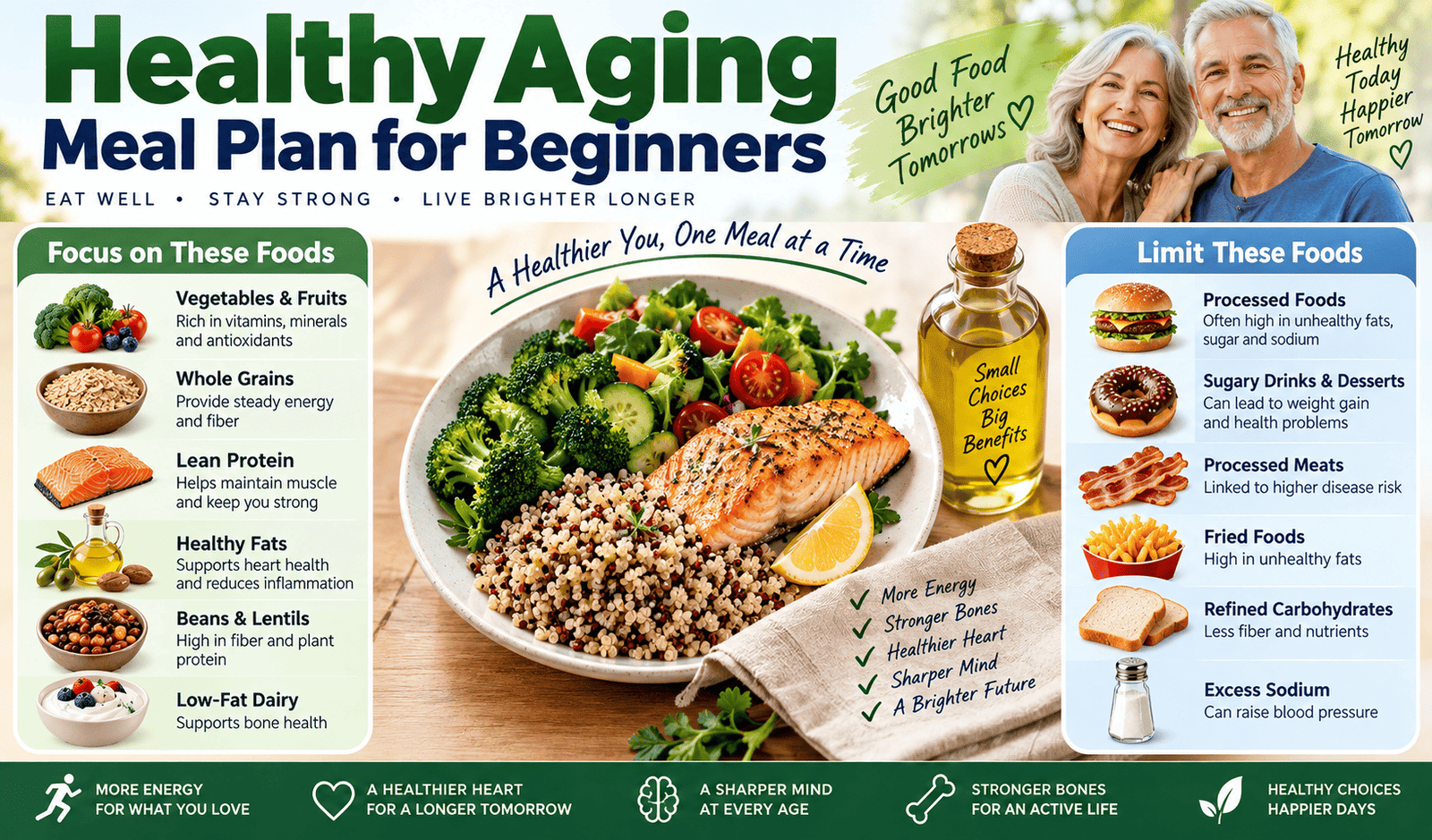
The best healthy aging meal plan for beginners is a Mediterranean-style eating pattern that focuses on vegetables, fruits, whole grains, legumes, nuts, olive oil, lean protein, and low-fat dairy while limiting processed foods, added sugar, and excess sodium. It supports heart health, brain function, muscle strength, healthy weight, and overall longevity.
Growing older doesn’t mean you have to give up delicious food or follow strict diets. Healthy aging is about nourishing your body with the right nutrients so you can stay energetic, maintain muscle, protect your heart, and reduce the risk of chronic diseases. Whether you’re in your 30s planning for the future or over 50 looking to improve your lifestyle, building healthy eating habits today can make a significant difference in your long-term health.
This beginner-friendly guide explains exactly what the best healthy aging meal plan looks like, which foods to prioritize, and how to create balanced meals that are simple, affordable, and sustainable.

Why Healthy Aging Starts With Nutrition?
As we age, our bodies naturally change. Muscle mass gradually decreases, metabolism slows down, bones become more fragile, and our nutritional needs become more important than ever. The food we eat directly affects our energy levels, immune system, memory, digestion, and overall quality of life.
Instead of focusing on restrictive diets, experts recommend following a nutrient-dense eating pattern that includes a wide variety of whole foods. Consistency matters much more than perfection. Small daily choices—such as eating more vegetables or replacing sugary snacks with fruit—can have lasting health benefits.
Also Read : Does Eating More Fiber Help You Live Longer?
What Is the Best Healthy Aging Meal Plan for Beginners?
The Mediterranean-style meal plan is considered one of the healthiest eating patterns for aging adults because it emphasizes natural, minimally processed foods. It isn’t a temporary diet but a long-term lifestyle that’s easy to adapt to different cultures, budgets, and cooking abilities.
A healthy aging meal plan typically includes colorful vegetables, fresh fruits, whole grains like oats and brown rice, beans and lentils, healthy fats from olive oil and nuts, seafood, lean poultry, eggs, and yogurt. Red meat, fried foods, sugary drinks, and heavily processed snacks are enjoyed only occasionally.
This balanced approach provides the vitamins, minerals, antioxidants, protein, and fiber your body needs to stay strong and healthy throughout life.
Also Read : Which Vegetables Are Best for Living Longer?
The Healthy Aging Plate Method
One of the easiest ways to build nutritious meals is by using the healthy plate method instead of counting calories.
Fill half of your plate with vegetables and fruits. These foods provide fiber, antioxidants, and essential vitamins that help protect your cells from age-related damage. One-quarter of your plate should contain lean protein such as salmon, chicken, turkey, eggs, tofu, beans, or lentils. The remaining quarter should include whole grains like quinoa, oats, brown rice, or whole-wheat pasta. Finish the meal with a small amount of healthy fat, such as extra virgin olive oil or avocado, and drink plenty of water throughout the day.
This simple formula makes meal planning much easier for beginners.
Also Read : What Are the Best Fruits for Healthy Aging and Longevity?
Essential Foods for Healthy Aging
Vegetables should be the foundation of your daily meals because they’re rich in vitamins, minerals, and antioxidants. Aim to eat different colors throughout the week, including leafy greens, broccoli, carrots, tomatoes, peppers, and sweet potatoes.
Fruits such as blueberries, strawberries, apples, oranges, and pears provide natural sweetness while supporting heart and brain health. Berries are especially valuable because they’re packed with antioxidants that help reduce oxidative stress.
Whole grains like oatmeal, quinoa, barley, and brown rice provide steady energy and improve digestion thanks to their high fiber content. Unlike refined grains, they help stabilize blood sugar and keep you feeling full longer.
Lean protein becomes increasingly important as you age because it helps preserve muscle mass. Excellent choices include salmon, tuna, chicken breast, turkey, eggs, Greek yogurt, beans, and lentils.
Healthy fats are another essential part of longevity. Olive oil, walnuts, almonds, chia seeds, flaxseeds, and avocado support heart health while reducing inflammation.
Also Read : High-Protein Diet for Adults Over 50
7-Day Healthy Aging Meal Plan
Day 1
Start the morning with oatmeal cooked in low-fat milk, topped with blueberries and walnuts. Lunch can be a grilled chicken salad with mixed greens, cucumber, tomatoes, and olive oil dressing served with whole-grain bread. Dinner includes baked salmon, roasted broccoli, and brown rice. Finish the day with plain Greek yogurt.
Day 2
Enjoy scrambled eggs with spinach and whole-grain toast for breakfast. Lunch features hearty lentil soup and a side salad. Dinner consists of turkey meatballs with quinoa and roasted vegetables. Snack on an apple with almond butter.
Day 3
Have Greek yogurt mixed with strawberries, oats, and chia seeds for breakfast. Lunch includes a chickpea and avocado wrap made with a whole-wheat tortilla. Dinner features grilled shrimp, asparagus, and wild rice. A handful of mixed nuts makes a satisfying snack.
Day 4
Prepare a vegetable omelet with mushrooms, onions, and peppers. Lunch can be a quinoa salad with cucumbers, tomatoes, feta cheese, and olive oil. Dinner includes baked cod with sweet potato and steamed green beans. Snack on cottage cheese with sliced pear.
Day 5
Breakfast is overnight oats with raspberries and flaxseed. Lunch includes grilled turkey breast with barley and steamed vegetables. Dinner features whole-wheat pasta tossed with olive oil, garlic, spinach, and grilled chicken. Carrot sticks with hummus make an excellent afternoon snack.
Day 6
Whole-grain avocado toast topped with a boiled egg is a nutritious breakfast. Lunch includes black bean salad with corn, tomatoes, and leafy greens. Dinner features salmon tacos on whole-grain tortillas with cabbage slaw. Enjoy plain yogurt with cinnamon for dessert.
Day 7
Begin the day with a berry smoothie made using Greek yogurt and oats. Lunch is Mediterranean-style tuna salad served with whole-grain crackers. Dinner includes roasted chicken, Brussels sprouts, and quinoa. End the week with fresh mixed berries.
Also Read : Mediterranean Diet vs DASH Diet for Longevity
One-Week Grocery List
A simple grocery list makes healthy eating easier and reduces unnecessary spending.
Fresh Produce: Spinach, broccoli, carrots, tomatoes, cucumbers, bell peppers, asparagus, sweet potatoes, Brussels sprouts, onions, garlic, blueberries, strawberries, apples, pears, lemons, and avocado.
Protein: Salmon, chicken breast, turkey breast, eggs, tuna, Greek yogurt, lentils, chickpeas, and black beans.
Whole Grains: Oats, quinoa, brown rice, barley, whole-grain bread, whole-wheat tortillas, and whole-wheat pasta.
Healthy Fats: Extra virgin olive oil, walnuts, almonds, chia seeds, flaxseeds, and hummus.
Buying frozen vegetables and frozen berries is also a smart budget-friendly option because they last longer and retain most of their nutritional value.
Also Read : Anti-Inflammatory Foods That May Support Longevity
Key Nutrients That Support Healthy Aging
Protein is essential for maintaining muscle strength, supporting recovery, and preventing age-related muscle loss. Include protein at every meal rather than eating most of it at dinner.
Fiber improves digestion, supports heart health, and helps regulate blood sugar. Fruits, vegetables, oats, beans, and whole grains are excellent sources.
Calcium and vitamin D work together to support strong bones. Dairy products, fortified milk, yogurt, eggs, and fatty fish can help meet these needs.
Omega-3 fatty acids found in salmon, sardines, walnuts, and flaxseeds support brain function and cardiovascular health.
Potassium helps maintain healthy blood pressure and is abundant in leafy greens, potatoes, bananas, beans, and tomatoes.
Also Read : Best Foods for Healthy Aging
Foods to Limit
Healthy aging doesn’t require completely eliminating your favorite foods, but moderation is important. Try to reduce sugary beverages, packaged desserts, processed meats, fast food, refined white bread, salty snacks, and heavily processed frozen meals.
Replacing soda with water, choosing fruit instead of candy, and cooking more meals at home can significantly improve your overall nutrition without feeling restrictive.
Also Read : The Biggest Longevity Trends in America
Beginner Meal Prep Tips
Meal preparation doesn’t have to take hours. Cook a large batch of brown rice or quinoa once a week so it’s ready for quick lunches and dinners. Wash and chop vegetables immediately after grocery shopping to make healthy cooking more convenient.
Preparing overnight oats the night before saves time during busy mornings. Portioning nuts into small containers helps prevent overeating while providing a healthy snack on the go.
Keeping frozen salmon, vegetables, and berries in your freezer ensures you always have nutritious ingredients available even when fresh food runs low.
Also Read : What Does Aging Gracefully Really Mean?
Is This Meal Plan Good for Weight Loss?
Yes. This meal plan naturally supports healthy weight management because it’s rich in protein and fiber, which help you stay full longer. Rather than promoting rapid weight loss, it focuses on improving body composition by preserving muscle while encouraging healthy eating habits.
If your goal is weight loss, adjust portion sizes according to your calorie needs while maintaining the same balance of vegetables, protein, whole grains, and healthy fats.
Also Read : Healthy Aging Myths You Should Stop Believing
Final Thoughts
The answer to What Is the Best Healthy Aging Meal Plan for Beginners? is simple: eat more whole foods, prioritize vegetables and lean protein, choose healthy fats, and follow a Mediterranean-style eating pattern you can maintain for life.
Healthy aging isn’t about eating perfectly every day. It’s about making consistent, sustainable choices that nourish your body and support long-term wellness. Even small improvements—like eating oatmeal for breakfast, adding more vegetables to lunch, or choosing salmon for dinner—can contribute to a healthier and more active future.
Also Read : Can You Slow Down Biological Aging?
Frequently Asked Questions (FAQs)
1. What is the best healthy aging meal plan for beginners?
A Mediterranean-style meal plan with vegetables, fruits, whole grains, lean protein, healthy fats, and legumes is the best option for most beginners.
2. What should I eat every day for healthy aging?
Aim to eat vegetables, fruit, whole grains, protein, healthy fats, and plenty of water every day.
3. Is the Mediterranean diet good for older adults?
Yes. It supports heart health, brain function, healthy weight, and overall longevity.
4. How much protein do I need as I age?
Most adults benefit from including protein with every meal, though individual needs vary based on age, weight, and activity level.
5. Is oatmeal a good breakfast for healthy aging?
Yes. Oatmeal is rich in fiber and provides long-lasting energy, especially when paired with berries and nuts.
6. Are eggs healthy for seniors?
Yes. Eggs are an excellent source of high-quality protein and important nutrients that support muscle health.
7. Can this meal plan help with weight loss?
Yes. Its high protein and fiber content can improve fullness and support healthy, sustainable weight management.
8. What foods help reduce inflammation naturally?
Fatty fish, berries, leafy greens, olive oil, nuts, seeds, beans, and colorful vegetables are all excellent anti-inflammatory foods.
9. Is this meal plan affordable?
Yes. Using beans, oats, frozen vegetables, canned tuna, and seasonal produce makes healthy eating budget-friendly.
10. What foods should I avoid for healthy aging?
Limit sugary drinks, processed meats, fried foods, refined carbohydrates, excessive sodium, and ultra-processed snacks for better long-term health.

Flexibility reduces injury risk.
Medical Disclaimer : This article is for educational purposes only and should not be considered medical advice. Always consult a qualified healthcare professional regarding dietary or medical concerns.
Medically reviewed information sourced from trusted health organizations.
References
- National Institute on Aging (NIA). Healthy Aging and Longevity Resources.
https://www.nia.nih.gov/health - National Institutes of Health (NIH). Healthy Aging Research.
https://www.nih.gov/health-information - Centers for Disease Control and Prevention (CDC). Healthy Aging.
https://www.cdc.gov/aging - Harvard T.H. Chan School of Public Health. Nutrition and Healthy Aging.
https://www.hsph.harvard.edu/nutritionsource
Reviewed by: Dzarro Editorial Team
Fact-checked using trusted medical and scientific sources.

Sandip Choudhary is a Health & Wellness Researcher and Content Creator specializing in sleep, digestive health, preventive wellness, and evidence-based health education. He has been creating online content and researching health-related topics for several years, focusing on translating complex medical information into practical guidance for everyday readers.
With a strong background in SEO and content strategy, Sandip ensures that every article is optimized for both search engines and real users. His goal is to provide reliable, clear, and helpful information that supports healthier living.
Disclaimer: The content published is for informational purposes only and is not a substitute for professional medical advice.