
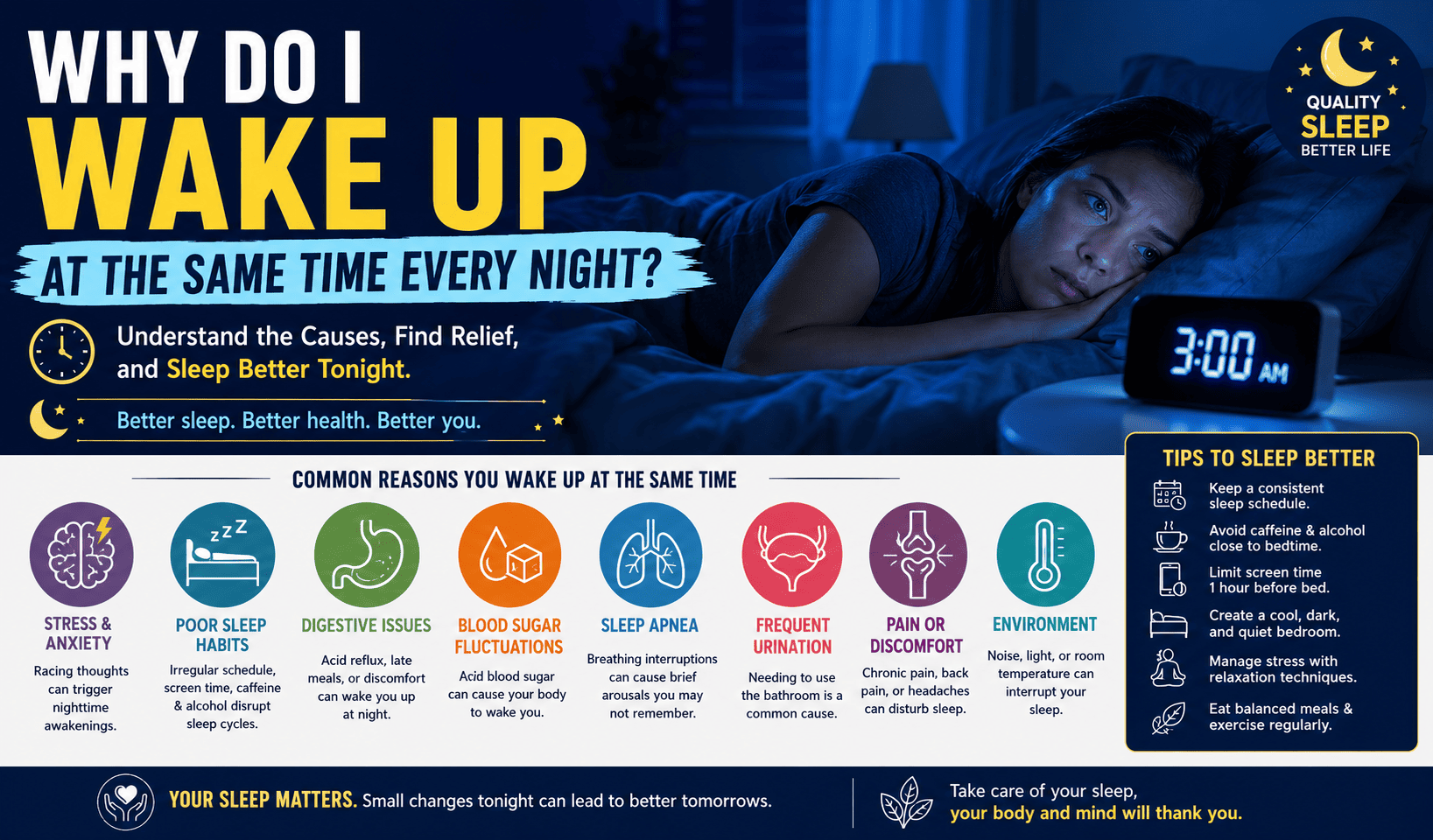
If you find yourself asking, “Why Do I Wake Up at the Same Time Every Night?”, you’re not alone. Many adults across the United States experience this frustrating sleep pattern. Whether it’s 2:00 a.m., 3:00 a.m., or 4:00 a.m., waking up at the exact same time night after night can leave you feeling exhausted, anxious, and wondering if something is wrong.
The good news is that this habit is often explainable. Your body’s internal clock, stress levels, lifestyle habits, medical conditions, and even your bedroom environment can all influence when you wake during the night.
In this comprehensive guide, you’ll learn why this happens, what it may mean for your health, practical strategies to improve your sleep, and when it’s time to seek medical advice.
Why Do I Wake Up at the Same Time Every Night?
The primary answer to Why Do I Wake Up at the Same Time Every Night? is that your body follows a highly organized internal timing system known as the circadian rhythm. Throughout the night, your brain cycles through different stages of sleep approximately every 90 to 120 minutes. During lighter stages of sleep, you’re naturally more likely to wake briefly.
Most people experience several awakenings each night but quickly fall back asleep without remembering them. However, if stress, discomfort, illness, or environmental factors interfere, those brief awakenings become fully conscious.
Repeated awakenings at nearly the same time usually indicate that one or more triggers consistently occur during that stage of your sleep cycle.
Also Read : What causes frequent waking during sleep?
Understanding Your Sleep Cycle
Healthy sleep isn’t a single uninterrupted state. Instead, your body repeatedly cycles through four main stages.
Light sleep helps your body begin relaxing.
Deep sleep allows physical repair, immune function, and growth hormone release.
REM sleep supports memory, learning, creativity, and emotional regulation.
These cycles repeat multiple times each night.
As morning approaches, REM sleep becomes longer while deep sleep becomes shorter. This is one reason many people wake around 3 or 4 a.m.
Your Circadian Rhythm May Be Responsible
Your circadian rhythm acts as your body’s internal clock.
It regulates:
- Sleep and wake times
- Hormone production
- Body temperature
- Digestion
- Energy levels
If your circadian rhythm becomes disrupted, you may consistently wake at the same time every night.
Common causes include:
- Irregular bedtime schedules
- Shift work
- Jet lag
- Late-night screen exposure
- Excessive artificial lighting
- Traveling across time zones
Also Read : How much sleep do adults over 40 need?
Stress and Anxiety Are Among the Most Common Causes
Mental health plays an enormous role in sleep quality.
When you’re under stress, your brain remains partially alert even while sleeping. Elevated cortisol—the body’s stress hormone—can trigger awakenings during the night.
People experiencing anxiety often notice:
Difficulty falling asleep.
Waking around 2–4 a.m.
Racing thoughts.
Difficulty returning to sleep.
Morning fatigue.
Financial concerns, work pressure, family issues, health worries, and major life changes commonly contribute to nighttime awakenings.
Depression Can Cause Early Morning Awakening
Depression doesn’t always make people sleep more.
Many individuals experience:
Waking much earlier than intended.
Feeling unable to return to sleep.
Low morning energy.
Persistent fatigue.
Loss of motivation.
Early morning awakening is considered one of the classic symptoms associated with depression.
Also Read : How to reset sleep schedule naturally?
Alcohol Can Interrupt Your Sleep
Many people believe alcohol helps them sleep.
While it may help you fall asleep faster, alcohol often disrupts the second half of the night.
As alcohol leaves your bloodstream, it increases:
Brain activity.
Frequent awakenings.
Reduced REM sleep.
Night sweats.
Restlessness.
This often leads to waking around the same time each night.
Caffeine May Still Affect You
Caffeine has a surprisingly long half-life.
Even afternoon coffee may still stimulate your nervous system at bedtime.
Sources include:
Coffee.
Energy drinks.
Tea.
Chocolate.
Pre-workout supplements.
Certain medications.
People sensitive to caffeine may experience lighter sleep and repeated nighttime awakenings.
Also Read : Can overthinking cause insomnia?
Blood Sugar Fluctuations
Blood sugar changes can disturb sleep.
Low blood sugar during the night may trigger:
Sweating.
Rapid heartbeat.
Hunger.
Shaking.
Sudden awakening.
This is more common in people with diabetes but can occasionally occur in healthy adults who skip dinner or consume excessive sugar before bedtime.
Sleep Apnea
Sleep apnea is one of the leading medical causes of waking repeatedly.
During sleep apnea:
Breathing temporarily stops.
Oxygen levels fall.
The brain briefly wakes you to restart breathing.
Symptoms include:
Loud snoring.
Morning headaches.
Dry mouth.
Daytime sleepiness.
Poor concentration.
Many people don’t realize they’re waking dozens of times every night because each awakening lasts only seconds.
Also Read : What causes sudden insomnia in adults?
Gastroesophageal Reflux (GERD)
Acid reflux frequently becomes worse while lying flat.
Nighttime reflux may cause:
Burning chest discomfort.
Coughing.
Sour taste.
Throat irritation.
Repeated awakening around the same time.
Eating large meals close to bedtime often makes symptoms worse.
Also Read : How to improve deep sleep naturally?
Frequent Urination (Nocturia)
Many adults wake because they need to urinate.
Potential causes include:
Excess fluids before bed.
Alcohol.
Diabetes.
Enlarged prostate.
Bladder disorders.
Pregnancy.
Certain medications.
If this occurs regularly, discussing it with a healthcare provider is worthwhile.
Also Read : Can sleeping with the TV on affect sleep?
Chronic Pain
Pain can interrupt sleep at predictable times.
Conditions include:
Arthritis.
Back pain.
Fibromyalgia.
Migraines.
Joint injuries.
As your body changes position during sleep, painful joints or muscles may wake you repeatedly.
Temperature Changes During the Night
Your core body temperature naturally changes overnight.
If your room becomes too warm or too cold, your body may awaken to regulate temperature.
Ideal bedroom temperature generally falls between 60°F and 67°F (15.5°C to 19.5°C).
Also Read : Can caffeine affect sleep even hours later?
Noise and Light Disturbances
Even sounds you barely notice can interrupt sleep.
Common examples include:
Garbage trucks.
Early morning traffic.
Pets.
Neighbors.
Snoring partners.
Phone notifications.
Outdoor lights.
Televisions left on.
Repeated exposure trains your brain to wake at those times.
Hormonal Changes
Hormones strongly influence sleep.
Women may experience nighttime awakenings during:
Pregnancy.
Menopause.
Perimenopause.
Menstrual cycle changes.
Night sweats and hot flashes are particularly common during menopause.
Also Read : How to sleep better without medication?
Aging Naturally Changes Sleep
As people age:
Deep sleep decreases.
Sleep becomes lighter.
Awakenings become more frequent.
Older adults also tend to go to bed earlier and wake earlier.
This change is considered a normal part of aging, although excessive daytime sleepiness should still be evaluated.
Could Your Medications Be Causing It?
Certain medications may interfere with sleep.
Examples include:
Antidepressants.
Steroids.
Decongestants.
Blood pressure medications.
ADHD medications.
Some asthma medications.
Never stop prescribed medications without consulting your healthcare provider.
Also Read : What are the signs of poor sleep quality?
Why Do I Wake Up Around 3 AM Every Night?
Many people specifically wake around 3 a.m.
Several biological factors contribute:
REM sleep becomes longer during this portion of the night.
Stress hormones begin gradually increasing.
Body temperature starts rising.
Light sleep becomes more common.
If anxiety is also present, these natural changes make awakening even more likely.
Is It Normal to Wake Up During the Night?
Yes.
Healthy adults commonly wake several times every night.
Most awakenings last only a few seconds and aren’t remembered.
The concern arises when:
You remain awake for over 20–30 minutes.
The problem occurs multiple nights per week.
You feel exhausted during the day.
Your quality of life suffers.
Also Read : What causes restless sleep every night?
How to Stop Waking Up at the Same Time Every Night?
Improving sleep usually requires addressing both your sleep habits and any underlying medical or psychological factors.
Begin by maintaining a consistent bedtime and wake-up schedule every day, including weekends. This helps strengthen your circadian rhythm and reduces unpredictable awakenings over time.
Limit caffeine after early afternoon because its stimulating effects can linger for many hours. If you’re sensitive to caffeine, consider stopping even earlier in the day.
Avoid alcohol close to bedtime. Although it may initially make you sleepy, it often fragments sleep later in the night and reduces restorative REM sleep.
Reduce exposure to phones, tablets, computers, and televisions during the hour before bed. Blue light suppresses melatonin production, making it harder for your brain to maintain healthy sleep cycles.
Keep your bedroom cool, dark, and quiet. Blackout curtains, white noise machines, comfortable bedding, and a supportive mattress can all improve sleep continuity.
Exercise regularly during the day, but avoid intense workouts immediately before bedtime because they temporarily increase body temperature and alertness.
Eat balanced evening meals and avoid heavy, spicy, or acidic foods shortly before going to sleep.
If you wake during the night, avoid checking the clock repeatedly. Watching the time often increases stress and reinforces the habit of waking at the same hour.
Instead, practice slow breathing, progressive muscle relaxation, or mindfulness techniques until sleep naturally returns.
Should You Stay in Bed If You Can’t Sleep?
If you’ve been awake for roughly 20 minutes and don’t feel sleepy, experts often recommend getting out of bed.
Move to another quiet room.
Read a relaxing book.
Practice meditation.
Listen to calming music.
Avoid bright lights and electronic screens.
Return to bed only when you begin feeling sleepy again.
This approach helps your brain associate the bed with sleep rather than frustration.
Also Read : Why do I keep waking up in the middle of the night?
When Should You See a Doctor?
Occasional nighttime awakenings are usually harmless.
However, medical evaluation is recommended if you experience persistent symptoms such as waking at the same time every night for several weeks despite improving your sleep habits, loud snoring or observed pauses in breathing, excessive daytime sleepiness, severe insomnia that interferes with work or daily life, unexplained weight loss, persistent pain, depression, anxiety, or other symptoms that suggest an underlying health condition.
A healthcare provider may recommend blood tests, a sleep study, medication review, or evaluation for conditions such as sleep apnea, thyroid disease, diabetes, or mental health disorders.
Also Read : Why do I wake up at 3 AM every night?
Can Sleep Tracking Devices Help?
Modern wearable devices and smartphone apps can identify patterns in:
Sleep duration.
Sleep timing.
Nighttime awakenings.
Heart rate.
Breathing changes.
While these tools are not medical diagnostic devices, they may help identify recurring sleep disturbances that can be discussed with your healthcare provider.
Also Read : Can gut health affect sleep?
Final Thoughts
If you’ve been wondering, “Why Do I Wake Up at the Same Time Every Night?”, the answer often lies in a combination of your body’s natural sleep cycles, circadian rhythm, stress levels, lifestyle habits, and underlying health conditions. While occasional nighttime awakenings are perfectly normal, consistently waking at the same hour may signal that something is disrupting your sleep.
Fortunately, improving sleep hygiene, managing stress, limiting caffeine and alcohol, maintaining a consistent sleep schedule, and addressing any medical conditions can significantly reduce nighttime awakenings. If the problem persists or is accompanied by symptoms such as loud snoring, breathing pauses, chronic fatigue, or mood changes, seeking professional medical evaluation is an important next step.
Quality sleep is essential for physical health, mental well-being, immune function, and daily performance. Understanding what causes these repeated awakenings is the first step toward enjoying deeper, more restorative sleep.

Quality sleep helps your body recover overnight.
Frequently Asked Questions (FAQs)
1. Why do I wake up at the same time every night even when I’m tired?
This often happens because your brain reaches a lighter stage of sleep at roughly the same point each night. Stress, anxiety, sleep apnea, medications, alcohol, or environmental disturbances may make these natural awakenings more noticeable.
2. Is waking up at 3 a.m. every night a sign of a health problem?
Not necessarily. Many people naturally wake during lighter sleep cycles around this time. However, if it happens frequently and causes daytime fatigue or is accompanied by symptoms like snoring, breathing pauses, or persistent insomnia, it may indicate an underlying condition that deserves medical evaluation.
3. Can stress make me wake up at the same time every night?
Yes. Chronic stress and anxiety increase cortisol levels, making the brain more alert during sleep. This can lead to repeated awakenings at a predictable time each night.
4. Does sleep apnea cause waking at the same time every night?
Yes. Sleep apnea repeatedly interrupts breathing during sleep, causing brief awakenings throughout the night. Although many people do not remember these episodes, they often experience daytime sleepiness, loud snoring, and poor-quality sleep.
5. Should I be worried if I wake up every night but fall back asleep quickly?
Brief awakenings are considered normal. If you fall asleep again within a few minutes and feel well-rested during the day, there is usually no cause for concern.
6. What is the best way to stop waking up at the same time every night?
Maintain a consistent sleep schedule, reduce caffeine and alcohol intake, manage stress, create a cool and dark sleeping environment, avoid screens before bed, and consult a healthcare provider if the problem persists for several weeks or affects your daily life.
Medical Disclaimer: This article is for educational purposes only and does not replace professional medical advice, diagnosis, or treatment. Always consult a qualified healthcare provider before making significant changes to your diet, exercise routine, medications, or health management plan.
Medically reviewed information sourced from trusted health organizations.
References
- National Institutes of Health (NIH). Sleep and Sleep Disorders.
https://www.nhlbi.nih.gov/health/sleep - Sleep Foundation. Sleep Health Resources.
https://www.sleepfoundation.org/ - Centers for Disease Control and Prevention (CDC). Sleep and Sleep Disorders.
https://www.cdc.gov/sleep/ - Mayo Clinic. Sleep Disorders Overview.
https://www.mayoclinic.org/
Reviewed by: Dzarro Editorial Team
Fact-checked using trusted medical and scientific sources.

Sandip Choudhary is a Health & Wellness Researcher and Content Creator specializing in sleep, digestive health, preventive wellness, and evidence-based health education. He has been creating online content and researching health-related topics for several years, focusing on translating complex medical information into practical guidance for everyday readers.
With a strong background in SEO and content strategy, Sandip ensures that every article is optimized for both search engines and real users. His goal is to provide reliable, clear, and helpful information that supports healthier living.
Disclaimer: The content published is for informational purposes only and is not a substitute for professional medical advice.