
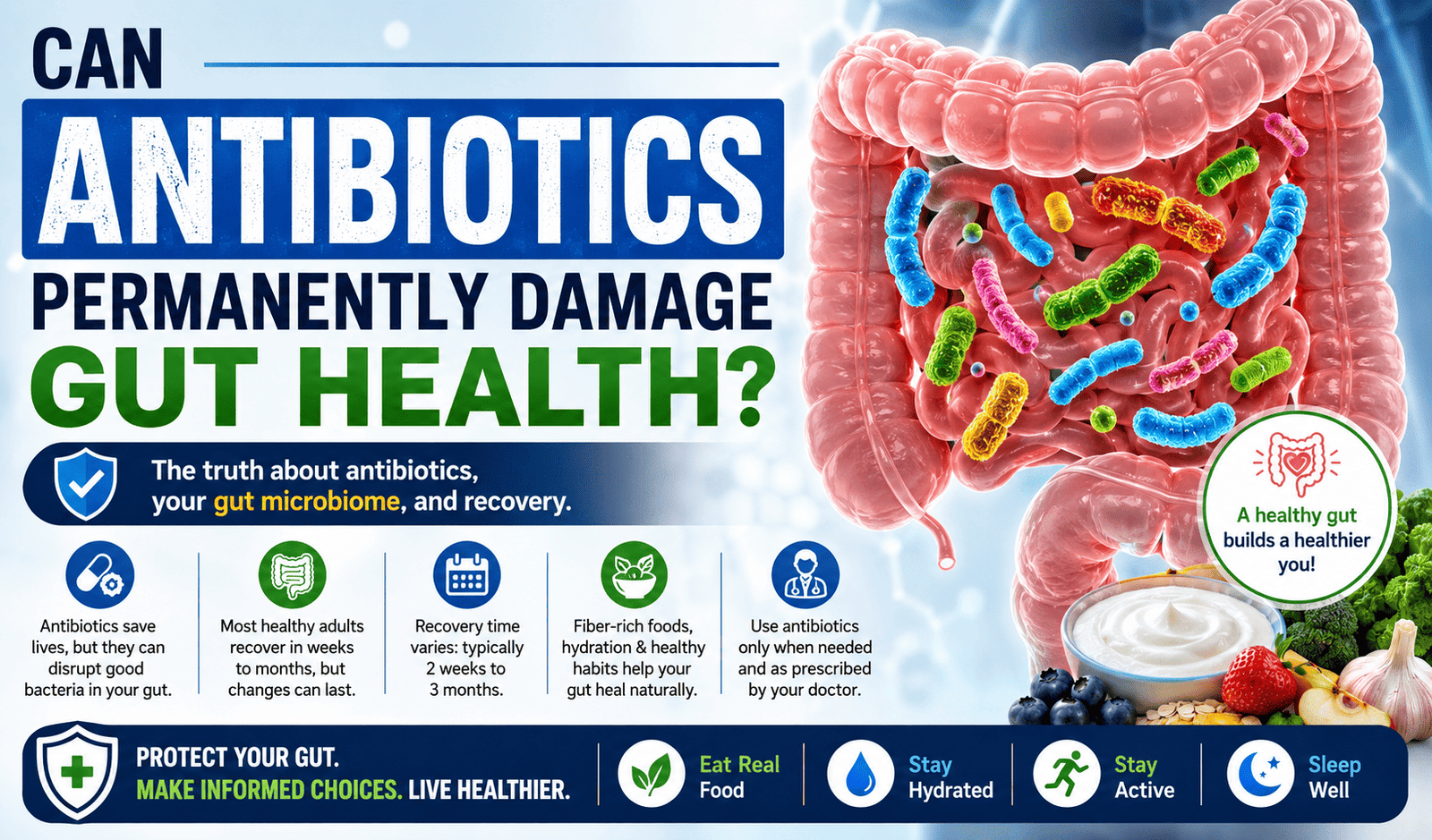
No—antibiotics do not usually permanently damage gut health. They can significantly disrupt the gut microbiome for weeks or even months, but most healthy adults recover much of their beneficial bacteria over time. Some bacterial species may never return to exactly the same levels, yet this does not necessarily mean your gut is permanently unhealthy.
Antibiotics remain one of the most important medical treatments ever developed. They save lives by eliminating harmful bacteria responsible for serious infections, but they also affect the beneficial microbes living in your digestive tract. Understanding how this process works helps you protect your gut while still using antibiotics responsibly when prescribed.
What Is the Gut Microbiome?

The gut microbiome is a vast ecosystem of trillions of microorganisms that live primarily in your large intestine. These bacteria, fungi, and viruses work together to digest food, produce essential nutrients, strengthen the immune system, and protect your body from harmful pathogens.
A healthy microbiome is incredibly diverse. The greater the variety of beneficial bacteria, the better your digestive system is generally able to adapt to changes in diet, illness, and environmental stress. Researchers now recognize the gut microbiome as one of the body’s most important contributors to overall wellness, influencing everything from metabolism to immune regulation.
Also Read : Does sleep impact gut bacteria?
How Do Antibiotics Affect Gut Health?

Antibiotics are designed to kill bacteria causing infections, but they cannot perfectly distinguish harmful bacteria from beneficial ones. As a result, they often reduce the population of healthy microbes alongside the disease-causing bacteria.
This temporary imbalance is called gut dysbiosis. During dysbiosis, beneficial bacteria decrease while other microorganisms may temporarily become more dominant. This shift explains why many people experience digestive symptoms such as bloating, diarrhea, or stomach discomfort during antibiotic treatment.
Broad-spectrum antibiotics typically have a greater impact because they target many different bacterial species, while narrow-spectrum antibiotics tend to be more selective.
Also Read : How does stress affect gut health?
Is the Damage Permanent?

This is the question most people ask, and the scientific answer is reassuring.
For most healthy adults, antibiotics cause long-lasting changes rather than permanent destruction. Studies show that the gut microbiome is remarkably resilient and often regains much of its diversity within several weeks to a few months after treatment ends.
However, recovery is not always identical. Certain bacterial species may remain reduced for extended periods, especially after repeated antibiotic use. The overall function of the microbiome often improves even if the exact bacterial composition changes. In other words, your gut can recover its health without becoming an exact copy of its previous microbial community.
Also Read : Can sugar damage your gut microbiome?
How Long Does Gut Recovery Take?

Recovery varies from person to person. Some people notice digestive improvement within a few weeks, while others require several months for their microbiome to stabilize. Factors such as age, diet, overall health, and the type of antibiotic all influence the recovery process.
Typical recovery timeline
First week: Significant reduction in beneficial bacteria
2–6 weeks: Digestive symptoms often begin improving
2–3 months: Much of the microbiome diversity returns in healthy adults
6 months or longer: Some bacterial species may still differ from baseline
While these timelines are averages, maintaining healthy lifestyle habits can support a smoother recovery.
Also Read : What drinks are best for gut health?
Common Signs of Gut Dysbiosis

When beneficial bacteria decline, the digestive system often reacts quickly. Temporary symptoms are common and usually resolve after antibiotics are finished.
Common signs include diarrhea, bloating, excessive gas, abdominal cramping, mild nausea, and changes in bowel habits. These symptoms typically improve as beneficial bacteria begin to repopulate the gut.
If diarrhea becomes severe, contains blood, or is accompanied by fever or dehydration, medical evaluation is important because it may indicate a more serious intestinal infection rather than ordinary antibiotic-related discomfort.
Also Read : Why is gut microbiome important for overall health?
Who Is Most Vulnerable?

Although most healthy adults recover well, certain groups are more likely to experience prolonged microbiome disruption.
Older adults naturally have lower microbial diversity, making recovery slower. Infants and young children have developing microbiomes that may be more sensitive to repeated antibiotic exposure. People living with inflammatory bowel disease or weakened immune systems may also experience greater difficulty restoring microbial balance.
Repeated antibiotic courses within a short period appear to have the strongest influence on long-term microbial changes, highlighting the importance of using antibiotics only when medically necessary.
Also Read : Can gut health affect weight loss?
Do Probiotics Really Help?

Probiotics are among the most popular supplements for digestive health, but their benefits are often misunderstood. Research suggests that specific probiotic strains may reduce the risk of antibiotic-associated diarrhea, especially in higher-risk individuals.
However, probiotics do not reliably restore your microbiome to its original state. Different strains perform different functions, and no single probiotic works for everyone. Rather than viewing probiotics as a cure, experts increasingly recommend considering them as one possible tool alongside a healthy diet.
Choosing a probiotic should ideally be based on medical advice rather than marketing claims.
Also Read : Do prebiotics really improve digestion?
Best Foods to Restore Gut Health Naturally

Your daily diet has a greater influence on gut recovery than any single supplement. Beneficial bacteria thrive on dietary fiber, particularly the prebiotic fibers found in fruits, vegetables, legumes, and whole grains.
Foods such as oats, lentils, beans, berries, apples, broccoli, onions, garlic, and leafy greens provide nourishment for healthy microbes. As these bacteria digest fiber, they produce short-chain fatty acids that help support the intestinal lining and immune system.
Eating a wide variety of plant foods also encourages greater microbial diversity, which is one of the strongest indicators of a resilient gut microbiome.
Also Read : What are the best probiotics for gut health?
Foods to Limit During Recovery

While your gut is recovering, limiting heavily processed foods may help create a healthier environment for beneficial bacteria. Diets high in refined sugar and low in fiber tend to promote less diverse microbial communities.
This doesn’t mean you need a restrictive eating plan. The goal is consistency rather than perfection. Prioritizing whole foods, staying hydrated, and including plenty of colorful produce is generally more beneficial than eliminating occasional treats.
Also Read : How long does it take to restore gut health?
Should You Avoid Antibiotics?

The answer is no. Avoiding necessary antibiotics can be far more dangerous than the temporary disruption they cause. Untreated bacterial infections may lead to severe complications, hospitalization, or life-threatening illness.
The healthiest approach is responsible antibiotic use. Take antibiotics only when prescribed, follow the dosage exactly as directed, complete the treatment unless instructed otherwise by your healthcare provider, and support your recovery with nutritious, fiber-rich foods afterward.
Protecting your gut does not mean fearing antibiotics—it means using them wisely.
Also Read : Is bloating a sign of poor gut health?
Conclusion
Can antibiotics permanently damage gut health? For the vast majority of healthy adults, the answer is no. Antibiotics temporarily disrupt the gut microbiome, and some bacterial species may change for months, but your digestive ecosystem is remarkably resilient.
Long-term gut wellness depends more on consistent healthy habits than on returning to an identical bacterial profile. Eating plenty of fiber, enjoying fermented foods, exercising regularly, sleeping well, and using antibiotics only when medically necessary are the most effective ways to support a strong and diverse microbiome for years to come.
Also Read : Can poor gut health cause anxiety and depression?
Frequently Asked Questions (FAQ)
1. Can antibiotics permanently damage gut health?
No. Most healthy adults recover much of their gut microbiome within a few months, although some bacterial species may remain altered.
2. How long does gut recovery usually take?
Recovery commonly takes between two weeks and three months, depending on individual health and the antibiotic used.
3. Which antibiotics affect the gut the most?
Broad-spectrum antibiotics generally have the greatest impact because they target many different bacterial species.
4. Can probiotics completely restore gut bacteria?
No. Probiotics may reduce diarrhea in some people but do not fully restore the original microbiome.
5. What is the best food for gut recovery?
High-fiber foods such as oats, beans, berries, apples, broccoli, and leafy greens are among the best choices.
6. Is yogurt enough after antibiotics?
Yogurt is beneficial, but a diverse, fiber-rich diet is more important than any single food.
7. Why do antibiotics cause diarrhea?
They reduce beneficial bacteria that help maintain digestive balance, allowing temporary microbial imbalance.
8. Can repeated antibiotics weaken the microbiome?
Yes. Multiple antibiotic courses may reduce microbial diversity and slow recovery.
9. Should I stop antibiotics if I develop bloating?
No. Continue your medication unless your healthcare provider tells you otherwise, especially if symptoms are mild.
10. When should I see a doctor?
Seek medical care immediately if you experience severe diarrhea, bloody stools, high fever, or signs of dehydration after taking antibiotics.

Yogurt with live cultures can support a healthy gut.
Medical Disclaimer: This article is for educational and informational purposes only and is not a substitute for professional medical advice, diagnosis, or treatment. Gut microbiome research is rapidly evolving, and individual health needs can differ. Speak with a qualified healthcare professional about persistent symptoms, medical conditions, medications, or supplements.
Medically reviewed information sourced from trusted health organizations.
Reviewed by: Dzarro Editorial Team
Fact-checked using trusted medical and scientific sources.

Sandip Choudhary is a Health & Wellness Researcher and Content Creator specializing in sleep, digestive health, preventive wellness, and evidence-based health education. He has been creating online content and researching health-related topics for several years, focusing on translating complex medical information into practical guidance for everyday readers.
With a strong background in SEO and content strategy, Sandip ensures that every article is optimized for both search engines and real users. His goal is to provide reliable, clear, and helpful information that supports healthier living.
Disclaimer: The content published is for informational purposes only and is not a substitute for professional medical advice.