
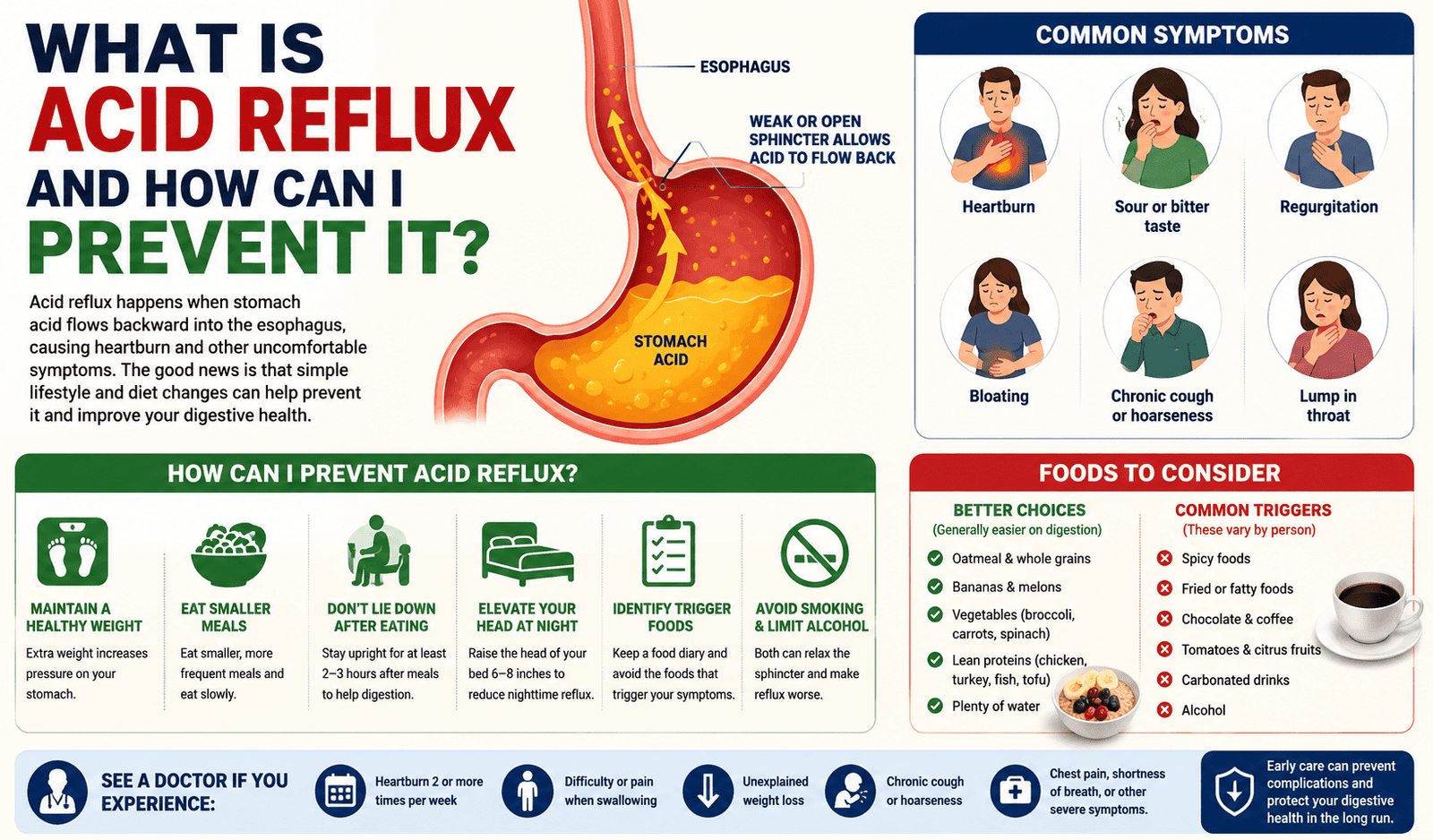
What is acid reflux and how can I prevent it? Acid reflux is a digestive condition that occurs when stomach acid flows backward into the esophagus, causing heartburn, a sour taste in the mouth, and chest discomfort. You can prevent acid reflux by maintaining a healthy weight, eating smaller meals, avoiding lying down for 2–3 hours after eating, identifying trigger foods, sleeping with your head elevated, and avoiding smoking. Frequent symptoms occurring two or more times per week may indicate GERD and should be evaluated by a healthcare professional.
Introduction
Acid reflux is one of the most common digestive problems affecting adults in the United States. Millions of people experience occasional heartburn after eating spicy foods, fatty meals, or eating too close to bedtime. While an occasional episode is usually harmless, frequent acid reflux can interfere with sleep, reduce quality of life, and eventually damage the lining of the esophagus if left untreated.
Understanding what acid reflux is and how to prevent it is essential for maintaining long-term digestive health. The good news is that many cases can be managed successfully through simple lifestyle and dietary changes without needing long-term medication. Making healthier daily habits can significantly reduce symptoms and improve overall well-being.
Also Read : Why Do I Feel Full So Quickly?
What Is Acid Reflux?
Acid reflux, also known as gastroesophageal reflux, happens when stomach acid flows backward into the esophagus instead of remaining in the stomach. The esophagus is the tube that carries food from your mouth to your stomach. At the bottom of the esophagus is a circular muscle called the lower esophageal sphincter, which normally opens to let food enter the stomach and then closes tightly afterward.
When this muscle becomes weak or relaxes at the wrong time, acidic stomach contents move upward into the esophagus. Because the esophagus does not have the same protective lining as the stomach, the acid causes irritation and inflammation, resulting in the burning sensation known as heartburn.
Occasional acid reflux is common and can happen after large meals or certain foods. However, when symptoms become frequent or persistent, the condition may develop into gastroesophageal reflux disease, commonly called GERD.
Also Read : Can Dehydration Cause Constipation?
How Does Acid Reflux Happen?
During normal digestion, food travels down the esophagus into the stomach, and the lower esophageal sphincter closes to prevent food and acid from coming back up. In acid reflux, this protective valve does not function properly. As a result, stomach acid escapes into the esophagus, where it irritates sensitive tissues and creates uncomfortable symptoms.
Gravity also plays an important role in digestion. This is why acid reflux often becomes worse when lying down shortly after eating or during sleep, as stomach contents can more easily travel upward.
Also Read : How Much Water Should I Drink for Healthy Digestion?
Common Symptoms of Acid Reflux
The most common symptom is heartburn, which feels like a burning sensation behind the breastbone. It often occurs after eating and may worsen when bending over or lying down. Many people also experience a sour or bitter taste in the mouth caused by acid reaching the throat.
Other symptoms include regurgitation of food or liquid, bloating, frequent burping, nausea, mild chest discomfort, chronic coughing, hoarseness, and the feeling of a lump in the throat. Some individuals may experience nighttime symptoms that interrupt sleep and leave them with a sore throat in the morning.
Although acid reflux can sometimes resemble heart-related chest pain, sudden or severe chest pain should always be treated as a medical emergency until evaluated by a healthcare professional.
Also Read : What Causes Chronic Diarrhea?
What Causes Acid Reflux?
Acid reflux usually develops because of a combination of lifestyle habits, dietary choices, and physical conditions rather than one single cause.
Excess body weight is one of the biggest risk factors because it increases pressure inside the abdomen, making it easier for stomach acid to move upward. Eating large meals stretches the stomach and increases the likelihood of reflux. Eating late at night or lying down soon after dinner also contributes to symptoms because digestion is less effective while lying flat.
Smoking weakens the lower esophageal sphincter and reduces its ability to keep stomach acid where it belongs. Alcohol may also relax this muscle and worsen symptoms in susceptible individuals.
Certain foods trigger acid reflux in some people. These commonly include spicy foods, fried foods, chocolate, coffee, tomatoes, citrus fruits, carbonated drinks, and high-fat meals. However, triggers vary from person to person, so identifying your individual trigger foods is often more effective than eliminating entire food groups.
Pregnancy, hiatal hernia, and some medications can also increase the risk of acid reflux by affecting the muscles and pressure around the stomach.
Also Read : Why Am I Constipated Even When I Eat Fiber?
Acid Reflux vs. GERD
Many people confuse acid reflux with GERD, but they are not exactly the same condition. Acid reflux refers to the occasional backward flow of stomach acid into the esophagus. GERD is the chronic form of acid reflux in which symptoms occur regularly and may cause inflammation or damage to the esophagus over time.
If you experience heartburn only occasionally after certain meals, you likely have acid reflux. If symptoms occur several times each week, wake you during the night, or continue despite lifestyle changes, GERD may be the underlying cause. A healthcare provider can determine the correct diagnosis and recommend appropriate treatment.
Also Read : Can Stress Cause Digestive Problems?
How Can I Prevent Acid Reflux Naturally?
Preventing acid reflux begins with improving daily habits that support healthy digestion and reduce pressure on the stomach.
Maintaining a healthy weight is one of the most effective prevention strategies. Even losing a modest amount of weight can reduce abdominal pressure and decrease the frequency of reflux episodes.
Eating smaller, more frequent meals instead of oversized portions also helps. Large meals stretch the stomach and make acid reflux more likely. Eating slowly and chewing food thoroughly gives your digestive system time to work efficiently while reducing overeating.
Avoid lying down for at least two to three hours after eating. Staying upright allows gravity to keep stomach contents in the stomach and reduces the chance of acid flowing backward. This habit is especially important after dinner.
Sleeping with your upper body elevated can reduce nighttime acid reflux. Raising the head of your bed or using a wedge pillow helps prevent stomach acid from reaching the esophagus while sleeping.
Keeping a food diary is another practical strategy. Recording what you eat and when symptoms occur can help identify personal trigger foods. Since everyone responds differently, a personalized approach is more effective than following overly restrictive diets.
Quitting smoking and limiting alcohol consumption can further improve digestive health and reduce reflux episodes by supporting proper function of the lower esophageal sphincter.
Also Read : What Foods Are Best for Gut Health?
Foods That May Help Reduce Acid Reflux
A balanced diet rich in whole, minimally processed foods can help many people manage acid reflux naturally. High-fiber foods promote healthy digestion and may reduce symptoms over time.
Oatmeal is an excellent breakfast option because it is filling and gentle on the stomach. Vegetables such as broccoli, carrots, spinach, green beans, and sweet potatoes are generally well tolerated and provide important vitamins and fiber. Fruits like bananas and melons are less acidic than citrus fruits and are often suitable choices for people with reflux.
Lean protein sources including grilled chicken, turkey, fish, tofu, and beans support nutrition without adding excessive saturated fat. Drinking adequate water throughout the day also supports healthy digestion, although water alone is not a cure for acid reflux.
Also Read : How Can I Improve My Gut Health Naturally?
Foods and Habits That Often Trigger Heartburn
Certain foods and habits are more likely to trigger acid reflux in susceptible individuals. Fried foods and fatty fast food slow digestion and increase stomach pressure. Spicy meals may irritate the esophagus and worsen heartburn. Coffee and chocolate can relax the lower esophageal sphincter in some people, while carbonated beverages increase stomach pressure through gas buildup.
Tomatoes, citrus fruits, and acidic juices may also worsen symptoms for sensitive individuals. Late-night eating, overeating, smoking, and excessive alcohol consumption are lifestyle habits strongly associated with recurring heartburn.
Rather than eliminating every potential trigger, focus on identifying which foods consistently cause symptoms in your own body.
Also Read : What Causes Bloating Every Day?
When Should You See a Doctor?
Occasional acid reflux is usually manageable at home, but persistent symptoms deserve medical evaluation. You should schedule an appointment with a healthcare provider if heartburn occurs two or more times each week, symptoms continue despite lifestyle changes, swallowing becomes difficult or painful, you experience unexplained weight loss, or you develop a chronic cough or persistent hoarseness.
Seek emergency medical care immediately if chest pain is severe or accompanied by shortness of breath, dizziness, sweating, or pain spreading to the arm or jaw, as these symptoms may indicate a heart attack rather than acid reflux.
Also Read : Why Does My Stomach Hurt After Eating?
Can Acid Reflux Be Cured?
For many people, acid reflux can be successfully controlled through lifestyle modifications. Maintaining a healthy weight, eating balanced meals, avoiding late-night eating, and identifying trigger foods often reduce symptoms dramatically. Some individuals may need over-the-counter or prescription medications for better symptom control, while severe GERD may require specialized medical treatment or surgery.
The key is early management. Addressing symptoms before they become chronic helps protect the esophagus and improves long-term digestive health.
Also Read : Why do I feel tired after eating?
Conclusion
Acid reflux is a common but manageable digestive condition that occurs when stomach acid flows backward into the esophagus. The condition commonly causes heartburn, regurgitation, and chest discomfort, but it can often be prevented through healthier daily habits. Eating smaller meals, maintaining a healthy weight, avoiding lying down after eating, sleeping with your head elevated, and reducing personal trigger foods are among the most effective natural prevention strategies. If symptoms become frequent or persistent, seeking medical evaluation is important to rule out GERD and prevent long-term complications.
Also Read : Why do I feel full after eating small amounts?
Frequently Asked Questions (FAQs)
1. What is acid reflux in simple words?
Acid reflux is a condition where stomach acid flows back into the esophagus, causing heartburn and a burning feeling in the chest.
2. Is acid reflux the same as heartburn?
No. Acid reflux is the condition, while heartburn is the most common symptom caused by stomach acid irritating the esophagus.
3. What is the main cause of acid reflux?
The most common causes include a weakened lower esophageal sphincter, overeating, obesity, late-night meals, smoking, and certain trigger foods.
4. How can I prevent acid reflux naturally?
You can reduce acid reflux by eating smaller meals, staying upright after eating, maintaining a healthy weight, avoiding trigger foods, and sleeping with your head elevated.
5. Which foods are good for acid reflux?
Oatmeal, bananas, melons, leafy vegetables, broccoli, carrots, sweet potatoes, and lean proteins are generally good choices for people with acid reflux.
6. What foods should I avoid with acid reflux?
Many people benefit from limiting spicy foods, fried foods, chocolate, coffee, tomatoes, citrus fruits, carbonated drinks, and alcohol if these trigger symptoms.
7. Can drinking water stop acid reflux?
Water may help wash acid from the esophagus and support digestion, but it is not a cure. Long-term symptom control depends on healthy lifestyle habits.
8. Is acid reflux worse at night?
Yes. Acid reflux often becomes worse at night because lying flat makes it easier for stomach acid to flow into the esophagus.
9. When does acid reflux become GERD?
If symptoms occur two or more times per week or cause ongoing irritation and inflammation, the condition may be diagnosed as GERD.
10. Can acid reflux go away without medication?
Yes. Many people successfully manage mild acid reflux through weight management, dietary improvements, meal timing, and avoiding personal trigger foods without long-term medication.

Drinking more water may help relieve constipation naturally.
Medical Disclaimer: This article is intended for general health education and is not a substitute for personalized medical advice, diagnosis, or treatment. Fluid and dietary needs differ from person to person. If you have persistent constipation, significant symptoms, a chronic medical condition, or concerns about your hydration needs, consult a qualified healthcare professional.
Medically reviewed information sourced from trusted health organizations.
Reviewed by: Dzarro Editorial Team
Fact-checked using trusted medical and scientific sources.

Sandip Choudhary is a Health & Wellness Researcher and Content Creator specializing in sleep, digestive health, preventive wellness, and evidence-based health education. He has been creating online content and researching health-related topics for several years, focusing on translating complex medical information into practical guidance for everyday readers.
With a strong background in SEO and content strategy, Sandip ensures that every article is optimized for both search engines and real users. His goal is to provide reliable, clear, and helpful information that supports healthier living.
Disclaimer: The content published is for informational purposes only and is not a substitute for professional medical advice.