
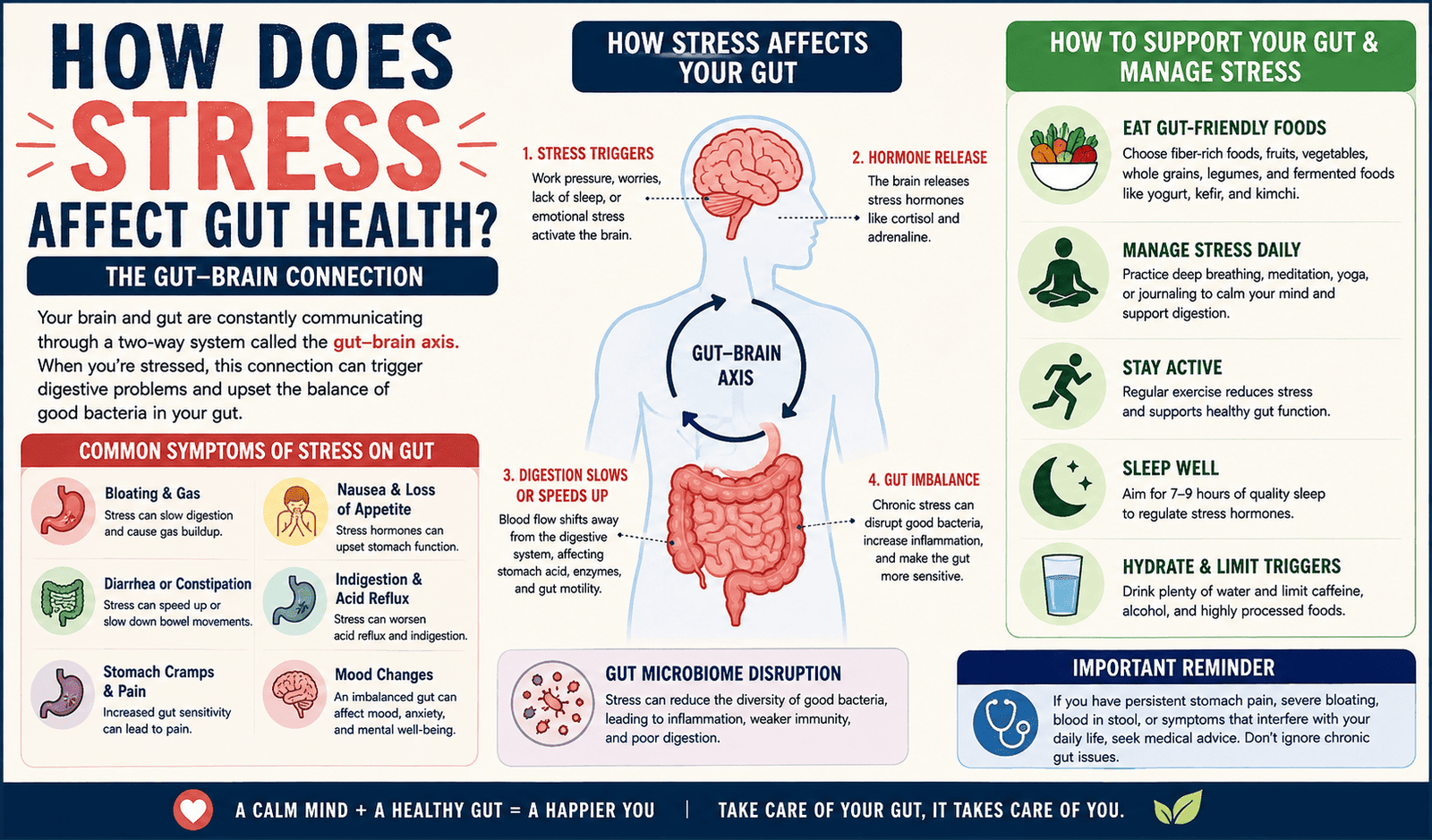
How does stress affect gut health? Stress affects gut health by disrupting the gut-brain axis, the communication network between your brain and digestive system. When you experience stress, your body releases cortisol and adrenaline, which can slow or speed up digestion, reduce beneficial gut bacteria, increase inflammation, and trigger symptoms such as bloating, constipation, diarrhea, nausea, and stomach pain. Chronic stress may also worsen digestive conditions like irritable bowel syndrome (IBS).
Introduction
Stress is often viewed as an emotional or mental challenge, but its effects extend throughout the entire body, especially the digestive system. Many people notice stomach discomfort before an important interview, experience diarrhea during stressful situations, or develop persistent bloating during periods of anxiety. These reactions are not a coincidence. They occur because the brain and the gut are constantly communicating with each other through a powerful biological system known as the gut-brain axis.
Modern research has shown that gut health influences much more than digestion. It plays an important role in immunity, hormone regulation, mood, and overall wellness. Likewise, emotional stress can change the balance of bacteria living in the intestines, affect how food moves through the digestive tract, and increase sensitivity within the gut. Understanding this connection is essential for improving both digestive and mental health naturally.
This comprehensive guide explains how stress affects gut health, why chronic stress damages digestion, common symptoms, and practical ways to restore a healthier gut.
Also Read : Can sugar damage your gut microbiome?
What Is the Gut-Brain Axis?
The gut-brain axis is a two-way communication system connecting the brain and the gastrointestinal tract. This connection involves the nervous system, hormones, immune cells, and trillions of microorganisms known as the gut microbiome. Rather than functioning independently, your brain and digestive system continuously exchange information that affects digestion, appetite, mood, and inflammation.
One of the most important pathways is the vagus nerve, which carries signals between the brain and the digestive organs. At the same time, beneficial bacteria in the intestines produce chemical messengers that influence the brain, including serotonin, a neurotransmitter associated with mood and emotional well-being. Nearly ninety percent of the body’s serotonin is produced within the digestive tract, highlighting the close relationship between gut health and mental health.
When stress becomes frequent or long-lasting, this communication network becomes disrupted, creating problems that affect both emotional wellness and digestive function.
Also Read : What drinks are best for gut health?
How Stress Changes Your Digestive System?
Whenever your brain detects stress, it activates the body’s fight-or-flight response. This survival mechanism prepares you to respond to danger by releasing cortisol and adrenaline. While this response is useful during emergencies, it becomes harmful when everyday stress keeps these hormones elevated for weeks or months.
During stress, blood flow is redirected away from the digestive organs toward the muscles and heart. As a result, digestion becomes less efficient. The stomach may empty more slowly, digestive enzymes may decrease, and intestinal movement can become either too fast or too slow. Some people lose their appetite, while others crave sugary or high-fat foods. This hormonal shift explains why stress often causes nausea, indigestion, constipation, or urgent bowel movements.
Over time, repeated activation of the stress response makes the digestive system increasingly sensitive, causing normal digestive activity to feel uncomfortable or painful.
Also Read : Why is gut microbiome important for overall health?
Does Stress Affect Gut Bacteria?
Yes. Chronic stress can change the diversity and balance of bacteria living in the intestines. This imbalance is commonly called dysbiosis. A healthy gut contains thousands of beneficial bacterial species that help digest fiber, produce vitamins, strengthen the intestinal lining, and regulate inflammation. When stress disrupts this ecosystem, harmful bacteria may become more dominant while beneficial microbes decrease.
Reduced microbial diversity may weaken the protective barrier of the intestines and contribute to digestive discomfort. Although scientists continue studying the exact relationship, growing evidence suggests that long-term psychological stress is associated with poorer gut microbial health and increased inflammation throughout the body.
Maintaining a diverse and healthy microbiome is one of the most effective ways to support digestive resilience during stressful periods.
Also Read : Can gut health affect weight loss?
Common Symptoms of Stress-Related Gut Problems
Stress can produce a wide range of digestive symptoms, and every person experiences them differently. Some individuals develop constipation, while others experience frequent diarrhea. Many people alternate between both conditions during prolonged stress.
Bloating is one of the most common symptoms because stress changes intestinal movement and allows gas to accumulate more easily. Abdominal cramping may occur as the digestive tract becomes more sensitive to normal contractions. Nausea and loss of appetite frequently develop when cortisol and adrenaline interfere with stomach function. Some people also experience acid reflux, indigestion, or a feeling of fullness after eating only small amounts of food.
These symptoms often improve once stress decreases, but persistent digestive problems should always be evaluated by a healthcare professional to rule out underlying medical conditions.
Also Read : Do prebiotics really improve digestion?
Can Stress Cause IBS?
Stress does not directly cause irritable bowel syndrome, but it is one of the strongest triggers for IBS flare-ups. People living with IBS usually have a more sensitive digestive system, meaning emotional stress can amplify pain, bloating, constipation, or diarrhea.
Healthcare providers now recognize that successful IBS management often requires treating both the gut and the brain. Dietary improvements, regular exercise, adequate sleep, stress reduction techniques, and psychological therapies may all help reduce symptom severity. Addressing only the digestive symptoms without managing chronic stress often produces limited results.
Also Read : What are the best probiotics for gut health?
Why Chronic Stress Is More Dangerous Than Temporary Stress?
Short-term stress is a normal part of life and usually causes only temporary digestive changes. Once the stressful event ends, hormone levels return to normal and digestion typically recovers.
Chronic stress is much more harmful because cortisol remains elevated for extended periods. This prolonged hormonal imbalance increases inflammation, disrupts sleep quality, alters appetite, reduces beneficial gut bacteria, and makes the digestive tract more reactive to everyday foods. Poor sleep further increases cortisol, creating a cycle where stress damages the gut while poor gut health contributes to anxiety and low mood.
Breaking this cycle requires improving lifestyle habits consistently rather than relying on quick fixes.
Also Read : How long does it take to restore gut health?
Best Foods for Gut Health During Stress
Nutrition plays a central role in protecting the gut during stressful periods. Instead of following restrictive diets, experts recommend eating a wide variety of whole foods that nourish beneficial bacteria.
Fiber-rich foods such as oats, beans, lentils, apples, berries, broccoli, spinach, and whole grains provide prebiotics that feed healthy gut microbes. Fermented foods including plain yogurt, kefir, kimchi, sauerkraut, and miso naturally contain beneficial bacteria that may support microbial diversity. Healthy fats from olive oil, walnuts, flaxseeds, chia seeds, and salmon help reduce inflammation and support overall digestive health.
Limiting highly processed foods, excessive sugar, alcohol, and frequent fast-food meals may also improve gut microbial balance and reduce digestive discomfort over time.
Also Read : Is bloating a sign of poor gut health?
Lifestyle Habits That Improve Gut Health
Food is only one part of the equation. Daily lifestyle habits have a profound impact on the gut-brain axis and digestive function.
Sleeping seven to nine hours each night helps regulate cortisol and allows the digestive system to recover. Regular physical activity improves bowel movement, reduces inflammation, and enhances stress resilience. Even a thirty-minute walk can positively affect both mental health and digestion.
Mindfulness meditation, yoga, and deep breathing exercises activate the parasympathetic nervous system, also known as the rest-and-digest response. This relaxed state encourages healthy digestion by improving blood flow to the digestive organs and reducing stress hormone production. Eating meals slowly and chewing food thoroughly also supports better digestion by allowing the body to prepare digestive enzymes effectively.
Consistency matters more than perfection. Small healthy habits practiced daily often produce greater long-term benefits than occasional dramatic changes.
Also Read : Can poor gut health cause anxiety and depression?
Can Probiotics Help?
Probiotics have become increasingly popular for digestive wellness, but they are not a universal solution. Different probiotic strains perform different functions, and their effectiveness varies between individuals. Some studies suggest specific strains may improve bloating, bowel regularity, and overall digestive comfort, while others show modest benefits for mood through the gut-brain connection.
For most healthy adults, obtaining probiotics naturally from fermented foods alongside a high-fiber diet remains the preferred first approach. Anyone considering probiotic supplements, especially individuals with chronic digestive disorders or weakened immune systems, should consult a healthcare professional before starting them.
Also Read : What foods heal the gut lining?
When Should You See a Doctor?
Although stress commonly causes digestive symptoms, it should not be used to explain every stomach problem. Medical evaluation is important if abdominal pain becomes severe, symptoms persist for several weeks, unexplained weight loss occurs, blood appears in the stool, frequent vomiting develops, or digestive problems interfere with daily life.
Early diagnosis helps identify conditions such as inflammatory bowel disease, ulcers, food intolerances, or other gastrointestinal disorders that require appropriate treatment.
Also Read : What are the signs of an unhealthy gut?
Conclusion
Stress and gut health are deeply connected through the gut-brain axis. Emotional stress changes hormone levels, alters digestion, affects beneficial gut bacteria, increases inflammation, and can trigger uncomfortable symptoms ranging from bloating to diarrhea and constipation. While occasional stress usually causes temporary digestive changes, chronic stress may contribute to long-term gut imbalance and worsen existing digestive disorders like IBS.
The good news is that your gut is remarkably adaptable. Prioritizing quality sleep, eating fiber-rich whole foods, consuming fermented foods, staying physically active, and practicing daily stress management can help restore a healthier digestive system naturally. Supporting both your brain and your gut is the most effective strategy for achieving lasting wellness.
Also Read : Can gut health affect energy levels?
Frequently Asked Questions (FAQs)
1. How does stress affect gut health?
Stress disrupts the gut-brain axis by increasing cortisol and adrenaline, which can alter digestion, change gut bacteria, increase inflammation, and cause symptoms such as bloating, constipation, diarrhea, and stomach pain.
2. Can stress cause bloating every day?
Yes. Chronic stress can slow digestion, increase intestinal sensitivity, and cause gas to build up, leading to frequent bloating and abdominal discomfort.
3. Does anxiety affect digestion?
Yes. Anxiety activates the body’s stress response, which may reduce appetite, cause nausea, change bowel movements, and increase digestive sensitivity.
4. Can stress cause diarrhea?
Yes. Stress may speed up intestinal contractions, resulting in urgent bowel movements or diarrhea, especially during emotionally challenging situations.
5. Can stress also cause constipation?
Yes. In some people, stress slows intestinal movement, making stool harder to pass and increasing the risk of constipation.
6. Does stress damage the gut microbiome?
Research suggests chronic stress can reduce the diversity of beneficial gut bacteria and contribute to microbial imbalance, although the exact mechanisms are still being studied.
7. What foods are best for stress-related gut problems?
Fiber-rich fruits, vegetables, legumes, whole grains, yogurt, kefir, kimchi, and other fermented foods are excellent choices for supporting gut health.
8. Is IBS caused by stress?
No. Stress does not cause IBS, but it is one of the most common triggers that can worsen IBS symptoms and increase flare-ups.
9. Can probiotics improve gut health during stress?
Certain probiotic strains may help some individuals, but results vary. A balanced diet rich in natural fermented foods is often the best foundation for gut health.
10. How long does it take for the gut to recover from chronic stress?
Recovery varies depending on the individual, but many people notice improvements within several weeks after consistently improving sleep, nutrition, exercise, and stress management habits.

Gut flora plays an important role in maintaining digestive balance.
Medical Disclaimer: This article is for educational and informational purposes only and is not a substitute for professional medical advice, diagnosis, or treatment. Gut microbiome research is rapidly evolving, and individual health needs can differ. Speak with a qualified healthcare professional about persistent symptoms, medical conditions, medications, or supplements.
Medically reviewed information sourced from trusted health organizations.
Reviewed by: Dzarro Editorial Team
Fact-checked using trusted medical and scientific sources.

Sandip Choudhary is a Health & Wellness Researcher and Content Creator specializing in sleep, digestive health, preventive wellness, and evidence-based health education. He has been creating online content and researching health-related topics for several years, focusing on translating complex medical information into practical guidance for everyday readers.
With a strong background in SEO and content strategy, Sandip ensures that every article is optimized for both search engines and real users. His goal is to provide reliable, clear, and helpful information that supports healthier living.
Disclaimer: The content published is for informational purposes only and is not a substitute for professional medical advice.