
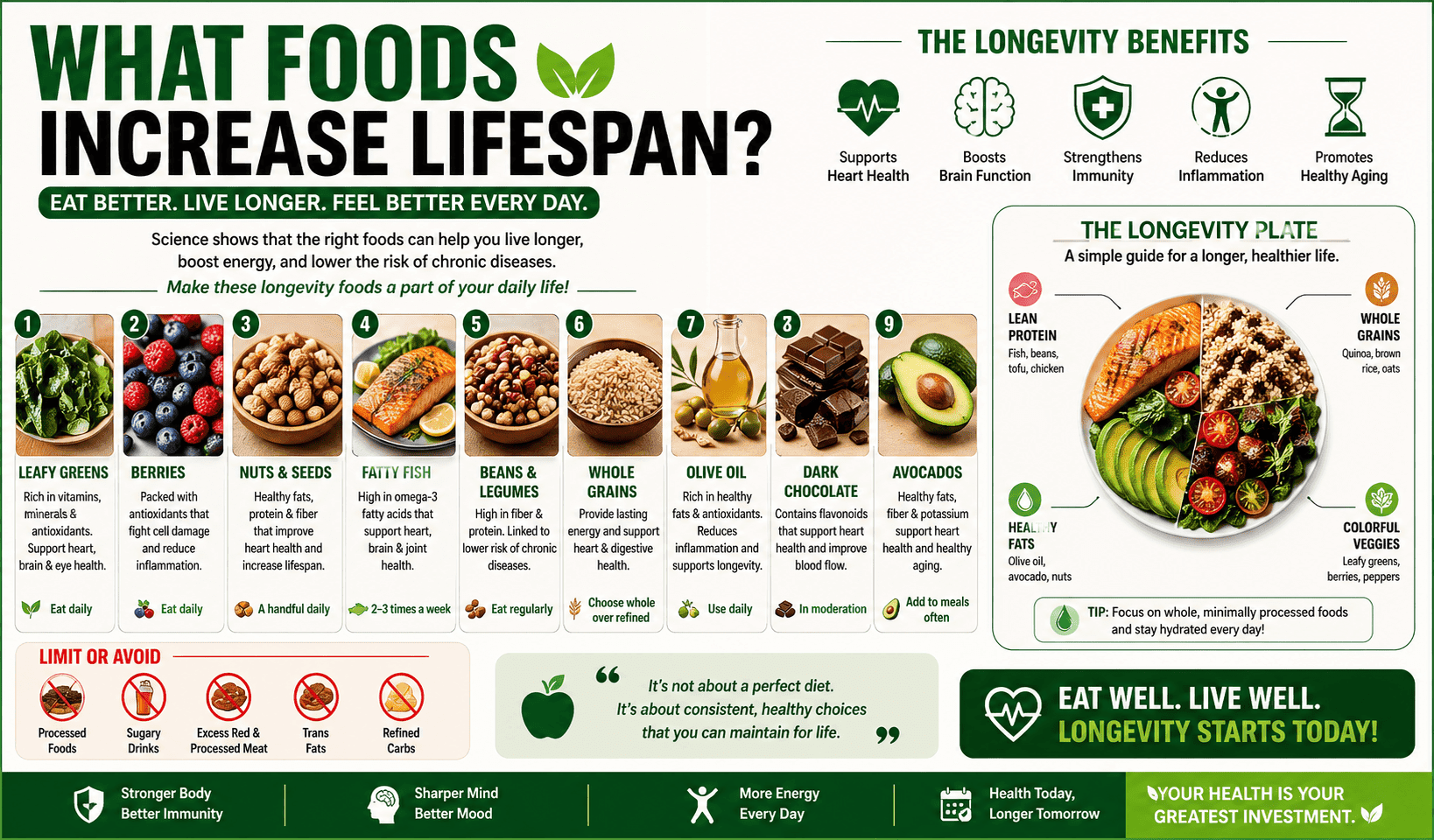
Many Americans wonder whether eating certain foods can actually help them live longer. While no single food guarantees a long life, decades of research suggest that dietary patterns rich in nutrient-dense, minimally processed foods are associated with lower rates of chronic disease and increased longevity.
The answer to “What foods increase lifespan?” lies in choosing foods that reduce inflammation, protect your heart, support brain health, improve gut function, and help maintain a healthy weight. Combined with regular physical activity, quality sleep, stress management, and avoiding tobacco, these foods can contribute to a longer and healthier life.
Why Diet Matters for Longevity
The foods you eat influence nearly every system in your body. Nutrients affect blood pressure, cholesterol, blood sugar, immune function, hormone balance, and even how your cells repair themselves over time.
Studies of populations known for exceptional longevity consistently show that people who live into their 90s and beyond often consume diets centered around whole plant foods, healthy fats, lean proteins, and limited processed foods.
Rather than focusing on one “superfood,” experts recommend building an overall eating pattern that supports lifelong health.
Also Read : How to slow aging naturally?
Leafy Green Vegetables
Leafy greens such as spinach, kale, Swiss chard, collard greens, and arugula are among the most nutrient-rich foods available.
They provide vitamins A, C, E, and K along with folate, magnesium, potassium, and antioxidants that help reduce oxidative stress. These nutrients support healthy blood vessels, stronger bones, and proper immune function.
Eating leafy greens regularly has also been linked to better cognitive health as people age.
Berries
Blueberries, strawberries, raspberries, and blackberries are packed with antioxidants called anthocyanins.
These compounds help protect cells from damage caused by free radicals while supporting heart health and healthy brain aging. Research suggests that people who consume berries regularly may experience slower cognitive decline and lower inflammation.
Fresh or frozen berries are both excellent choices with little added sugar.
Also Read : Can inflammation shorten lifespan?
Nuts
Almonds, walnuts, pistachios, pecans, and cashews provide healthy unsaturated fats, plant protein, fiber, vitamins, and minerals.
Regular nut consumption has been associated with reduced risk of cardiovascular disease and improved cholesterol levels. Walnuts are particularly rich in omega-3 fatty acids, which support brain and heart health.
Although nuts are calorie-dense, moderate daily portions can fit well into a healthy eating plan.
Beans and Lentils
Beans, chickpeas, peas, and lentils are dietary staples in many of the world’s longest-living populations.
They are rich in plant protein, fiber, iron, potassium, and magnesium while remaining naturally low in saturated fat.
High-fiber foods help stabilize blood sugar, improve digestive health, promote fullness, and support healthy cholesterol levels.
Replacing some red meat meals with legumes each week may provide meaningful long-term health benefits.
Also Read : How to improve metabolic health?
Fatty Fish
Salmon, sardines, trout, mackerel, and herring are excellent sources of omega-3 fatty acids.
These healthy fats reduce inflammation and support cardiovascular, brain, and eye health. Many health organizations recommend eating fatty fish at least twice per week.
If you do not eat fish, discuss alternative omega-3 sources with your healthcare provider.
Extra Virgin Olive Oil
Extra virgin olive oil is one of the defining features of the Mediterranean diet.
Its monounsaturated fats and plant compounds help reduce inflammation while supporting healthy cholesterol levels and blood vessel function.
Using olive oil instead of butter or highly processed cooking oils may contribute to better long-term cardiovascular health.
Also Read : What are early signs of hormonal imbalance?
Whole Grains
Whole grains such as oats, brown rice, quinoa, barley, and whole wheat retain their natural fiber and nutrients.
Unlike refined grains, they digest more slowly and help maintain stable blood sugar levels. Whole grains have also been associated with lower risks of heart disease, type 2 diabetes, and certain digestive conditions.
Aim to make at least half of your grain choices whole grains whenever possible.
Yogurt and Fermented Foods
Gut health has become an important area of longevity research.
Plain yogurt with live cultures, kefir, kimchi, sauerkraut, and fermented vegetables provide beneficial bacteria that help maintain a healthy gut microbiome.
A balanced gut microbiome may support digestion, immune health, and even mental well-being.
Choose products with little or no added sugar whenever possible.
Also Read : How to reduce biological age?
Fruits and Colorful Vegetables
Eating a variety of colorful produce ensures you receive a broad spectrum of vitamins, minerals, fiber, and protective plant compounds.
Orange vegetables provide beta-carotene, tomatoes supply lycopene, and cruciferous vegetables like broccoli and Brussels sprouts contain compounds that support normal cellular function.
Health experts often recommend filling half your plate with fruits and vegetables at most meals.
Avocados
Avocados contain heart-healthy fats, potassium, and fiber.
They may help improve cholesterol profiles and increase satisfaction after meals. Because they are nutrient-dense, avocados can be part of a balanced diet when eaten in reasonable portions.
Green Tea
Green tea contains polyphenols called catechins that may help protect cells from oxidative damage.
While green tea alone will not dramatically increase lifespan, replacing sugary beverages with unsweetened tea may benefit overall health.
Dark Chocolate
Dark chocolate containing at least 70% cocoa provides flavonoids that support blood vessel health.
Small amounts can fit into a healthy dietary pattern, but moderation remains important because chocolate still contains calories and added fat.
Also Read : Can gut health affect aging?
Foods That May Shorten Lifespan
Just as some foods support longevity, others may increase the risk of chronic disease when consumed frequently.
Highly processed foods often contain excessive sodium, added sugars, refined carbohydrates, and unhealthy fats. Regular consumption has been associated with obesity, type 2 diabetes, hypertension, and cardiovascular disease.
Limiting sugar-sweetened beverages, processed meats, deep-fried foods, packaged snacks, and excessive alcohol may improve long-term health outcomes.
The Best Eating Pattern for a Longer Life
Current scientific evidence suggests that the overall dietary pattern matters more than individual foods.
A longevity-focused eating pattern typically includes:
- Plenty of vegetables and fruits
- Whole grains
- Beans and legumes
- Nuts and seeds
- Healthy fats like olive oil
- Fish several times per week
- Limited processed foods
- Minimal added sugars
- Moderate portion sizes
This approach closely resembles the Mediterranean and other traditional plant-forward diets associated with healthy aging.
Lifestyle Habits That Work Together with Healthy Eating
Nutrition is only one piece of healthy aging.
Regular physical activity, maintaining a healthy body weight, getting seven to nine hours of quality sleep, managing stress, avoiding smoking, limiting alcohol, staying socially connected, and keeping up with preventive healthcare all contribute to a longer lifespan.
These habits often work together, producing greater benefits than any single dietary change alone.
👉 Learning natural longevity habits may help support healthier aging and improved energy levels.
Final Thoughts
If you’re asking “What foods increase lifespan?”, the best answer is not one magical ingredient but a consistent pattern of healthy eating. Leafy greens, berries, beans, whole grains, nuts, fatty fish, olive oil, yogurt, and colorful vegetables provide nutrients that support heart health, brain function, immune health, and healthy aging.
Small, sustainable dietary improvements made today can have meaningful effects over the coming decades. Instead of chasing the latest nutrition trend, focus on building lifelong eating habits that are supported by scientific evidence.
Medical Disclaimer: This article is intended for educational purposes only and should not replace professional medical advice. Individuals with chronic health conditions, food allergies, kidney disease, or other medical concerns should consult a qualified healthcare professional or registered dietitian before making significant dietary changes.
Frequently Asked Questions
1. What food is most associated with a longer lifespan?
There is no single longevity food, but research consistently highlights leafy green vegetables, berries, beans, nuts, whole grains, fatty fish, and extra virgin olive oil as key components of healthy aging diets.
2. Can eating healthier really increase lifespan?
Healthy eating alone cannot guarantee a longer life, but studies show that nutritious dietary patterns significantly reduce the risk of heart disease, stroke, type 2 diabetes, and certain cancers, which may contribute to increased longevity.
3. Is the Mediterranean diet the best diet for longevity?
The Mediterranean diet is one of the most researched dietary patterns and has been associated with lower rates of cardiovascular disease, cognitive decline, and premature death. However, other balanced, plant-forward diets can also support healthy aging.
4. How much fruit and vegetables should adults eat?
The Dietary Guidelines for Americans recommend a variety of fruits and vegetables daily. The exact amount depends on age, sex, and activity level, but many adults benefit from making fruits and vegetables about half of each meal.
5. Are supplements necessary for longevity?
Most people should obtain nutrients from whole foods whenever possible. Supplements may be appropriate for certain individuals with deficiencies or specific medical conditions, but they should be used under the guidance of a healthcare professional.
6. What foods should I avoid for healthy aging?
Limiting highly processed foods, sugary beverages, processed meats, excessive sodium, refined carbohydrates, and foods high in saturated and trans fats may help reduce the risk of chronic disease and support long-term health.
Medically reviewed information sourced from trusted health organizations.
References
- National Institute on Aging (NIA). Healthy Aging and Longevity Resources.
https://www.nia.nih.gov/health - National Institutes of Health (NIH). Healthy Aging Research.
https://www.nih.gov/health-information - Centers for Disease Control and Prevention (CDC). Healthy Aging.
https://www.cdc.gov/aging - Harvard T.H. Chan School of Public Health. Nutrition and Healthy Aging.
https://www.hsph.harvard.edu/nutritionsource
Reviewed by: Dzarro Editorial Team
Fact-checked using trusted medical and scientific sources.
Last Updated: June 27, 2026

Sandip Choudhary is a Health & Wellness Researcher and Content Creator specializing in sleep, digestive health, preventive wellness, and evidence-based health education. He has been creating online content and researching health-related topics for several years, focusing on translating complex medical information into practical guidance for everyday readers.
With a strong background in SEO and content strategy, Sandip ensures that every article is optimized for both search engines and real users. His goal is to provide reliable, clear, and helpful information that supports healthier living.
Disclaimer: The content published is for informational purposes only and is not a substitute for professional medical advice.