
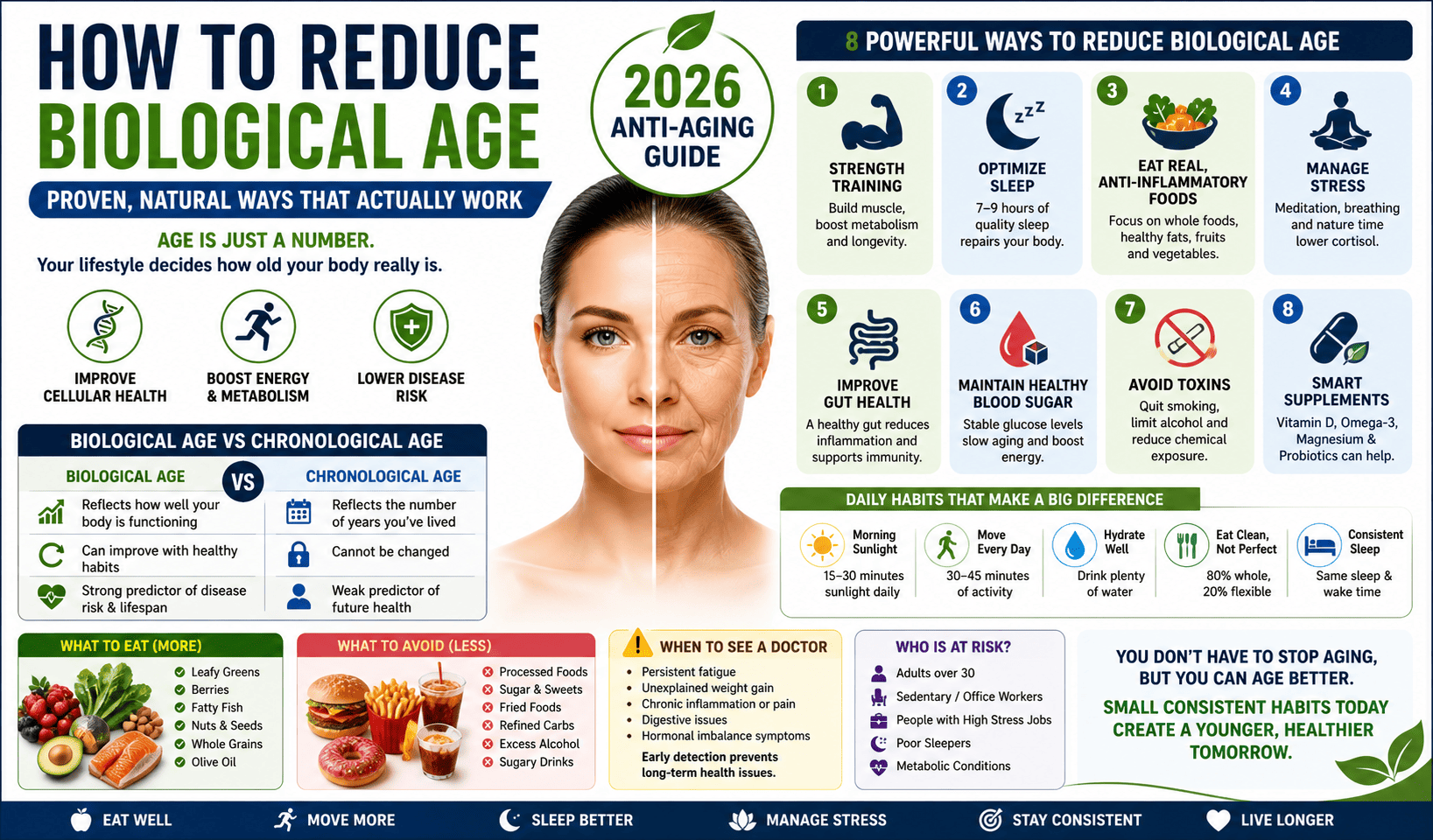
Introduction
You eat fairly well, try to stay active, and still feel older than your actual age—low energy, poor sleep, stubborn belly fat, slower recovery. You’re not alone. Millions of Americans are now asking a smarter question: not “How old am I?” but “How old is my body really?”
That’s where biological age comes in—and the good news is, you can improve it.
Quick Answer
To reduce biological age, focus on consistent exercise, high-quality sleep, anti-inflammatory nutrition, stress control, and metabolic health. Strength training, a whole-food diet, good sleep hygiene, and avoiding smoking or excess alcohol can measurably improve how your body functions—often within months.
What Is Biological Age?
Biological age measures how well your body is functioning compared to your actual (chronological) age.
- Chronological age = years since birth
- Biological age = how “young” or “old” your cells and systems behave
Someone who is 40 years old chronologically could have a biological age of 30 (healthier) or 50 (accelerated aging).
Why It Matters:
- Predicts disease risk
- Reflects energy, metabolism, and recovery
- Can be improved with lifestyle changes
Symptoms of Accelerated Biological Aging
Early Signs:
- Low energy or constant fatigue
- Poor sleep quality
- Frequent bloating or digestion issues
- Brain fog or lack of focus
- Slower workout recovery
Advanced Signs:
- Chronic inflammation
- Weight gain (especially belly fat)
- High blood sugar or insulin resistance
- Joint pain and stiffness
- Reduced immunity
Causes & Risk Factors
Lifestyle Factors:
- Sedentary lifestyle
- Poor diet (processed foods, sugar)
- Sleep deprivation
- Smoking or alcohol overuse
Stress & Mental Health:
- Chronic stress (high cortisol)
- Anxiety or burnout
Medical Factors:
- Hormonal imbalance
- Chronic inflammation
- Gut health issues
Environmental Factors:
- Pollution
- Toxin exposure
👉 Gut health and digestion play a major role in maintaining a healthy body and mind guide.
Biological Age vs Chronological Age
| Factor | Biological Age | Chronological Age |
|---|---|---|
| Definition | Body function level | Years lived |
| Flexibility | Can improve | Fixed |
| Influenced by | Lifestyle, diet, stress | Time only |
| Health indicator | Strong predictor | Weak predictor |
Best Ways to Reduce Biological Age
1. Strength Training (Most Powerful)
- Builds muscle mass
- Improves metabolism
- Reduces insulin resistance
👉 Aim: 3–4 sessions/week
2. Optimize Sleep (Non-Negotiable)
- 7–9 hours per night
- Deep sleep = cellular repair
👉 Poor sleep = faster aging
3. Anti-Inflammatory Diet
Focus on:
- Vegetables
- Fruits
- Healthy fats (olive oil, nuts)
- Lean protein
Avoid:
- Ultra-processed foods
- Sugar
- Trans fats
4. Manage Stress Effectively
- Meditation
- Breathing exercises
- Walking outdoors
👉 Chronic stress = aging accelerator
5. Improve Gut Health
- Probiotics
- Fiber-rich foods
- Fermented foods
👉 Gut = immune + inflammation control center
6. Maintain Healthy Weight & Blood Sugar
- Avoid insulin spikes
- Eat balanced meals
👉 Stable glucose = slower aging
7. Avoid Toxins
- Quit smoking
- Limit alcohol
- Reduce chemical exposure
8. Consider Evidence-Based Supplements
(Consult a doctor before use)
- Vitamin D
- Omega-3
- Magnesium
- Probiotics
Diet & Lifestyle Tips
What to Eat:
- Leafy greens
- Berries
- Fatty fish
- Nuts & seeds
- Whole grains
What to Avoid:
- Sugary drinks
- Processed snacks
- Excess alcohol
Daily Routine:
- Morning sunlight exposure
- 30–45 min movement
- Consistent sleep schedule
When to See a Doctor
Consult a healthcare professional if you have:
- Persistent fatigue
- Hormonal imbalance symptoms
- Unexplained weight gain
- Chronic inflammation
- Digestive issues that don’t improve
Who Is at Risk?
- Office workers (sedentary lifestyle)
- Adults over 30
- People with high stress jobs
- Individuals with poor sleep habits
- Those with metabolic conditions
FAQs
1. Can you actually reverse biological age?
Yes, lifestyle changes like exercise, diet, and sleep improvements can lower biological age markers.
2. How long does it take to reduce biological age?
Some improvements can be seen in 8–12 weeks with consistent habits.
3. What is the fastest way to lower biological age?
Combining strength training, quality sleep, and a clean diet gives the fastest results.
4. Does fasting help reduce biological age?
Intermittent fasting may improve metabolic health, which can support healthy aging.
5. Can stress increase biological age?
Yes, chronic stress accelerates aging through hormonal imbalance and inflammation.
Conclusion
Reducing biological age isn’t about extreme diets or shortcuts—it’s about consistent, smart lifestyle choices.
Focus on:
- Strength training
- Quality sleep
- Clean nutrition
- Stress control
👉 Small daily habits can make your body function years younger than your actual age.
Medically reviewed information sourced from trusted health organizations.
References
- National Institute on Aging (NIA). Healthy Aging and Longevity Resources.
https://www.nia.nih.gov/health - National Institutes of Health (NIH). Healthy Aging Research.
https://www.nih.gov/health-information - Centers for Disease Control and Prevention (CDC). Healthy Aging.
https://www.cdc.gov/aging - Harvard T.H. Chan School of Public Health. Nutrition and Healthy Aging.
https://www.hsph.harvard.edu/nutritionsource
Reviewed by: Dzarro Editorial Team
Fact-checked using trusted medical and scientific sources.
Last Updated: June 18, 2026

Sandip Choudhary is a Health & Wellness Researcher and Content Creator specializing in sleep, digestive health, preventive wellness, and evidence-based health education. He has been creating online content and researching health-related topics for several years, focusing on translating complex medical information into practical guidance for everyday readers.
With a strong background in SEO and content strategy, Sandip ensures that every article is optimized for both search engines and real users. His goal is to provide reliable, clear, and helpful information that supports healthier living.
Disclaimer: The content published is for informational purposes only and is not a substitute for professional medical advice.