
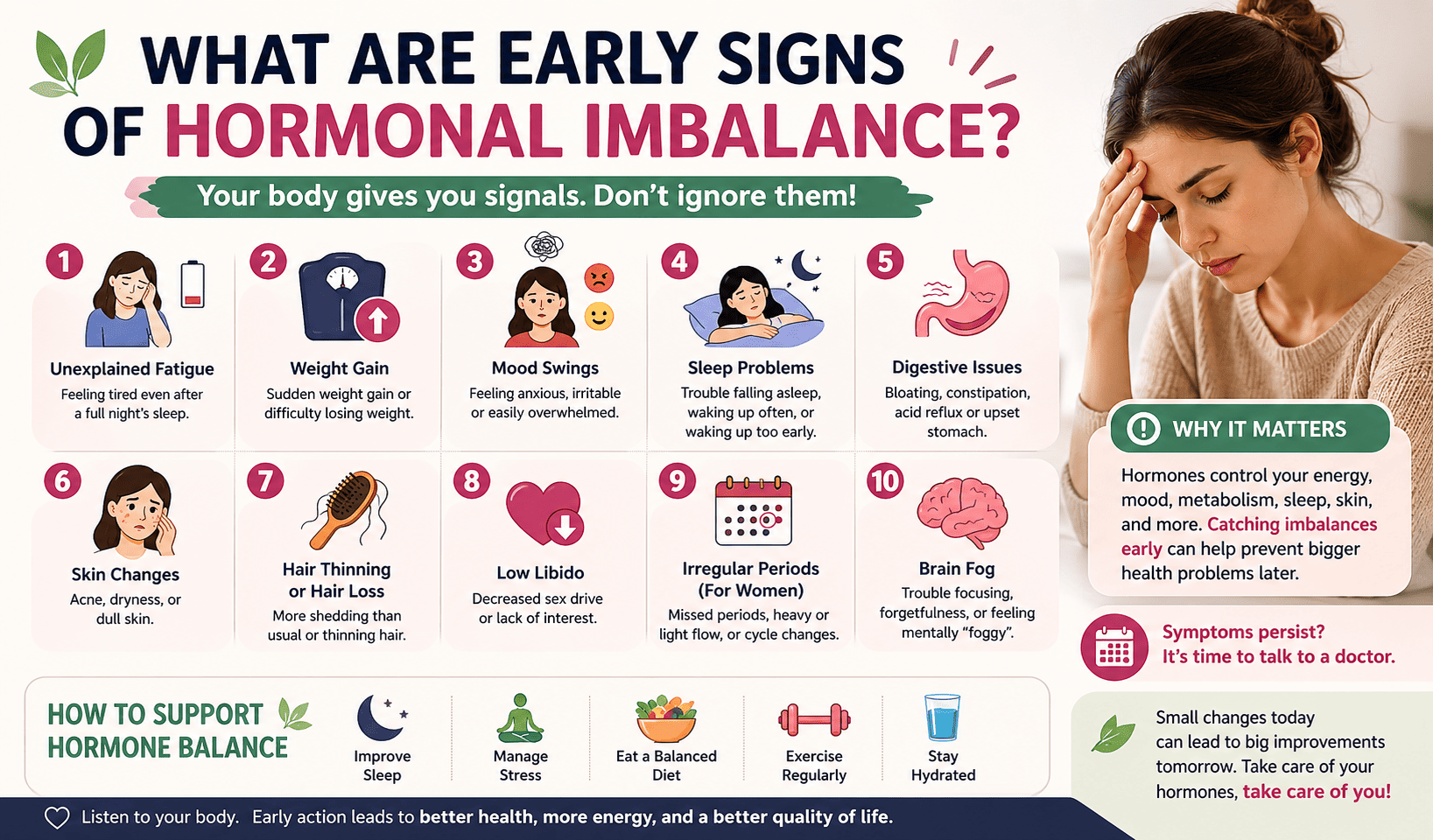
Hormones control nearly every major function in your body—energy, metabolism, mood, sleep, digestion, and reproduction. When they fall out of balance, the earliest symptoms are often subtle and easy to ignore. Recognizing these warning signs early can help you take action before they turn into bigger health problems.
What Is a Hormonal Imbalance?
A hormonal imbalance happens when your body produces too much or too little of certain hormones such as estrogen, progesterone, testosterone, thyroid hormones, insulin, or cortisol. Even small shifts can affect how you feel day to day.
Early Signs of Hormonal Imbalance
1. Unexplained Fatigue
Feeling tired even after a full night’s sleep is one of the most common early signs.
- Low thyroid hormones can slow your metabolism
- High cortisol (stress hormone) can drain energy
- Blood sugar imbalance can cause energy crashes
If your fatigue feels constant and not linked to activity, hormones may be involved.
2. Sudden Weight Gain or Difficulty Losing Weight
If your diet and activity haven’t changed but your weight has, hormones may be the reason.
- Insulin resistance → weight gain around the belly
- Thyroid imbalance → slower metabolism
- Cortisol imbalance → fat storage
3. Mood Swings, Anxiety, or Irritability
Hormones play a direct role in brain chemistry.
Early signs include:
- Feeling anxious without a clear reason
- Irritability or sudden mood changes
- Low motivation or mild depression
Estrogen, progesterone, and cortisol imbalances are often linked to these symptoms.
4. Sleep Problems
Hormonal shifts can disrupt your sleep cycle.
You may notice:
- Trouble falling asleep
- Waking up frequently at night
- Waking up too early (often around 2–4 AM)
Melatonin and cortisol imbalance are common causes.
5. Digestive Issues
Your gut and hormones are closely connected.
Watch for:
- Bloating
- Constipation or diarrhea
- Acid reflux
Hormonal imbalance can affect gut bacteria and digestion.
6. Skin Changes
Your skin often reflects internal hormonal shifts.
Common early signs:
- Acne (especially jawline in adults)
- Oily or very dry skin
- Sudden breakouts
These are often linked to androgen or estrogen imbalance.
7. Hair Thinning or Hair Loss
Hormonal changes can affect hair growth cycles.
- Thyroid imbalance → overall hair thinning
- Androgen imbalance → hair loss (especially in men and women with PCOS)
8. Low Libido
A drop in sex drive can be an early hormonal signal.
Possible causes:
- Low testosterone
- Estrogen imbalance
- Chronic stress (high cortisol)
9. Irregular Periods (For Women)
Changes in menstrual cycle are a strong indicator.
- Missed periods
- Heavy or very light bleeding
- Cycle length changes
Often linked to estrogen and progesterone imbalance.
10. Brain Fog and Poor Focus
If you’re struggling to concentrate or feel mentally “slow,” hormones may be affecting cognitive function.
- Thyroid imbalance
- Cortisol dysregulation
- Blood sugar fluctuations
👉 Managing chronic stress naturally is one of the best long-term wellness guide recommendations.
When Should You Be Concerned?
You should consider taking action if:
- Symptoms persist for several weeks
- Multiple symptoms appear together
- Your daily routine or productivity is affected
What Causes Hormonal Imbalance?
Common triggers include:
- Chronic stress
- Poor sleep
- Unhealthy diet (high sugar, processed foods)
- Lack of physical activity
- Certain medications
- Aging
How to Start Fixing Hormonal Imbalance Naturally
1. Improve Sleep Quality
Aim for 7–9 hours of consistent sleep.
2. Manage Stress
Try:
- Deep breathing
- Walking
- Meditation
3. Balance Your Diet
Focus on:
- Whole foods
- Healthy fats
- Protein-rich meals
- Fiber for gut health
4. Exercise Regularly
Even light activity like walking can improve hormone balance.
When to See a Doctor
Consult a healthcare professional if:
- Symptoms worsen
- You experience severe fatigue or weight changes
- Menstrual cycles become highly irregular
- Hair loss is rapid or noticeable
Blood tests can help identify specific hormone issues.
Final Thoughts
Hormonal imbalance doesn’t always start with obvious symptoms. Early signs like fatigue, mood swings, sleep problems, and weight changes are often your body’s way of signaling that something is off.
The sooner you recognize these signals, the easier it is to restore balance through lifestyle changes or medical support.
Taking action early can prevent long-term health complications and help you feel like yourself again.
Medically reviewed information sourced from trusted health organizations.
References
- National Institute on Aging (NIA). Healthy Aging and Longevity Resources.
https://www.nia.nih.gov/health - National Institutes of Health (NIH). Healthy Aging Research.
https://www.nih.gov/health-information - Centers for Disease Control and Prevention (CDC). Healthy Aging.
https://www.cdc.gov/aging - Harvard T.H. Chan School of Public Health. Nutrition and Healthy Aging.
https://www.hsph.harvard.edu/nutritionsource
Reviewed by: Dzarro Editorial Team
Fact-checked using trusted medical and scientific sources.
Last Updated: June 18, 2026

Sandip Choudhary is a Health & Wellness Researcher and Content Creator specializing in sleep, digestive health, preventive wellness, and evidence-based health education. He has been creating online content and researching health-related topics for several years, focusing on translating complex medical information into practical guidance for everyday readers.
With a strong background in SEO and content strategy, Sandip ensures that every article is optimized for both search engines and real users. His goal is to provide reliable, clear, and helpful information that supports healthier living.
Disclaimer: The content published is for informational purposes only and is not a substitute for professional medical advice.