
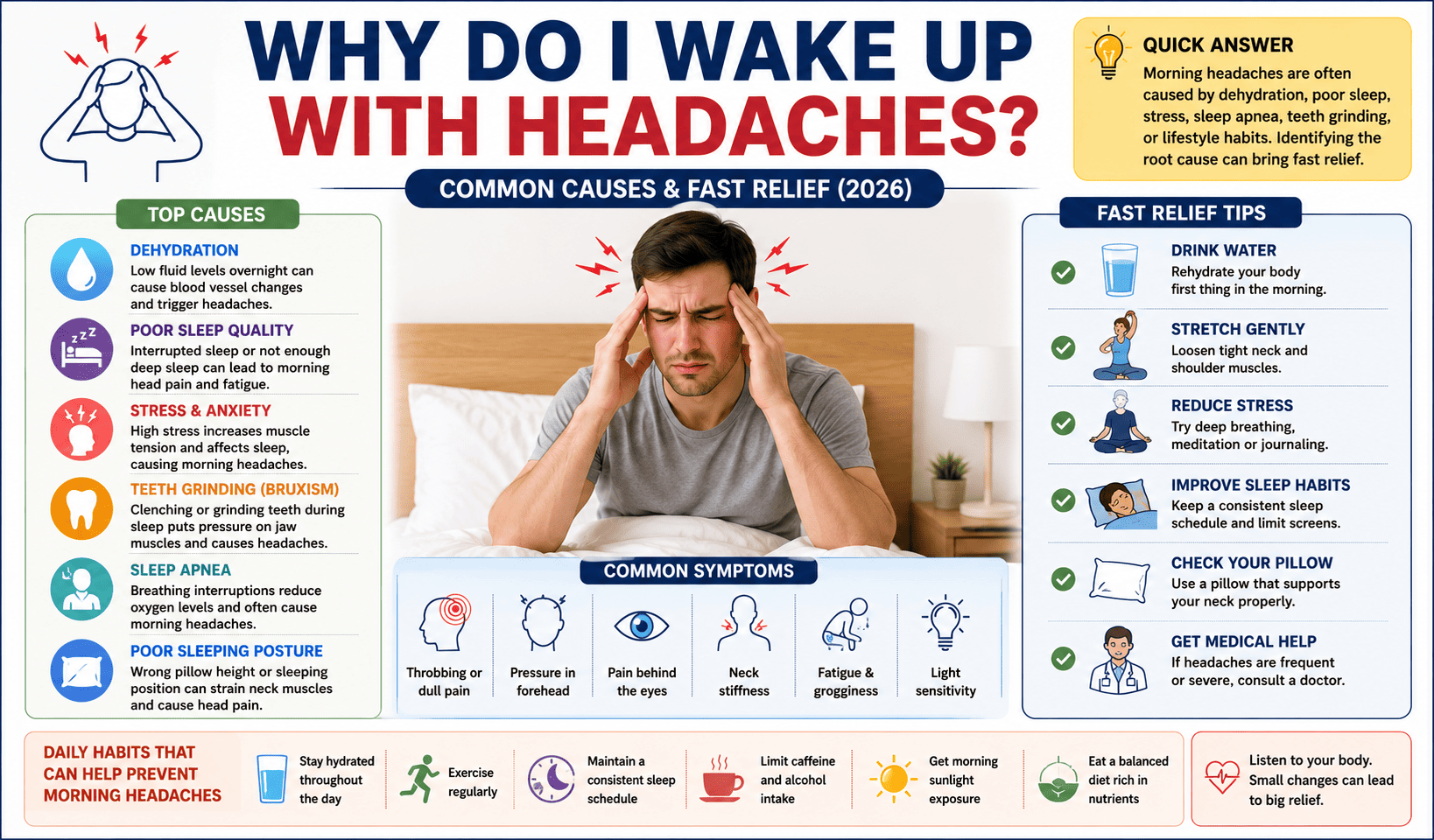
Waking up with a headache can ruin your entire morning before the day even begins. You go to bed expecting rest and recovery, but instead wake up with pressure in your forehead, neck pain, throbbing temples, or a heavy feeling in your head.
If this happens occasionally, it may be linked to dehydration, poor sleep, stress, or sleeping position. But if morning headaches happen frequently, they may point to deeper issues like sleep apnea, teeth grinding, high stress, poor sleep quality, or even lifestyle habits affecting your body overnight.
Morning headaches are surprisingly common in the United States, especially among adults dealing with stress, poor sleep schedules, screen overuse, and sleep disorders.
The good news is that most causes are manageable once you identify the root problem.
Quick Answer
Waking up with headaches can be caused by dehydration, poor sleep quality, stress, teeth grinding, sleep apnea, caffeine withdrawal, poor sleeping posture, or underlying health conditions. Improving sleep habits, hydration, stress management, and identifying possible sleep disorders can help reduce or prevent morning headaches naturally.
What Does It Mean to Wake Up With Headaches?
Morning headaches happen when physical or neurological triggers affect your body during sleep.
These headaches may feel like:
- Pressure around the forehead
- Tightness in the neck
- Pain behind the eyes
- Throbbing temples
- A dull heavy sensation after waking
In many cases, the headache itself is not the main problem — it’s a symptom of something affecting your sleep, breathing, muscles, or nervous system overnight.
Common Symptoms of Morning Headaches
Symptoms can vary depending on the cause.
Early Symptoms
- Mild forehead pressure
- Head heaviness after waking
- Neck stiffness
- Dry mouth
- Light sensitivity
- Fatigue in the morning
- Brain fog
Advanced Symptoms
- Severe throbbing pain
- Nausea
- Frequent migraines
- Snoring with headaches
- Dizziness
- Jaw pain
- Exhaustion despite sleeping
- Difficulty concentrating
Some people notice headaches improve after:
- Drinking water
- Moving around
- Drinking coffee
- Taking a shower
Others experience symptoms that continue throughout the day.
Most Common Causes of Waking Up With Headaches
There isn’t one single reason for morning headaches. Usually, several lifestyle and health factors contribute together.
1. Poor Sleep Quality
Even if you sleep for 7–8 hours, poor-quality sleep can trigger headaches.
Sleep Problems That Increase Risk
- Frequent waking during the night
- Restless sleep
- Light sleep instead of deep sleep
- Sleeping in noisy environments
Poor sleep prevents proper recovery of the nervous system and muscles.
2. Dehydration
Dehydration is one of the most overlooked causes of morning headaches.
During sleep, your body goes several hours without fluids. If you already:
- Don’t drink enough water
- Consume caffeine or alcohol
- Sleep in dry air
you may wake up dehydrated.
Common Signs
- Dry mouth
- Dark urine
- Fatigue
- Dizziness
- Head pressure
3. Stress and Anxiety
Stress causes muscle tension and affects sleep quality.
High stress levels may lead to:
- Tight neck muscles
- Jaw clenching
- Poor REM sleep
- Increased cortisol levels
This can create tension headaches after waking.
4. Teeth Grinding (Bruxism)
Many people unknowingly grind or clench their teeth during sleep.
This places pressure on:
- Jaw muscles
- Temples
- Facial nerves
Symptoms of Teeth Grinding
- Jaw soreness
- Tooth sensitivity
- Morning headaches
- Ear discomfort
Stress is one of the biggest triggers for nighttime grinding.
5. Sleep Apnea
Sleep apnea is a major cause of chronic morning headaches in the United States.
This condition causes temporary breathing interruptions during sleep, reducing oxygen flow to the brain.
Common Symptoms
- Loud snoring
- Gasping during sleep
- Dry mouth
- Daytime fatigue
- Morning headaches
People with untreated sleep apnea often wake up feeling exhausted even after long sleep.
6. Poor Sleeping Position
Your sleeping posture can affect:
- Neck alignment
- Blood flow
- Muscle tension
Sleeping with improper pillow support may strain neck muscles and trigger headaches.
7. Caffeine Withdrawal
If your body depends heavily on caffeine, overnight withdrawal may trigger headaches in the morning.
This is common in people who:
- Drink multiple coffees daily
- Consume energy drinks
- Suddenly reduce caffeine intake
8. Migraines
Some people naturally experience migraines during early morning hours because of:
- Hormonal shifts
- Sleep disruption
- Stress
- Blood vessel changes
Morning migraines may include:
- Nausea
- Light sensitivity
- Throbbing pain
- Visual disturbances
Comparison Table: Common Morning Headache Causes
| Cause | Common Symptoms | Typical Trigger |
|---|---|---|
| Dehydration | Dry mouth, dizziness | Low water intake |
| Stress | Neck tension, fatigue | Anxiety, burnout |
| Sleep Apnea | Snoring, exhaustion | Breathing interruptions |
| Teeth Grinding | Jaw pain, temple pain | Stress, poor sleep |
| Poor Sleep Quality | Brain fog, grogginess | Interrupted sleep |
| Caffeine Withdrawal | Head pain after waking | Reduced caffeine |
Risk Factors That Increase Morning Headaches
Several lifestyle factors increase your risk.
1. Poor Sleep Schedule
Irregular sleep timing disrupts sleep cycles and recovery.
2. High Stress Lifestyle
Work pressure and emotional burnout contribute heavily.
3. Excess Screen Time
Late-night blue light affects sleep quality.
4. Alcohol Consumption
Alcohol can worsen dehydration and sleep disruption.
5. Obesity
Increases the risk of sleep apnea.
6. Sedentary Lifestyle
Poor circulation and muscle tension may contribute to headaches.
Best Treatment Options for Morning Headaches
The right treatment depends on the underlying cause.
1. Improve Sleep Quality
Better sleep is one of the most effective solutions.
Helpful Sleep Habits
- Go to bed at the same time daily
- Keep your room cool and dark
- Avoid screens before bed
- Limit caffeine late in the day
Consistency matters more than sleeping longer.
2. Stay Hydrated
Proper hydration can reduce headache frequency significantly.
Helpful Tips
- Drink water after waking
- Reduce excessive alcohol
- Avoid sleeping dehydrated
- Add electrolytes if needed
3. Reduce Stress Naturally
Stress management improves both sleep and muscle tension.
Effective Methods
- Meditation
- Deep breathing
- Walking
- Stretching
- Journaling
- Yoga
Even small relaxation habits before bed may help.
4. Treat Sleep Apnea
If you snore heavily or wake up exhausted, consult a healthcare professional about possible sleep apnea.
Treatment may include:
- CPAP therapy
- Weight management
- Sleep position adjustments
5. Address Teeth Grinding
A dentist may recommend:
- Mouth guards
- Stress reduction
- Jaw relaxation exercises
Reducing nighttime grinding often improves headaches quickly.
Also Read : How much sleep do adults really need?
Diet & Lifestyle Tips for Better Sleep & Fewer Headaches
Foods That May Help
- Magnesium-rich foods
- Leafy greens
- Bananas
- Nuts and seeds
- Water-rich fruits
Foods to Limit
- Excess caffeine
- Alcohol
- Sugary snacks
- Processed foods late at night
Healthy Daily Habits
- Exercise regularly
- Maintain consistent sleep timing
- Reduce screen exposure before bed
- Stretch neck muscles gently
When Should You See a Doctor?
Seek medical attention if headaches:
- Happen frequently
- Become severe suddenly
- Cause vision problems
- Include vomiting
- Occur with chest pain
- Cause confusion or weakness
- Disrupt daily life consistently
Morning headaches should not be ignored if symptoms persist.
👉 Following proven sleep optimization tips may help improve deep sleep quality.
Who Is Most at Risk?
1. Office Workers
Stress, screen time, and poor posture increase risk.
2. People With Sleep Apnea
Morning headaches are extremely common.
3. Adults Under Chronic Stress
Stress-related muscle tension contributes heavily.
4. Women
Hormonal fluctuations may increase migraine risk.
5. Shift Workers
Irregular sleep schedules affect recovery and sleep quality.
FAQs
1. Why do I wake up with headaches every morning?
Common causes include dehydration, poor sleep quality, stress, sleep apnea, teeth grinding, and caffeine withdrawal.
2. Can dehydration cause headaches after sleeping?
Yes. Sleeping for several hours without enough hydration may trigger morning headaches.
3. Is waking up with headaches a sign of sleep apnea?
Sometimes. Morning headaches combined with snoring and fatigue may indicate sleep apnea.
4. Can stress cause morning headaches?
Yes. Stress increases muscle tension and affects sleep quality, which can trigger headaches after waking.
5. How can I stop waking up with headaches naturally?
Improve sleep habits, stay hydrated, reduce stress, avoid excessive caffeine, and address possible sleep disorders.
Also Read : Mayo Clinic Minute: What are the stages of sleep?
Conclusion
Waking up with headaches is often a sign that something is affecting your sleep, hydration, breathing, stress levels, or muscle recovery overnight.
The most common causes include:
- Poor sleep quality
- Dehydration
- Stress
- Sleep apnea
- Teeth grinding
The good news is that many cases improve with simple lifestyle changes such as better sleep habits, hydration, stress management, and proper medical evaluation when necessary.
If headaches become frequent or severe, speaking with a healthcare professional is important to identify the underlying cause and protect your long-term health.
Medically reviewed information sourced from trusted health organizations.
References
- National Institutes of Health (NIH). Sleep and Sleep Disorders.
https://www.nhlbi.nih.gov/health/sleep - Sleep Foundation. Sleep Health Resources.
https://www.sleepfoundation.org/ - Centers for Disease Control and Prevention (CDC). Sleep and Sleep Disorders.
https://www.cdc.gov/sleep/ - Mayo Clinic. Sleep Disorders Overview.
https://www.mayoclinic.org/
Reviewed by: Dzarro Editorial Team
Fact-checked using trusted medical and scientific sources.
Last Updated: June 13, 2026

Sandip Choudhary is a Health & Wellness Researcher and Content Creator specializing in sleep, digestive health, preventive wellness, and evidence-based health education. He has been creating online content and researching health-related topics for several years, focusing on translating complex medical information into practical guidance for everyday readers.
With a strong background in SEO and content strategy, Sandip ensures that every article is optimized for both search engines and real users. His goal is to provide reliable, clear, and helpful information that supports healthier living.
Disclaimer: The content published is for informational purposes only and is not a substitute for professional medical advice.