
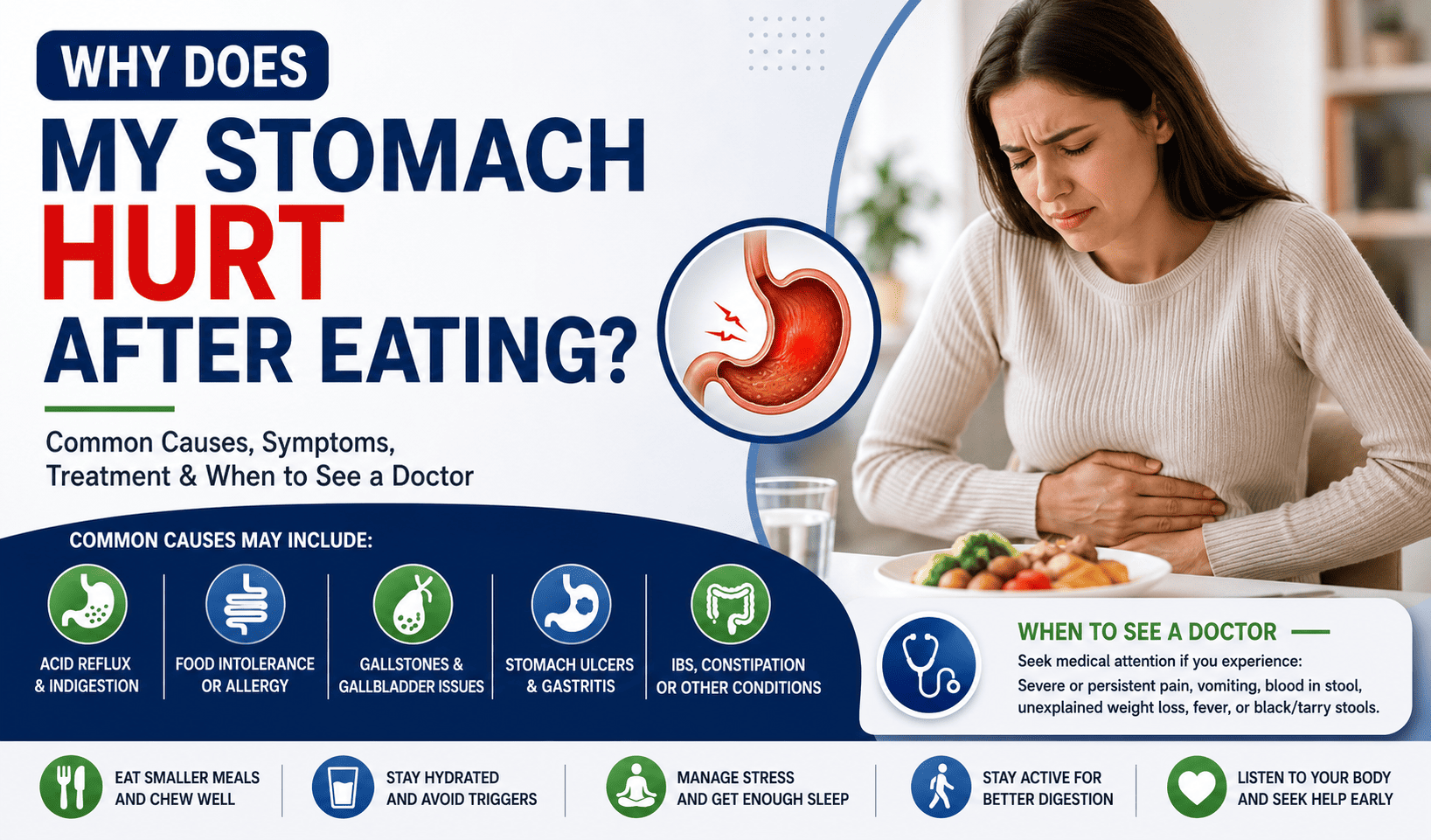
Have you ever finished a meal only to find yourself clutching your stomach in discomfort? If you’ve been asking yourself, “Why does my stomach hurt after eating?”, you’re not alone. Millions of Americans experience stomach pain after meals at some point in their lives. Sometimes it’s simply the result of eating too quickly or overeating, but in other cases, recurring pain may signal an underlying digestive condition that deserves medical attention.
Understanding what causes stomach pain after eating can help you determine whether simple lifestyle changes are enough or whether you should consult a healthcare provider. This guide explains the most common reasons your stomach may hurt after eating, how to identify warning signs, available treatments, and practical ways to improve your digestive health.
Why Does My Stomach Hurt After Eating?
Stomach pain after eating isn’t actually a disease. Instead, it’s a symptom that can arise from many different digestive problems. The discomfort may occur immediately after eating or several hours later. It may feel sharp, dull, cramping, burning, bloating, or like intense pressure.
The location of the pain also matters. Pain in the upper abdomen may point toward acid reflux or stomach ulcers, while pain on the right side could suggest gallbladder problems. Lower abdominal pain might indicate bowel-related conditions such as irritable bowel syndrome (IBS).
Because many digestive disorders share similar symptoms, it’s important to pay attention to when the pain occurs, how long it lasts, what foods trigger it, and whether other symptoms are present.
Also Read : What are the early symptoms of esophageal stricture?
Common Causes of Stomach Pain After Eating
Overeating
One of the most common explanations is simply eating too much. Large meals stretch the stomach beyond its comfortable capacity, slowing digestion and increasing pressure inside the digestive tract. This may result in bloating, fullness, cramping, and discomfort that lasts for several hours.
Eating slowly and stopping before feeling overly full often helps prevent this type of pain.
Indigestion (Dyspepsia)
Indigestion is another frequent cause of post-meal stomach pain. It commonly develops after consuming fatty foods, spicy meals, caffeine, alcohol, or carbonated beverages.
Symptoms often include upper abdominal discomfort, burning, bloating, nausea, excessive belching, and feeling full sooner than expected.
Occasional indigestion usually isn’t serious, but frequent episodes should be evaluated by a healthcare provider.
Also Read : Why Does My Stomach Hurt After Eating?
Acid Reflux (GERD)
Acid reflux occurs when stomach acid flows backward into the esophagus instead of remaining in the stomach. This commonly causes a burning sensation in the chest, but it can also produce upper abdominal pain after meals.
Large meals, chocolate, peppermint, tomatoes, citrus fruits, fried foods, and coffee are common triggers.
People with chronic gastroesophageal reflux disease (GERD) often notice symptoms becoming worse after eating or lying down shortly afterward.
Also Read : Can stress affect digestion?
Food Intolerances
Some people have difficulty digesting specific foods without having a true food allergy.
Common examples include lactose intolerance, gluten sensitivity, fructose intolerance, and intolerance to artificial sweeteners.
When the body cannot properly digest certain carbohydrates or proteins, fermentation occurs in the intestines, producing gas, bloating, cramps, and diarrhea after eating.
Keeping a food diary can help identify personal trigger foods.
Food Allergies
Unlike food intolerances, food allergies involve the immune system and can become life-threatening.
Along with stomach pain, symptoms may include hives, swelling, difficulty breathing, vomiting, dizziness, or anaphylaxis.
Emergency medical care is required if severe allergic symptoms develop after eating.
Irritable Bowel Syndrome (IBS)
IBS is a common digestive disorder affecting the large intestine. Many individuals experience abdominal pain shortly after meals because eating stimulates bowel contractions.
Symptoms often include cramping, bloating, constipation, diarrhea, or alternating bowel habits.
Stress, hormonal changes, and certain foods may trigger IBS symptoms.
Also Read : How many times can esophageal dilatation be done?
Gallstones and Gallbladder Disease
Pain occurring 30 minutes to two hours after eating a fatty meal may indicate gallbladder disease.
The gallbladder releases bile to digest fats. If gallstones block the bile ducts, severe pain develops in the upper right abdomen and may radiate to the back or right shoulder.
Nausea and vomiting often accompany gallbladder attacks.
Peptic Ulcers
Peptic ulcers are open sores that develop in the stomach or upper small intestine.
Eating may temporarily improve or worsen ulcer pain depending on the ulcer’s location.
Additional symptoms include burning stomach pain, nausea, bloating, and occasionally vomiting blood or black stools, which require immediate medical attention.
Gastritis
Gastritis refers to inflammation of the stomach lining. It may result from infection, frequent NSAID use, excessive alcohol consumption, or autoimmune conditions.
People with gastritis often experience burning stomach pain after eating, along with nausea and loss of appetite.
Inflammatory Bowel Disease (IBD)
Crohn’s disease and ulcerative colitis are chronic inflammatory conditions affecting the digestive tract.
Symptoms may include persistent abdominal pain after meals, diarrhea, fatigue, weight loss, and blood in the stool.
Unlike IBS, IBD causes ongoing inflammation that may damage the digestive tract.
Also Read : Why do I feel full after eating small amounts?
Constipation
Constipation can cause abdominal discomfort that becomes more noticeable after eating because food stimulates intestinal movement.
Increasing fiber, hydration, and physical activity often improves symptoms.
Pancreatitis
Inflammation of the pancreas can produce severe upper abdominal pain after eating, especially high-fat meals.
The pain often spreads to the back and may be accompanied by nausea, vomiting, and fever.
Pancreatitis requires prompt medical evaluation.
Also Read : Can esophageal stricture heal naturally?
Foods That Commonly Trigger Stomach Pain
Certain foods are more likely to cause digestive discomfort, especially in sensitive individuals.
Highly processed foods, fried meals, greasy fast food, spicy dishes, excessive dairy products, carbonated beverages, caffeine, alcohol, artificial sweeteners, onions, garlic, beans, and high-fat desserts are among the most common triggers.
However, triggers vary from person to person, making it helpful to identify your own patterns.
Symptoms That May Accompany Stomach Pain
Stomach pain after eating often occurs alongside other digestive symptoms that can help narrow down the cause.
These symptoms may include bloating, excessive gas, nausea, vomiting, heartburn, diarrhea, constipation, early fullness, burping, abdominal swelling, or loss of appetite.
Some people experience only mild discomfort, while others develop severe pain that interferes with daily activities.
When Should You See a Doctor?
Occasional stomach discomfort after eating is common and usually resolves without treatment. However, persistent or severe symptoms deserve medical attention.
Seek emergency medical care immediately if stomach pain occurs with chest pain, difficulty breathing, vomiting blood, black or tarry stools, severe dehydration, fainting, or sudden intense abdominal pain.
Schedule an appointment with your healthcare provider if pain lasts for several days, repeatedly occurs after meals, causes unexplained weight loss, interferes with eating, or is accompanied by persistent diarrhea or fever.
How Doctors Diagnose the Cause?
Your healthcare provider will begin by reviewing your medical history, eating habits, symptoms, and family history.
Depending on your symptoms, diagnostic testing may include blood tests, stool analysis, food allergy testing, abdominal ultrasound, CT scan, upper endoscopy, colonoscopy, breath tests for lactose intolerance or bacterial overgrowth, or testing for Helicobacter pylori infection.
Accurate diagnosis helps guide appropriate treatment rather than simply masking symptoms.
Treatment Options
Treatment depends entirely on the underlying cause.
Simple indigestion may improve with dietary modifications and over-the-counter antacids.
GERD often responds to acid-reducing medications alongside lifestyle changes.
Food intolerances require avoiding trigger foods.
IBS management may include dietary adjustments, stress management, medications, and increased physical activity.
Gallstones sometimes require surgical removal of the gallbladder.
Ulcers are typically treated with acid suppression and antibiotics when caused by H. pylori infection.
Inflammatory bowel diseases require ongoing medical management to reduce inflammation and prevent complications.
Always follow your healthcare provider’s recommendations rather than self-diagnosing persistent abdominal pain.
Lifestyle Changes That Can Help
Healthy daily habits can significantly reduce stomach pain after eating.
Eating smaller meals throughout the day places less stress on the digestive system than consuming large portions. Chewing food thoroughly supports better digestion before food reaches the stomach. Remaining upright for at least two to three hours after meals can reduce acid reflux. Drinking enough water supports healthy digestion, while regular physical activity helps promote normal bowel function. Managing stress through exercise, meditation, or adequate sleep may also reduce symptoms, especially in people with IBS or functional digestive disorders.
Also Read : How much sleep do adults really need?
Keeping a detailed food and symptom journal can reveal recurring patterns that are otherwise difficult to recognize.
Can Stress Cause Stomach Pain After Eating?
Yes. The digestive system and brain are closely connected through the gut-brain axis.
Periods of chronic stress or anxiety can alter stomach acid production, increase muscle contractions in the digestive tract, and make the intestines more sensitive to normal digestive processes.
Many people notice worsening symptoms during stressful periods even without an underlying digestive disease.
Stress reduction techniques often complement medical treatment for digestive disorders.
Also Read : Why do I feel tired after eating?
Preventing Stomach Pain After Meals
Although not every digestive condition is preventable, many cases of post-meal stomach pain can be reduced through healthier habits.
Eating balanced meals, limiting highly processed foods, avoiding known trigger foods, maintaining a healthy body weight, staying hydrated, exercising regularly, limiting alcohol intake, avoiding smoking, and scheduling regular medical checkups all contribute to better digestive health.
Final Thoughts
If you’ve been wondering, “Why does my stomach hurt after eating?”, the answer depends on many possible factors ranging from simple overeating to chronic digestive diseases. While occasional discomfort is common, recurring or severe stomach pain should never be ignored.
Pay attention to your symptoms, identify possible food triggers, and seek medical evaluation if pain becomes persistent or is accompanied by alarming symptoms such as weight loss, bleeding, fever, or severe abdominal pain.
Early diagnosis and appropriate treatment can improve both your digestive health and your overall quality of life.

Healthy digestion helps your body absorb nutrients efficiently.
Medical Disclaimer: This article is for educational purposes only and should not replace professional medical advice, diagnosis, or treatment. Always consult a qualified healthcare provider regarding persistent or severe digestive symptoms.
Frequently Asked Questions (FAQs)
1. Why does my stomach hurt immediately after eating?
Immediate stomach pain may result from indigestion, overeating, gastritis, acid reflux, food intolerance, or gallbladder disease. Persistent symptoms should be evaluated by a healthcare provider.
2. Is stomach pain after eating a sign of something serious?
Not always. Occasional discomfort is often harmless, but repeated pain, unexplained weight loss, vomiting blood, black stools, fever, or severe abdominal pain may indicate a more serious condition requiring medical attention.
3. Which foods commonly cause stomach pain after eating?
Fatty foods, spicy meals, dairy products, caffeine, alcohol, carbonated drinks, highly processed foods, beans, onions, garlic, and artificial sweeteners are common triggers for many people.
4. Can stress make my stomach hurt after eating?
Yes. Stress can affect digestion through the gut-brain connection and may worsen symptoms of indigestion, IBS, acid reflux, and other digestive disorders.
5. How can I stop stomach pain after meals?
Eating smaller meals, chewing thoroughly, avoiding trigger foods, staying upright after eating, managing stress, and staying hydrated may help. Persistent symptoms should be assessed by a healthcare professional.
6. When should I go to the emergency room for stomach pain?
Seek emergency care if stomach pain is severe or accompanied by chest pain, difficulty breathing, vomiting blood, black stools, fainting, high fever, or sudden intense abdominal pain.
7. Can food intolerance cause stomach pain without an allergy?
Yes. Food intolerances such as lactose intolerance or fructose intolerance can cause abdominal pain, bloating, gas, and diarrhea without involving the immune system like a food allergy does.
8. Does drinking water help with stomach pain after eating?
Water supports normal digestion and may help in some situations, but it is not a treatment for all causes of abdominal pain. If symptoms are frequent or severe, consult a healthcare provider for evaluation.
Reviewed by: Dzarro Editorial Team
Fact-checked using trusted medical and scientific sources.

Sandip Choudhary is a Health & Wellness Researcher and Content Creator specializing in sleep, digestive health, preventive wellness, and evidence-based health education. He has been creating online content and researching health-related topics for several years, focusing on translating complex medical information into practical guidance for everyday readers.
With a strong background in SEO and content strategy, Sandip ensures that every article is optimized for both search engines and real users. His goal is to provide reliable, clear, and helpful information that supports healthier living.
Disclaimer: The content published is for informational purposes only and is not a substitute for professional medical advice.
3 thoughts on “Why Does My Stomach Hurt After Eating?”
Comments are closed.