
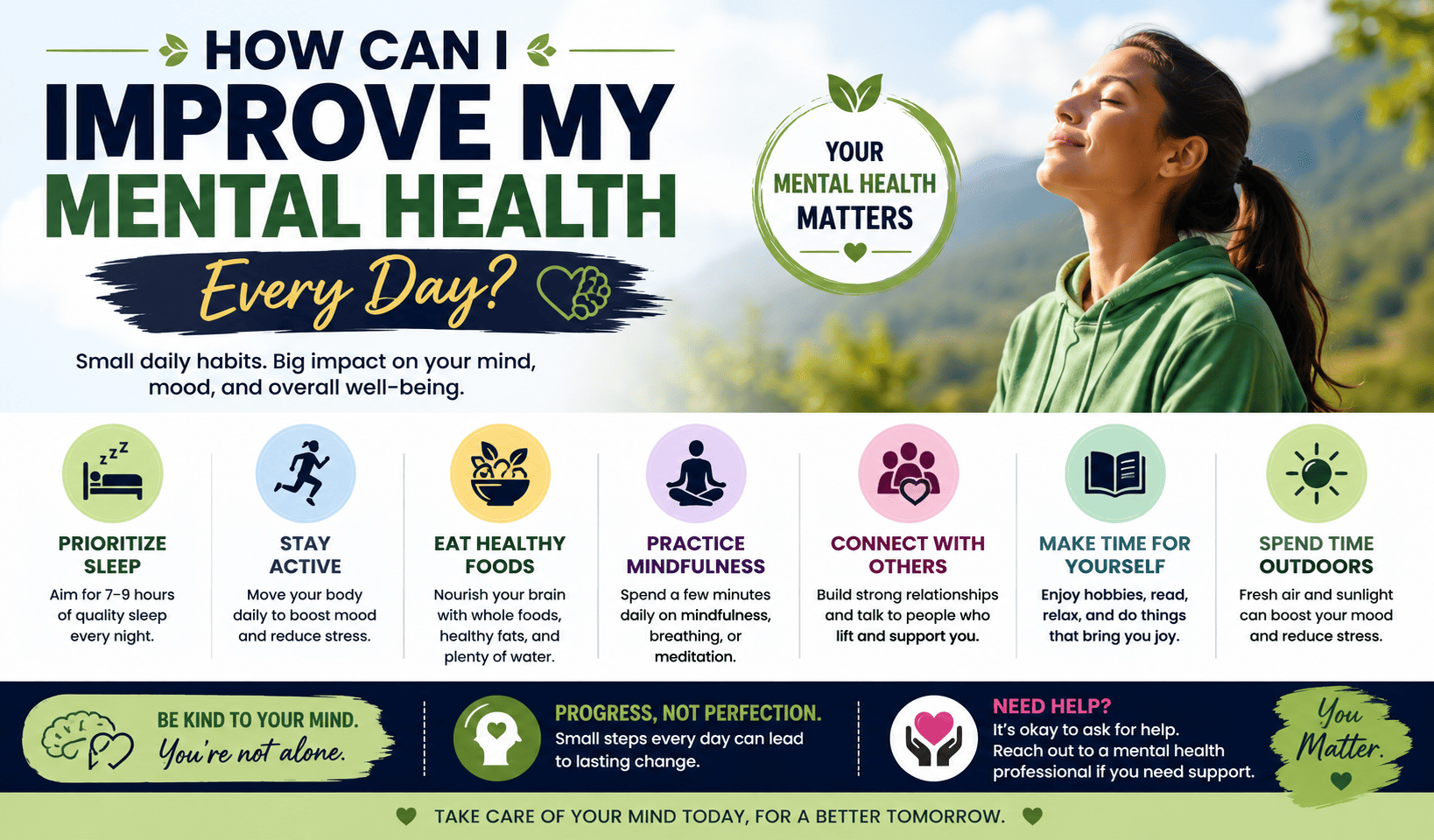
Mental health is just as important as physical health, yet many people focus on their bodies while neglecting their minds. If you’ve ever asked yourself, “How Can I Improve My Mental Health Every Day?”, you’re not alone. Millions of Americans experience stress, anxiety, burnout, or emotional exhaustion due to work, relationships, finances, or daily responsibilities.
The good news is that improving your mental health doesn’t require dramatic life changes. Small, consistent habits can significantly improve your emotional well-being, resilience, and overall quality of life. While these daily practices are not a replacement for professional mental health care, they can help support a healthier mindset and reduce everyday stress.
In this guide, you’ll learn evidence-based strategies to improve your mental health naturally, develop healthy routines, and recognize when it’s time to seek professional support.
Why Daily Mental Health Habits Matter
Mental health affects how you think, feel, make decisions, manage stress, and interact with others. Just as regular exercise strengthens your muscles, healthy daily habits strengthen your emotional resilience.
Building positive routines helps your brain regulate emotions more effectively while reducing the impact of chronic stress. Over time, these habits can improve your mood, increase energy levels, sharpen focus, and promote healthier relationships.
Consistency matters more than perfection. Even small improvements practiced every day can create lasting positive change.
Also Read : Why does stress affect my stomach?
Start Your Day with a Healthy Morning Routine
Your morning often sets the tone for the rest of your day.
Instead of immediately checking emails or scrolling through social media, spend the first few minutes focusing on yourself. Drink water, stretch your body, take a few deep breaths, or enjoy a quiet breakfast.
Starting your day intentionally helps reduce stress hormones while giving your mind a sense of control before daily responsibilities begin.
Even five to ten minutes of mindful preparation can make a noticeable difference in your mood.
Prioritize Quality Sleep
Sleep and mental health are deeply connected.
Poor sleep can increase anxiety, irritability, depression symptoms, and difficulty concentrating. Adults generally benefit from seven to nine hours of quality sleep each night.
Improving sleep hygiene includes maintaining a consistent bedtime, reducing screen exposure before sleep, avoiding excessive caffeine in the evening, and creating a cool, quiet sleeping environment.
Better sleep allows your brain to process emotions more effectively and recover from daily stress.
Also Read : Why do I wake up tired even after 8 hours of sleep?
Stay Physically Active
Exercise isn’t only beneficial for physical fitness—it also supports emotional wellness.
Regular physical activity stimulates the release of endorphins, often called “feel-good” chemicals, which naturally improve mood and reduce stress.
You don’t have to spend hours in the gym. Walking around your neighborhood, cycling, swimming, yoga, dancing, or gardening all contribute to better mental health.
Aim for regular movement that you genuinely enjoy, making it easier to stay consistent.
Eat Foods That Support Brain Health
Nutrition influences both physical and mental well-being.
A balanced diet rich in vegetables, fruits, whole grains, lean proteins, healthy fats, and omega-3 fatty acids supports healthy brain function.
Highly processed foods, excessive sugar, and frequent fast food consumption may contribute to energy crashes and mood fluctuations in some people.
Staying hydrated throughout the day is equally important, as even mild dehydration can affect concentration and mood.
Practice Mindfulness Every Day
Mindfulness helps you stay present instead of becoming overwhelmed by worries about the future or regrets from the past.
Simple mindfulness practices include focusing on your breathing, observing your surroundings, meditating for a few minutes, or simply paying attention while eating or walking.
Regular mindfulness practice has been associated with reduced stress, improved emotional regulation, and greater self-awareness.
Even five minutes daily can be beneficial.
Reduce Daily Stress
Stress is unavoidable, but how you manage it makes a significant difference.
Healthy stress management may include taking short breaks during work, practicing deep breathing exercises, spending time outdoors, listening to calming music, reading, or enjoying hobbies.
Learning to pause before reacting during stressful moments can help prevent emotional overload.
Remember that reducing stress doesn’t mean eliminating responsibilities—it means responding to them more effectively.
Build Strong Social Connections
Humans are naturally social beings.
Spending quality time with family members, trusted friends, coworkers, or supportive communities can improve emotional well-being and reduce feelings of loneliness.
Meaningful conversations provide emotional support during difficult times and help create a sense of belonging.
Even regular phone calls or video chats can strengthen relationships if you cannot meet in person.
Limit Social Media Consumption
While social media can help people stay connected, excessive use may contribute to anxiety, comparison, low self-esteem, and information overload.
Consider setting boundaries for screen time or scheduling specific periods to check social media rather than constantly scrolling throughout the day.
Replacing some screen time with reading, hobbies, exercise, or spending time outdoors often benefits mental health.
Spend Time Outside
Nature has a calming effect on many people.
Fresh air, sunlight, and green spaces may help reduce stress while improving mood and concentration.
Whether you walk through a local park, sit in your backyard, hike on weekends, or simply enjoy a few minutes outside during lunch, regular exposure to nature supports emotional wellness.
Sunlight also helps regulate your body’s natural sleep-wake cycle.
Practice Gratitude
Gratitude shifts your attention toward positive experiences rather than focusing solely on challenges.
Consider writing down three things you’re thankful for each day.
These don’t have to be major accomplishments. Appreciating a supportive friend, a delicious meal, good weather, or a productive day can gradually strengthen a more positive outlook.
Over time, gratitude becomes easier and more natural.
Learn to Say No
Many people experience burnout because they overcommit themselves.
Protecting your mental health sometimes means setting healthy boundaries.
Saying no to additional responsibilities doesn’t make you selfish. It allows you to preserve energy for the commitments that truly matter.
Healthy boundaries reduce stress while improving work-life balance.
Engage in Activities You Enjoy
Daily enjoyment plays an important role in emotional well-being.
Reading books, painting, gardening, cooking, photography, music, puzzles, sports, or learning new skills all stimulate your brain while providing healthy emotional outlets.
Scheduling enjoyable activities—even briefly—can help reduce chronic stress and increase overall life satisfaction.
Challenge Negative Thinking
Everyone experiences negative thoughts occasionally.
Instead of automatically believing every thought, ask yourself whether it’s based on facts or assumptions.
Replacing harsh self-criticism with realistic, compassionate thinking supports emotional resilience.
For example, instead of saying, “I’m terrible at everything,” try thinking, “I’m learning, and everyone makes mistakes.”
This small shift can significantly improve self-confidence over time.
Practice Self-Compassion
Treat yourself with the same kindness you would offer a close friend.
No one performs perfectly every day.
Accepting mistakes as part of personal growth reduces unnecessary guilt and emotional distress.
Self-compassion encourages healthier coping strategies rather than self-judgment.
Keep a Journal
Writing down your thoughts helps organize emotions and identify patterns.
Journaling may include recording daily experiences, expressing gratitude, setting goals, or simply describing how you feel.
Many people find that writing reduces mental clutter while increasing self-awareness.
There is no right or wrong way to journal.
Continue Learning
Learning keeps your brain engaged while building confidence.
Reading books, taking online courses, listening to educational podcasts, or developing new skills stimulates mental growth.
Personal development often contributes to improved self-esteem and greater emotional resilience.
Avoid Harmful Coping Mechanisms
When feeling overwhelmed, some people turn to alcohol, recreational drugs, excessive gambling, emotional eating, or compulsive shopping.
Although these behaviors may provide temporary relief, they often worsen mental health over time.
Healthier coping strategies include exercise, talking with trusted people, meditation, hobbies, or professional counselling.
Know When to Seek Professional Help
Daily habits can improve overall mental wellness, but some situations require professional care.
If you experience persistent sadness, overwhelming anxiety, panic attacks, significant changes in sleep or appetite, difficulty functioning at work or school, loss of interest in activities, or thoughts of harming yourself, seek help from a licensed mental health professional promptly.
Psychologists, psychiatrists, licensed therapists, and counsellors can provide evidence-based treatments tailored to your needs.
Seeking help is a sign of strength—not weakness.
Also Read : What causes sleep anxiety before workdays?
Creating Your Daily Mental Health Routine
Improving mental health doesn’t require following every suggestion at once.
Start by choosing two or three healthy habits that fit naturally into your routine. As these become consistent, gradually add others.
Small daily actions practiced over weeks and months often produce greater long-term benefits than making large changes that are difficult to maintain.
Remember that progress is rarely linear. Some days will be easier than others, and that’s completely normal.
Final Thoughts
If you’ve been asking, “How Can I Improve My Mental Health Every Day?”, the answer lies in building consistent, healthy habits that support your mind as well as your body. Prioritizing quality sleep, regular exercise, nutritious eating, mindfulness, social connection, gratitude, healthy boundaries, and enjoyable activities can all contribute to better emotional well-being over time.
While self-care plays an important role, it is not a substitute for professional treatment when symptoms are persistent or severe. If your mental health is significantly affecting your daily life, reaching out to a qualified healthcare professional is one of the most valuable steps you can take.
Improving mental health is a lifelong journey, and every positive step—no matter how small—counts.

Practicing gratitude may contribute to better mental well-being.
Frequently Asked Questions (FAQs)
1. How can I improve my mental health every day naturally?
You can support your mental health naturally by getting enough sleep, exercising regularly, eating a balanced diet, practicing mindfulness, staying connected with loved ones, managing stress, limiting social media, and making time for enjoyable activities.
2. How long does it take to improve mental health?Also Read
Everyone’s experience is different. Some people notice improvements within a few weeks of adopting healthier habits, while others may need more time or professional treatment depending on their situation.
3. Can exercise really improve mental health?
Yes. Regular physical activity can improve mood, reduce stress, support better sleep, and enhance overall emotional well-being. Even moderate activities like walking can be beneficial.
4. Is it normal to have bad mental health days?
Yes. Everyone experiences emotional ups and downs. Occasional difficult days are normal. However, if symptoms persist for several weeks or interfere with daily life, it’s important to consult a qualified mental health professional.
5. Does eating healthy affect mental health?
A nutritious diet supports brain function and overall health. While healthy eating alone won’t cure mental health conditions, it can be an important part of maintaining emotional well-being.
6. How much sleep is best for mental health?
Most adults benefit from seven to nine hours of quality sleep each night. Consistent sleep schedules and good sleep habits can help improve mood, concentration, and stress management.
Also Read : How to reset sleep schedule naturally?
7. Can mindfulness reduce anxiety?
Mindfulness may help reduce everyday stress and anxiety by encouraging present-moment awareness and improving emotional regulation. It works best when practiced consistently and may complement, but not replace, professional care when needed.
8. When should I seek professional help for my mental health?
You should consider seeking professional help if symptoms such as persistent sadness, anxiety, panic attacks, significant changes in sleep or appetite, or thoughts of self-harm interfere with your daily functioning or quality of life. A licensed mental health professional can assess your situation and recommend appropriate treatment.
Reviewed by: Dzarro Editorial Team
Fact-checked using trusted medical and scientific sources.

Sandip Choudhary is a Health & Wellness Researcher and Content Creator specializing in sleep, digestive health, preventive wellness, and evidence-based health education. He has been creating online content and researching health-related topics for several years, focusing on translating complex medical information into practical guidance for everyday readers.
With a strong background in SEO and content strategy, Sandip ensures that every article is optimized for both search engines and real users. His goal is to provide reliable, clear, and helpful information that supports healthier living.
Disclaimer: The content published is for informational purposes only and is not a substitute for professional medical advice.
1 thought on “How Can I Improve My Mental Health Every Day?”
Comments are closed.