
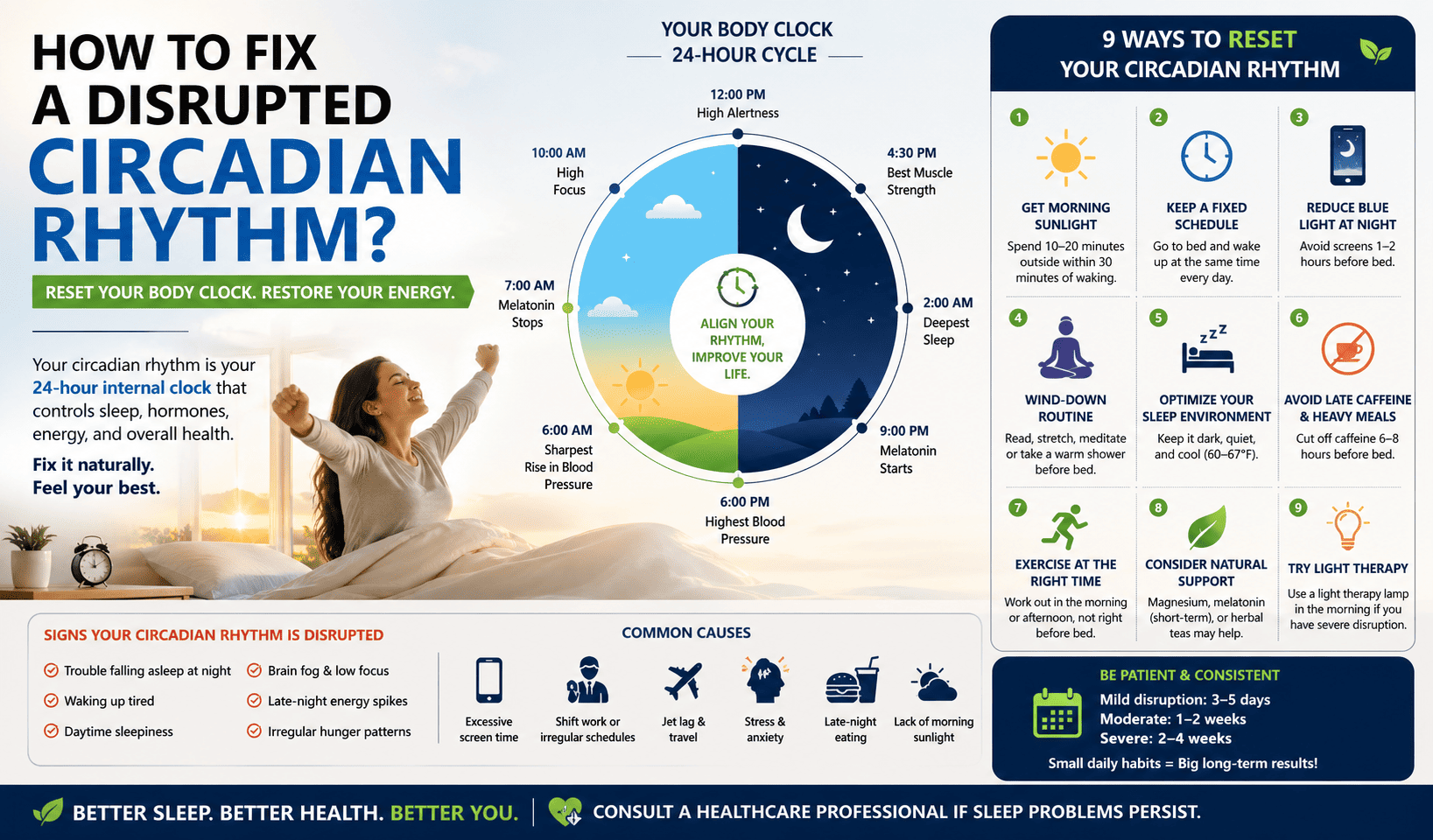
A disrupted circadian rhythm can make you feel tired at the wrong times, wide awake at night, and mentally foggy during the day. In the U.S., this is increasingly common due to shift work, late-night screen use, travel, and irregular routines.
This guide explains what’s happening in your body—and exactly how to reset your internal clock naturally.
What Is a Circadian Rhythm?
Your circadian rhythm is your body’s 24-hour internal clock that controls:
- Sleep and wake cycles
- Hormone release (like melatonin & cortisol)
- Body temperature
- Digestion and metabolism
It’s mainly regulated by light exposure, especially sunlight.
Signs Your Circadian Rhythm Is Disrupted
You may have a misaligned sleep cycle if you experience:
- Difficulty falling asleep at night
- Waking up tired even after 7–8 hours
- Feeling sleepy during the day
- Brain fog or low focus
- Late-night energy spikes
- Irregular hunger patterns
Common Causes (USA Lifestyle Factors)
- Excessive screen time at night (blue light)
- Shift work or rotating schedules
- Jet lag (frequent travel across time zones)
- Late-night eating
- Lack of morning sunlight
- Stress or anxiety
Also Read : Can gut health affect sleep?
How to Fix a Disrupted Circadian Rhythm
1. Get Morning Sunlight Within 30 Minutes of Waking
Morning light is the strongest signal to reset your body clock.
👉 What to do:
- Go outside for 10–20 minutes daily
- No sunglasses if possible
- Even cloudy days work
💡 This helps regulate melatonin and cortisol naturally.
2. Keep a Fixed Sleep Schedule (Even on Weekends)
Your body loves consistency.
👉 Target:
- Same sleep time every night
- Same wake-up time every morning
📌 Even a 1–2 hour shift on weekends can disrupt your rhythm.
3. Reduce Blue Light at Night
Artificial light delays melatonin release.
👉 Fix it:
- Avoid screens 1–2 hours before bed
- Use night mode / blue light filters
- Consider blue-light-blocking glasses
4. Create a “Wind-Down” Routine
Signal your brain that it’s time to sleep.
Try:
- Reading a book
- Warm shower
- Light stretching
- Meditation or breathing
5. Control Your Sleep Environment
Optimize your bedroom:
- Temperature: 60–67°F (15–19°C)
- Completely dark room
- Quiet or white noise
6. Avoid Late Caffeine & Heavy Meals
👉 Cut off caffeine:
- At least 6–8 hours before bedtime
👉 Avoid:
- Heavy meals late at night
- Sugar spikes before sleep
7. Exercise at the Right Time
Exercise improves sleep—but timing matters.
✔ Best time: Morning or afternoon
❌ Avoid intense workouts close to bedtime
8. Try Natural Sleep Support (Optional)
Some natural aids may help:
- Magnesium
- Melatonin (short-term use)
- Herbal teas (chamomile, valerian root)
⚠️ Always consult a healthcare professional before supplements.
9. Use Light Therapy (For Severe Cases)
If you have extreme disruption (like night shift work):
- Light therapy lamps can simulate sunlight
- Used in the morning to reset your clock
👉 Small lifestyle changes can lead to better sleep quality and reduced fatigue.
How Long Does It Take to Reset?
- Mild disruption: 3–5 days
- Moderate: 1–2 weeks
- Severe (shift work/jet lag): 2–4 weeks
Consistency is the key.
When to See a Doctor
Seek professional help if:
- Insomnia lasts more than 3 weeks
- You suspect sleep apnea
- You feel extreme daytime fatigue
- Sleep issues affect your work or health
Pro Tips for Faster Results
- Wake up at the same time even after poor sleep
- Don’t nap longer than 20–30 minutes
- Eat breakfast within 1 hour of waking
- Avoid lying in bed awake for long
Final Thoughts
Fixing a disrupted circadian rhythm isn’t about quick hacks—it’s about retraining your body through consistency, light exposure, and daily habits.
If you follow these steps daily, your sleep cycle can gradually return to normal—helping you feel more energized, focused, and healthy.
Medically reviewed information sourced from trusted health organizations.
References
- National Institutes of Health (NIH). Sleep and Sleep Disorders.
https://www.nhlbi.nih.gov/health/sleep - Sleep Foundation. Sleep Health Resources.
https://www.sleepfoundation.org/ - Centers for Disease Control and Prevention (CDC). Sleep and Sleep Disorders.
https://www.cdc.gov/sleep/ - Mayo Clinic. Sleep Disorders Overview.
https://www.mayoclinic.org/
Reviewed by: Dzarro Editorial Team
Fact-checked using trusted medical and scientific sources.
Last Updated: June 13, 2026

Sandip Choudhary is a Health & Wellness Researcher and Content Creator specializing in sleep, digestive health, preventive wellness, and evidence-based health education. He has been creating online content and researching health-related topics for several years, focusing on translating complex medical information into practical guidance for everyday readers.
With a strong background in SEO and content strategy, Sandip ensures that every article is optimized for both search engines and real users. His goal is to provide reliable, clear, and helpful information that supports healthier living.
Disclaimer: The content published is for informational purposes only and is not a substitute for professional medical advice.