
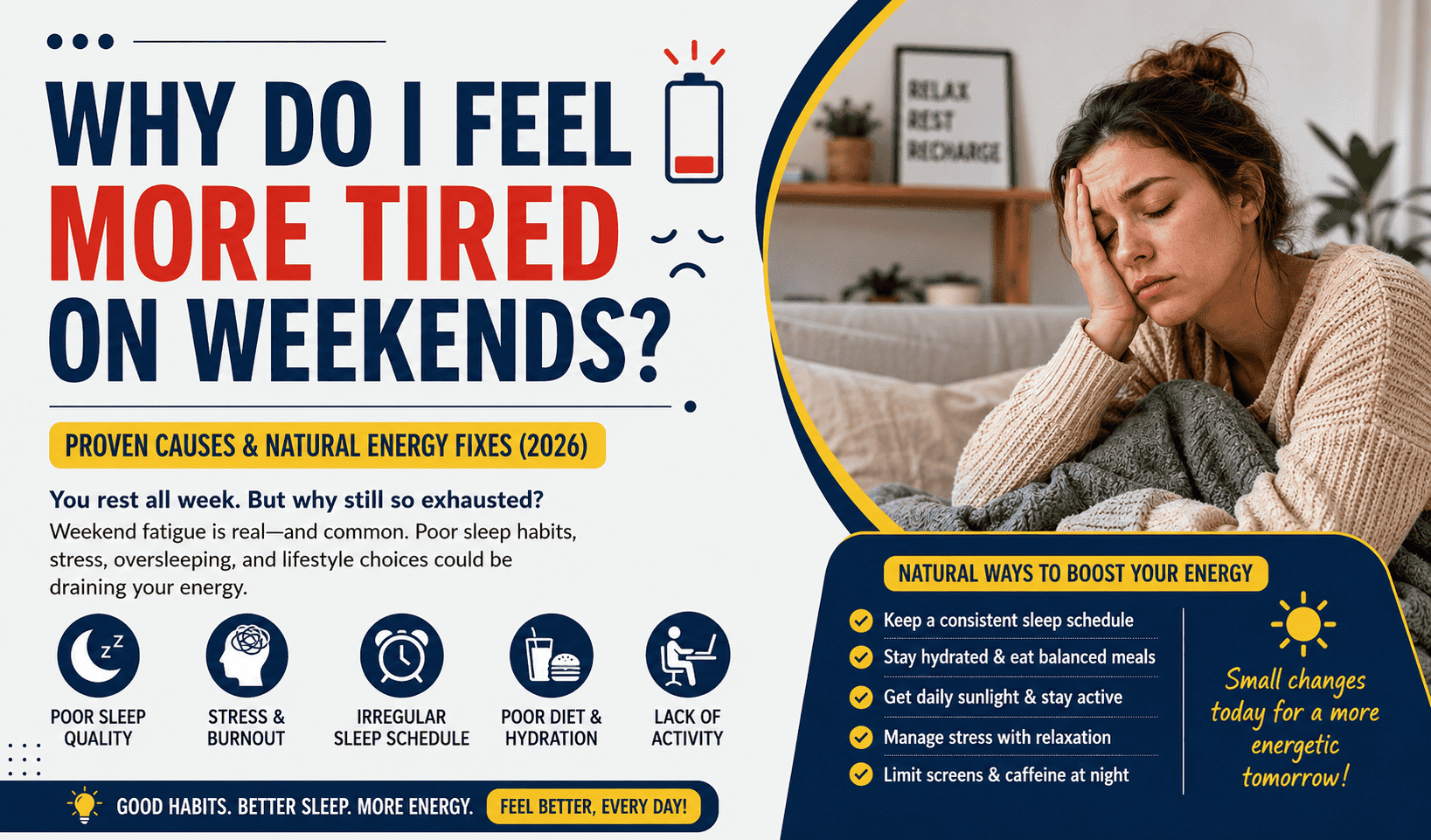
Do you finally get a chance to relax on the weekend, only to feel even more exhausted than during the workweek? Many Americans experience heavy fatigue, brain fog, headaches, or low motivation on Saturdays and Sundays — even after sleeping longer.
It may seem confusing, but weekend fatigue is surprisingly common. Changes in sleep schedules, stress recovery, poor sleep quality, dehydration, mental burnout, and disrupted body rhythms can all contribute to feeling more tired on weekends.
The good news is that understanding the real causes can help you improve energy naturally and feel more refreshed throughout the week.
Quick Answer
Feeling more tired on weekends is often caused by disrupted sleep schedules, accumulated stress, oversleeping, social jet lag, poor sleep quality, dehydration, burnout, or lifestyle changes. Your body may finally begin recovering from weekday stress, leading to increased fatigue and sleepiness during weekends.
What Does It Mean to Feel More Tired on Weekends?
Weekend fatigue happens when your body and brain react differently to changes in routine, stress levels, and sleep patterns.
During busy weekdays, many people rely on:
- Adrenaline
- Caffeine
- Stress hormones
- Strict schedules
Once the weekend arrives and stress decreases, the body may finally recognize how exhausted it actually feels.
In other cases, sleeping too much or changing sleep schedules can disrupt the body’s internal clock and worsen tiredness.
Common Symptoms of Weekend Fatigue
Weekend tiredness may feel physical, mental, or both.
Early Symptoms
- Sleeping longer than usual
- Grogginess after waking up
- Brain fog
- Low motivation
- Feeling lazy or sluggish
- Mild headaches
Advanced Symptoms
- Severe fatigue
- Irritability
- Daytime sleepiness
- Difficulty focusing
- Muscle heaviness
- Mood changes
- Poor productivity even after resting
Some people also experience:
- Digestive discomfort
- Sleep anxiety
- Weekend migraines
- Increased caffeine cravings
Also Read : What is revenge bedtime procrastination?
Why Do I Feel More Tired on Weekends?
There are several common reasons why fatigue becomes more noticeable on weekends.
1. Social Jet Lag
One of the biggest causes is “social jet lag.”
This happens when your sleep schedule changes significantly between weekdays and weekends.
Example:
- Weekdays: sleep at 11 PM, wake at 6 AM
- Weekends: sleep at 2 AM, wake at 10 AM
This confuses your circadian rhythm and may cause:
- Brain fog
- Low energy
- Grogginess
- Poor sleep quality
Even a few hours of schedule change can affect recovery.
2. Sleep Debt Recovery
Many Americans accumulate “sleep debt” during the week.
If you regularly sleep less than needed, your body may try to recover on weekends by increasing fatigue and sleepiness.
Signs of Sleep Debt
- Needing naps
- Sleeping excessively on weekends
- Feeling exhausted after work
- Trouble waking up
Weekend fatigue may be your body asking for proper recovery.
3. Chronic Stress & Burnout
Stress hormones help many people stay active during workdays.
When stress decreases on weekends:
- The nervous system relaxes
- Cortisol levels shift
- Fatigue becomes more noticeable
This is common among:
- Office workers
- Healthcare professionals
- Parents
- Students
- Entrepreneurs
4. Oversleeping
Sleeping too much may actually worsen tiredness.
Oversleeping can:
- Disrupt circadian rhythm
- Increase grogginess
- Reduce sleep quality
- Trigger headaches
Many people feel more tired after sleeping 10–12 hours than after sleeping 7–8 hours consistently.
5. Poor Sleep Quality
You may spend enough time in bed but still get poor-quality sleep.
Common Sleep Disruptors
- Stress
- Room temperature
- Alcohol
- Screen time
- Sleep apnea
- Noise
Poor deep sleep may leave you tired regardless of sleep duration.
6. Weekend Lifestyle Changes
Weekends often involve habits that disrupt recovery.
Common Weekend Habits
- Staying up late
- Alcohol consumption
- Heavy meals
- Less movement
- Excess screen time
These habits may negatively affect sleep and energy levels.
Also Read : Can sleeping with the TV on affect sleep?
Comparison Table: Healthy Recovery vs Weekend Fatigue
| Factor | Healthy Recovery | Weekend Fatigue |
|---|---|---|
| Sleep Schedule | Consistent | Irregular |
| Energy Levels | Improved | Low |
| Sleep Duration | Balanced | Oversleeping |
| Stress Recovery | Gradual | Sudden crash |
| Morning Feeling | Refreshed | Groggy |
Main Causes & Risk Factors
Certain people are more likely to experience weekend exhaustion.
Poor Sleep Habits
Irregular bedtimes and inconsistent sleep schedules increase fatigue risk.
High Stress Lifestyle
Long work hours and emotional stress can lead to burnout-related exhaustion.
Excessive Screen Time
Phones, TVs, and social media late at night may reduce melatonin production.
Poor Diet
Heavy processed foods, sugar, and alcohol may worsen inflammation and fatigue.
Medical Conditions
Underlying conditions may contribute to chronic tiredness, including:
- Sleep apnea
- Anxiety
- Depression
- Thyroid issues
- Vitamin deficiencies
Persistent fatigue should not always be blamed on stress alone.
Best Treatment Options for Weekend Fatigue
Improving weekend energy usually requires healthier sleep and lifestyle habits.
1. Keep a Consistent Sleep Schedule
One of the most effective strategies is maintaining similar sleep and wake times every day.
Helpful Tip
Try not to shift sleep schedules by more than 1 hour on weekends.
Consistency helps stabilize circadian rhythm naturally.
2. Improve Sleep Quality
Focus on better sleep recovery instead of simply sleeping longer.
Helpful Sleep Habits
- Keep the room cool
- Reduce screen time before bed
- Avoid caffeine late in the day
- Use comfortable bedding
- Reduce noise and bright lights
3. Manage Stress Better
Stress management improves both energy and sleep quality.
Helpful Stress Reduction Methods
- Walking outdoors
- Meditation
- Journaling
- Deep breathing
- Exercise
- Social connection
Your body recovers better when stress levels are balanced consistently.
4. Stay Active on Weekends
Many people become less active on weekends, which may worsen sluggishness.
Helpful Activities
- Walking
- Stretching
- Light exercise
- Outdoor activities
Movement supports energy production and circulation.
5. Address Sleep Debt Gradually
Instead of oversleeping excessively:
- Go to bed slightly earlier during the week
- Add small recovery naps if needed
- Focus on consistency
This may help improve energy more effectively.
Also Read : Why do I wake up with a dry mouth?
Diet & Lifestyle Tips for Better Weekend Energy
Foods That Support Energy
- Eggs
- Oatmeal
- Bananas
- Greek yogurt
- Nuts and seeds
- Salmon
- Leafy greens
These foods support:
- Stable blood sugar
- Better recovery
- Sustained energy
Hydration Tips
Dehydration may worsen weekend fatigue.
Helpful Habits
- Drink water throughout the day
- Reduce sugary drinks
- Limit excessive alcohol
Even mild dehydration can contribute to headaches and tiredness.
Foods & Habits to Avoid
Limit:
- Heavy late-night meals
- Energy drinks
- Excess alcohol
- Sugary snacks
- Excess caffeine
Avoid:
- Sleeping excessively
- Staying up extremely late
- Spending all day inactive
Best Daily Habits for Better Results
Morning Habits
- Wake up at consistent times
- Get sunlight exposure
- Drink water after waking
Daytime Habits
- Stay active
- Reduce stress buildup
- Take movement breaks
Nighttime Habits
- Reduce blue light exposure
- Maintain relaxing routines
- Sleep in a cool, dark room
Small consistent habits often improve recovery naturally.
When Should You See a Doctor?
Seek medical advice if you experience:
- Extreme fatigue regularly
- Loud snoring
- Breathing pauses during sleep
- Depression symptoms
- Chest pain
- Severe headaches
- Ongoing exhaustion lasting weeks
Persistent fatigue may indicate underlying medical conditions.
Who Is Most at Risk?
1. Office Workers
High stress and long sitting hours increase burnout risk.
2. Parents
Interrupted sleep and mental exhaustion commonly affect energy.
3. Students
Irregular sleep schedules often contribute to weekend fatigue.
4. Shift Workers
Circadian rhythm disruption increases tiredness.
5. People with Anxiety or Burnout
Stress-related exhaustion may become more noticeable during weekends.
FAQs
1. Why do I feel more tired after sleeping longer on weekends?
Oversleeping can disrupt your body clock and increase grogginess, making you feel less refreshed.
2. Can stress cause weekend fatigue?
Yes. When stress hormones drop on weekends, the body may finally recognize accumulated exhaustion.
3. Is weekend tiredness normal?
Occasional fatigue is common, but persistent exhaustion may signal poor sleep quality or underlying health issues.
4. How can I stop feeling tired on weekends?
Maintain consistent sleep schedules, improve sleep quality, stay hydrated, reduce stress, and avoid oversleeping.
5. Can poor sleep during the week affect weekends?
Yes. Sleep debt accumulated during the week often causes increased fatigue and recovery needs on weekends.
👉 Consistent routines often lead to long-term sleep quality improvement.
Conclusion
Feeling more tired on weekends is often connected to sleep debt, stress recovery, oversleeping, poor sleep quality, and disrupted routines. While occasional fatigue is common, consistently waking up exhausted may signal unhealthy sleep habits or underlying health concerns.
The good news is that improving sleep consistency, managing stress, staying active, and following healthier routines can naturally improve energy and overall recovery.
If fatigue continues despite healthy lifestyle changes, speaking with a healthcare professional may help identify deeper causes affecting your sleep and wellness.
Medically reviewed information sourced from trusted health organizations.
References
- National Institutes of Health (NIH). Sleep and Sleep Disorders.
https://www.nhlbi.nih.gov/health/sleep - Sleep Foundation. Sleep Health Resources.
https://www.sleepfoundation.org/ - Centers for Disease Control and Prevention (CDC). Sleep and Sleep Disorders.
https://www.cdc.gov/sleep/ - Mayo Clinic. Sleep Disorders Overview.
https://www.mayoclinic.org/
Reviewed by: Dzarro Editorial Team
Fact-checked using trusted medical and scientific sources.
Last Updated: June 13, 2026

Sandip Choudhary is a Health & Wellness Researcher and Content Creator specializing in sleep, digestive health, preventive wellness, and evidence-based health education. He has been creating online content and researching health-related topics for several years, focusing on translating complex medical information into practical guidance for everyday readers.
With a strong background in SEO and content strategy, Sandip ensures that every article is optimized for both search engines and real users. His goal is to provide reliable, clear, and helpful information that supports healthier living.
Disclaimer: The content published is for informational purposes only and is not a substitute for professional medical advice.