
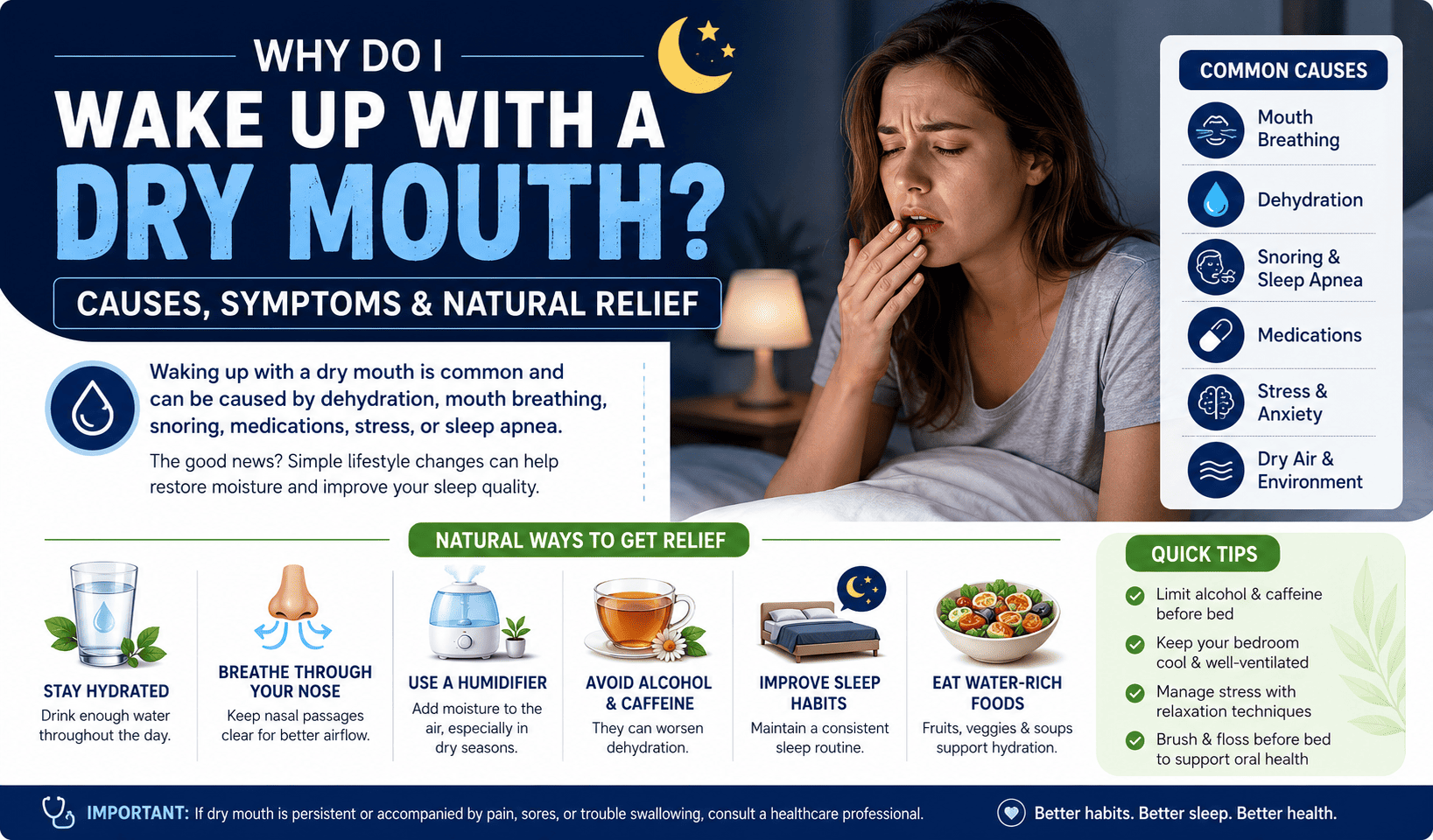
Waking up with a dry mouth can feel uncomfortable and frustrating. Your mouth may feel sticky, your throat irritated, and you might immediately need water after waking up. For many Americans, this happens occasionally. But if it becomes frequent, it may point to underlying sleep, lifestyle, or health-related issues.
Dry mouth during sleep is often linked to dehydration, mouth breathing, snoring, stress, medications, or poor sleep quality. In some cases, it may also signal conditions like sleep apnea or nasal congestion.
This guide explains why you wake up with a dry mouth, common symptoms, possible causes, and practical ways to improve it naturally
Quick Answer
Waking up with a dry mouth is commonly caused by dehydration, mouth breathing, snoring, medications, stress, poor sleep habits, or sleep apnea. Dry mouth happens when saliva production decreases overnight. Improving hydration, nasal breathing, bedroom humidity, and sleep quality may help reduce symptoms naturally.
What Does It Mean to Wake Up With a Dry Mouth?
Dry mouth occurs when your mouth does not produce enough saliva during sleep.
Saliva is important because it helps:
- Keep the mouth moist
- Protect teeth and gums
- Support digestion
- Reduce bacteria buildup
When saliva levels drop overnight, you may wake up with:
- Sticky mouth
- Dry throat
- Bad breath
- Difficulty swallowing
Occasional dry mouth is common, especially in dry climates or after dehydration. However, chronic dry mouth should not be ignored.
Common Symptoms of Dry Mouth During Sleep
Symptoms may range from mild discomfort to more persistent oral problems.
Early Symptoms
- Sticky or dry feeling in the mouth
- Dry throat in the morning
- Increased thirst after waking
- Bad breath
- Cracked lips
- Mild irritation while swallowing
Advanced Symptoms
- Difficulty speaking
- Burning sensation in the mouth
- Frequent nighttime waking
- Mouth sores
- Gum irritation
- Tooth sensitivity
- Hoarseness
Persistent dry mouth may affect sleep quality and oral health over time.
Also Read : Can caffeine affect sleep even hours later?
Why Do I Wake Up With a Dry Mouth?
Several factors may reduce saliva production or increase mouth dryness during sleep.
1. Mouth Breathing During Sleep
One of the most common causes is sleeping with the mouth open.
This often happens because of:
- Nasal congestion
- Allergies
- Deviated septum
- Habitual mouth breathing
Mouth breathing dries out saliva quickly, especially overnight.
Common Signs
- Dry lips
- Sore throat
- Snoring
- Morning fatigue
2. Dehydration
Even mild dehydration may reduce saliva production.
Common Causes of Overnight Dehydration
- Not drinking enough water
- Excess caffeine
- Alcohol
- Sweating during sleep
- Dry bedroom air
Many Americans unknowingly become dehydrated overnight, especially during summer or winter heating seasons.
3. Snoring & Sleep Apnea
Snoring and sleep apnea often increase mouth dryness because breathing patterns become disrupted during sleep.
Possible Symptoms
- Loud snoring
- Waking up tired
- Dry mouth every morning
- Morning headaches
- Daytime fatigue
Sleep apnea is a common but underdiagnosed sleep disorder in the United States.
4. Certain Medications
Many medications may reduce saliva production.
Common Medication Types
- Allergy medications
- Antidepressants
- Blood pressure medications
- Sleep aids
- Anxiety medications
Medication-related dry mouth is especially common among older adults.
5. Stress & Anxiety
Stress affects the nervous system and may reduce saliva production.
People under chronic stress may notice:
- Dry mouth during anxiety
- Tight throat sensation
- Increased nighttime waking
- Poor sleep quality
Stress may also contribute to mouth breathing and dehydration.
6. Dry Air & Bedroom Environment
Sleeping in dry environments can worsen mouth dryness.
Common Environmental Causes
- Air conditioning
- Heating systems
- Low humidity
- Poor airflow
Dry winter air is a major trigger in many parts of the USA.
Also Read : Why do I feel anxious before bedtime?
Dry Mouth Causes Comparison Table
| Cause | Common Symptoms | Risk Level |
|---|---|---|
| Mouth Breathing | Dry throat, snoring | Very common |
| Dehydration | Thirst, fatigue | Common |
| Sleep Apnea | Snoring, exhaustion | Moderate to high |
| Medications | Persistent dryness | Common |
| Stress & Anxiety | Tight throat, restlessness | Common |
| Dry Air | Dry lips, irritation | Seasonal |
Best Treatment Options for Dry Mouth During Sleep
Most cases improve with lifestyle changes and better sleep habits.
1. Stay Hydrated Throughout the Day
Proper hydration supports healthy saliva production.
Helpful Tips
- Drink water consistently
- Reduce sugary drinks
- Limit excessive caffeine
- Avoid dehydration before bed
Hydration matters more throughout the day than drinking large amounts right before sleep.
2. Improve Nasal Breathing
Breathing through the nose helps retain moisture.
Helpful Strategies
- Treat allergies
- Use saline nasal sprays
- Improve room humidity
- Avoid sleeping with the mouth open
Some people notice significant improvement after reducing nasal congestion.
3. Use a Humidifier
Humidifiers add moisture to the air and may reduce overnight dryness.
This can help:
- Dry mouth
- Dry throat
- Nasal irritation
- Snoring discomfort
Humidifiers are especially useful during winter or in dry climates.
4. Reduce Alcohol & Caffeine
Both alcohol and caffeine may contribute to dehydration.
Best Practice
Limit:
- Coffee late in the day
- Energy drinks
- Alcohol before bed
These substances may worsen overnight mouth dryness.
5. Improve Sleep Quality
Better sleep habits may reduce mouth breathing and stress-related dryness.
Helpful Sleep Habits
- Consistent sleep schedule
- Cooler bedroom temperature
- Stress reduction before bed
- Better sleep posture
Good sleep quality supports healthier breathing patterns.
6. Review Medications With a Doctor
Never stop medications without medical advice.
However, if dry mouth becomes severe, discussing alternatives with a healthcare provider may help.
Also Read : What causes night sweats while sleeping?
Diet & Lifestyle Tips for Better Hydration & Oral Health
Foods That May Help
- Water-rich fruits
- Cucumbers
- Watermelon
- Soups
- Herbal tea
- Leafy greens
These foods may support hydration naturally.
Foods & Habits to Avoid
Avoid Excess:
- Salty foods
- Sugary drinks
- Smoking
- Alcohol
- Energy drinks
These may worsen dehydration and oral dryness.
Daily Routine Improvements
Morning
- Drink water after waking
- Avoid excessive caffeine immediately
During the Day
- Stay hydrated consistently
- Reduce stress when possible
Evening
- Limit alcohol
- Use a humidifier if needed
- Improve bedroom airflow
Small routine changes often improve symptoms over time.
When Should You See a Doctor?
Seek medical advice if dry mouth becomes:
- Severe
- Persistent
- Painful
- Associated with breathing problems
You should also seek medical attention if you experience:
- Loud snoring
- Difficulty swallowing
- Frequent waking
- Mouth sores
- Severe fatigue
- White patches in the mouth
Persistent dry mouth may sometimes signal underlying medical conditions.
Who Is Most at Risk?
Older Adults
Medication use and reduced saliva production increase risk.
People With Allergies
Nasal congestion often causes mouth breathing.
Office Workers
Stress, dehydration, and caffeine intake may contribute.
People With Sleep Apnea
Dry mouth is very common among sleep apnea sufferers.
Individuals Living in Dry Climates
Low humidity environments may worsen symptoms.
FAQs
1. Why is my mouth so dry when I wake up?
Dry mouth during sleep is commonly caused by mouth breathing, dehydration, snoring, medications, or poor sleep quality.
2. Can stress cause dry mouth at night?
Yes. Stress and anxiety may reduce saliva production and contribute to nighttime mouth dryness.
3. Is waking up with a dry mouth a sign of sleep apnea?
Sometimes. Frequent dry mouth combined with loud snoring and daytime fatigue may suggest sleep apnea.
4. How can I stop waking up with a dry mouth?
Improving hydration, nasal breathing, bedroom humidity, and sleep habits may help reduce symptoms naturally.
5. Can dehydration cause dry mouth during sleep?
Yes. Mild dehydration is one of the most common causes of waking up with a dry mouth.
👉 Natural bedtime habits may help the body relax before sleep.
Conclusion
Waking up with a dry mouth is often linked to dehydration, mouth breathing, poor sleep habits, stress, or sleep-related breathing issues. While occasional dryness is common, frequent symptoms should not be ignored.
Simple lifestyle changes — like improving hydration, optimizing sleep environment, reducing alcohol intake, and supporting nasal breathing — may help improve symptoms naturally.
If dry mouth continues regularly or occurs alongside snoring, fatigue, or breathing problems, speaking with a healthcare professional may help identify the underlying cause and improve sleep quality.
Medically reviewed information sourced from trusted health organizations.
References
- National Institutes of Health (NIH). Sleep and Sleep Disorders.
https://www.nhlbi.nih.gov/health/sleep - Sleep Foundation. Sleep Health Resources.
https://www.sleepfoundation.org/ - Centers for Disease Control and Prevention (CDC). Sleep and Sleep Disorders.
https://www.cdc.gov/sleep/ - Mayo Clinic. Sleep Disorders Overview.
https://www.mayoclinic.org/
Reviewed by: Dzarro Editorial Team
Fact-checked using trusted medical and scientific sources.
Last Updated: June 13, 2026

Sandip Choudhary is a Health & Wellness Researcher and Content Creator specializing in sleep, digestive health, preventive wellness, and evidence-based health education. He has been creating online content and researching health-related topics for several years, focusing on translating complex medical information into practical guidance for everyday readers.
With a strong background in SEO and content strategy, Sandip ensures that every article is optimized for both search engines and real users. His goal is to provide reliable, clear, and helpful information that supports healthier living.
Disclaimer: The content published is for informational purposes only and is not a substitute for professional medical advice.