
Introduction
You feel your heart racing, your mind restless, and a strange sense of unease—but nothing obvious triggered it. No major stress, no bad news. Just anxiety out of nowhere.
This is more common than you think in the United States. Millions of Americans experience unexplained anxiety symptoms every year—and one often overlooked cause is dehydration.
Yes, something as simple as not drinking enough water can affect your mood, energy, and even your mental health.
Quick Answer
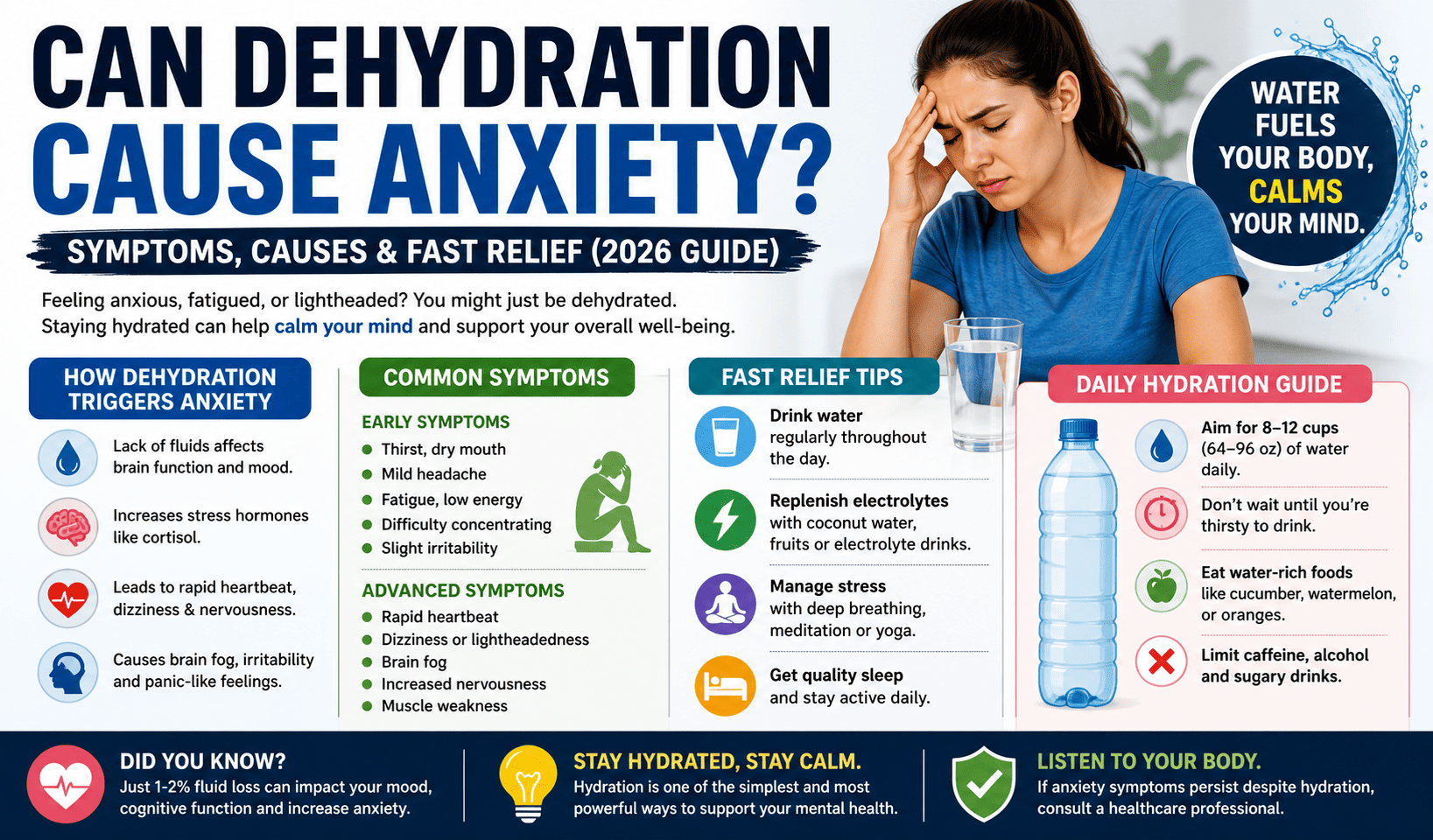
Yes, dehydration can cause anxiety. When your body lacks enough fluids, it affects brain function, hormone balance, and nervous system regulation. This can lead to symptoms like increased heart rate, dizziness, fatigue, and heightened stress response, which may feel like anxiety or even trigger panic-like symptoms.
What Is Dehydration and Its Link to Anxiety?
Dehydration happens when your body loses more fluids than it takes in.
Your brain is made up of about 75% water, and even mild dehydration can impact:
- Mood
- Focus
- Energy levels
- Stress response
When hydration levels drop, your body enters a stress state, activating hormones like cortisol. This can mimic or worsen anxiety symptoms.
Symptoms of Dehydration-Related Anxiety
Early Symptoms:
- Dry mouth and thirst
- Mild headache
- Fatigue or low energy
- Difficulty concentrating
- Slight irritability
Advanced Symptoms:
- Rapid heartbeat (palpitations)
- Dizziness or lightheadedness
- Brain fog
- Increased nervousness or panic feeling
- Muscle weakness
- Low blood pressure
👉 Many people mistake these signs for anxiety disorders without realizing dehydration is the root cause.
Causes & Risk Factors
1. Inadequate Water Intake
- Busy schedules
- Forgetting to drink water
- Relying on coffee or sugary drinks
2. High Caffeine Consumption
- Coffee, energy drinks, and soda can increase fluid loss
3. Stress & Anxiety Loop
- Stress increases cortisol
- Dehydration increases stress
➡️ Creates a cycle
4. Diet Habits
- High sodium intake
- Low intake of fruits and vegetables
5. Physical Factors
- Exercise without proper hydration
- Hot weather
- Illness (fever, vomiting, diarrhea)
👉 Discover proven strategies for stress management and mental clarity in our complete Mental Wellness category guide.
Dehydration vs Anxiety Disorder (Key Differences)
| Factor | Dehydration-Related Anxiety | Anxiety Disorder |
|---|---|---|
| Root Cause | Lack of fluids | Psychological / neurological |
| Onset | Sudden (linked to hydration levels) | Gradual or chronic |
| Physical Signs | Dry mouth, thirst, dizziness | Chest tightness, worry, fear |
| Relief | Improves with hydration | Needs therapy or medication |
| Duration | Short-term | Long-term condition |
Best Treatment Options
1. Rehydrate Properly
- Drink water consistently throughout the day
- Aim for 8–12 cups daily (USA general guideline)
2. Add Electrolytes
- Sodium, potassium, and magnesium help restore balance
- Use natural sources like coconut water or electrolyte drinks
3. Reduce Caffeine
- Limit coffee and energy drinks
- Replace with herbal teas
4. Manage Stress
- Deep breathing exercises
- Meditation or mindfulness
- Regular physical activity
5. Improve Sleep
- Poor sleep worsens both dehydration and anxiety
Diet & Lifestyle Tips
What to Eat:
- Water-rich foods:
- Cucumbers
- Watermelon
- Oranges
- Spinach
- Electrolyte-rich foods:
- Bananas
- Avocados
- Yogurt
What to Avoid:
- Excess caffeine
- Alcohol
- Processed salty foods
- Sugary beverages
Daily Routine Improvements:
- Start your morning with water
- Carry a water bottle
- Set hydration reminders
- Drink before you feel thirsty
When to See a Doctor
Seek medical help if you experience:
- Severe dizziness or fainting
- Rapid or irregular heartbeat
- Confusion or disorientation
- Persistent anxiety despite hydration
- Symptoms lasting more than a few days
👉 These could indicate a more serious condition beyond dehydration.
Who Is at Risk?
1. Office Workers
- Long hours without water intake
- High caffeine consumption
2. Students
- Stress + irregular hydration habits
3. Athletes / Gym Goers
- Fluid loss through sweat
4. Older Adults
- Reduced thirst sensation
5. Women
- Hormonal changes can increase sensitivity
FAQs
1. Can dehydration trigger panic attacks?
Yes, dehydration can increase heart rate and stress hormones, which may trigger panic-like symptoms in some individuals.
2. How quickly can dehydration affect mood?
Even mild dehydration can impact mood and concentration within a few hours.
3. Does drinking water reduce anxiety immediately?
It may help reduce symptoms if dehydration is the cause, but effects can take some time.
4. How much water should I drink daily?
Most adults in the U.S. need about 8–12 cups (2–3 liters) per day, depending on activity level.
5. Can electrolytes help anxiety caused by dehydration?
Yes, restoring electrolyte balance can improve nerve and muscle function, helping reduce symptoms.
Conclusion
Dehydration is a simple yet powerful factor that can influence your mental state.
If you’re experiencing unexplained anxiety, fatigue, or brain fog, your body might just be asking for water.
✔ Stay hydrated
✔ Balance electrolytes
✔ Reduce caffeine
✔ Listen to your body
Sometimes, the solution isn’t complex—it’s as basic as drinking enough water consistently.
Reviewed by: Dzarro Editorial Team
Fact-checked using trusted medical and scientific sources.

Sandip Choudhary is a Health & Wellness Researcher and Content Creator specializing in sleep, digestive health, preventive wellness, and evidence-based health education. He has been creating online content and researching health-related topics for several years, focusing on translating complex medical information into practical guidance for everyday readers.
With a strong background in SEO and content strategy, Sandip ensures that every article is optimized for both search engines and real users. His goal is to provide reliable, clear, and helpful information that supports healthier living.
Disclaimer: The content published is for informational purposes only and is not a substitute for professional medical advice.