
Introduction
If you’re dealing with bloating, irregular digestion, or constant gut discomfort, you’re not alone. Millions of people in the U.S. struggle with gut health issues—often trying diets, supplements, and medications without lasting results. Recently, fasting has gained popularity as a natural way to “reset” the gut. But does it actually work, or is it just another trend?
Quick Answer
Yes, fasting can improve gut health by giving your digestive system time to rest, reducing inflammation, and supporting beneficial gut bacteria. However, results depend on the type of fasting, your diet, and overall lifestyle. Short-term fasting may help digestion, but it’s not a cure and should be done carefully.
What Is Fasting for Gut Health?
Fasting means going without food for a specific period of time. In the context of gut health, it’s used to allow your digestive system to reset and function more efficiently.
Common fasting methods in the U.S. include:
- Intermittent fasting (e.g., 16:8 method)
- Time-restricted eating
- 24-hour fasting (less common)
Instead of constantly digesting food, your gut gets a break—potentially improving digestion and reducing stress on the system.
Symptoms That May Improve with Fasting
Early Symptoms:
- Bloating after meals
- Gas and indigestion
- Mild constipation or irregular bowel movements
- Feeling heavy or sluggish
Advanced Symptoms:
- Chronic digestive discomfort
- Food sensitivities
- Fatigue linked to poor digestion
- Gut inflammation-related issues
Causes & Risk Factors of Poor Gut Health
Gut problems don’t happen overnight. They’re usually caused by a combination of factors:
Diet:
- Processed foods
- High sugar intake
- Low fiber consumption
Lifestyle:
- Lack of physical activity
- Poor sleep habits
- Irregular eating patterns
Stress:
- Chronic stress disrupts gut-brain connection
Medical Factors:
- Antibiotic overuse
- IBS or gut disorders
- Hormonal imbalances
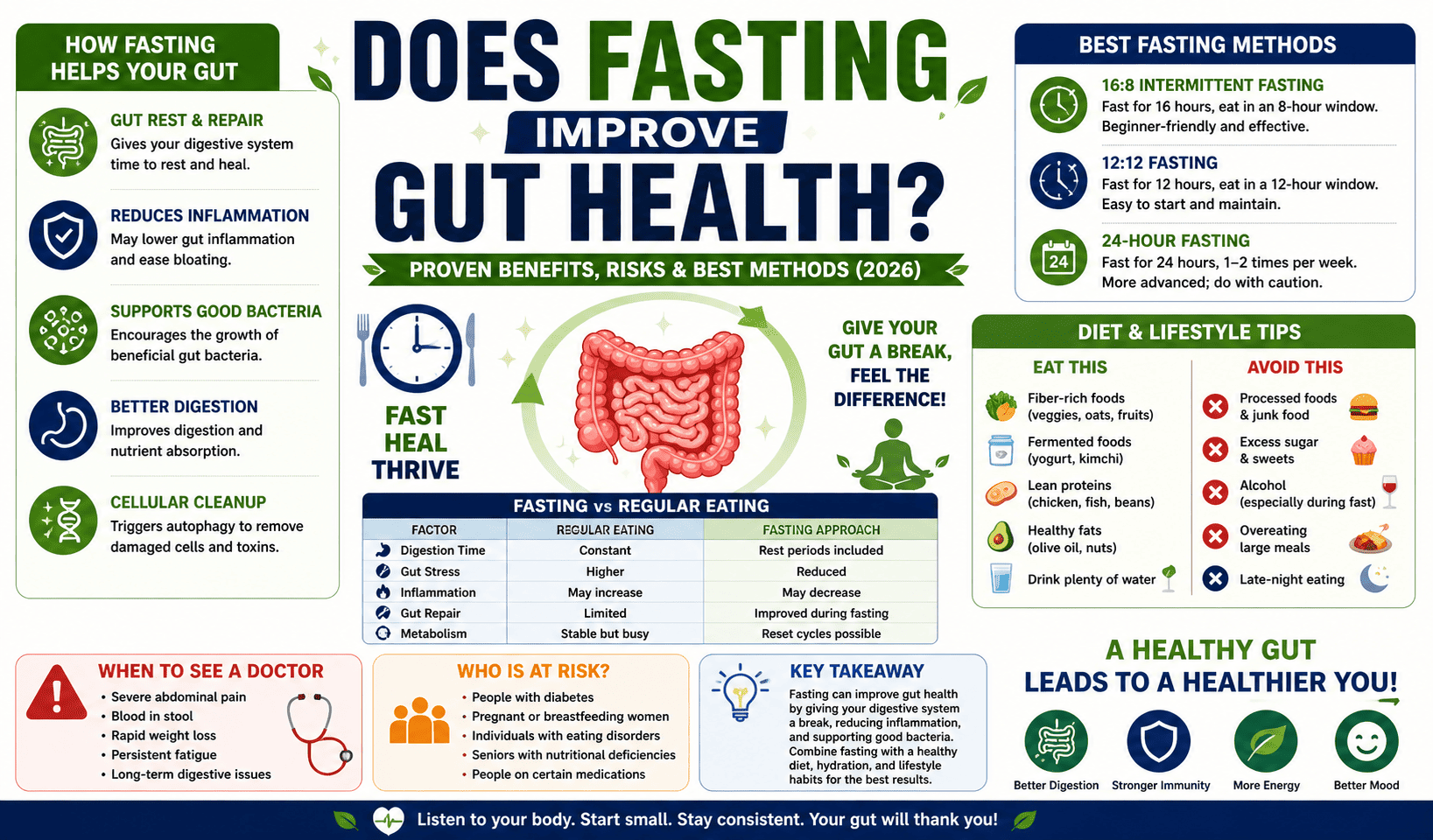
Fasting vs Regular Eating: Key Differences
| Factor | Regular Eating | Fasting Approach |
|---|---|---|
| Digestion Time | Constant | Rest periods included |
| Gut Stress | Higher | Reduced |
| Inflammation | May increase | May decrease |
| Gut Repair | Limited | Improved during fasting |
| Metabolism | Stable but busy | Reset cycles possible |
Best Treatment Options for Gut Health
Fasting can help—but it works best when combined with other strategies.
1. Intermittent Fasting (Most Effective)
- 12–16 hour fasting window
- Supports gut rest and repair
- Easy to follow for beginners
2. Balanced Diet
- Whole foods, fiber-rich meals
- Avoid ultra-processed foods
3. Probiotics & Prebiotics
- Support healthy gut bacteria
- Found in yogurt, kefir, fermented foods
4. Hydration
- Water helps digestion and detox processes
5. Stress Management
- Meditation, walking, deep breathing
Diet & Lifestyle Tips for Better Gut Health
What to Eat:
- Fiber-rich foods (vegetables, oats, fruits)
- Fermented foods (yogurt, kimchi, sauerkraut)
- Lean proteins
- Healthy fats (olive oil, nuts)
What to Avoid:
- Processed junk food
- Excess sugar
- Alcohol (especially during fasting periods)
- Overeating
Daily Routine:
- Eat at consistent times
- Avoid late-night eating
- Stay active
- Maintain sleep schedule
When to See a Doctor
Fasting is not suitable for everyone. Seek medical advice if you experience:
- Severe abdominal pain
- Rapid weight loss
- Persistent fatigue
- Blood in stool
- Long-term digestive issues
Who Is at Risk?
Fasting may not be ideal for:
- People with diabetes
- Pregnant or breastfeeding women
- Individuals with eating disorders
- Seniors with nutritional deficiencies
- People on certain medications
FAQs
1. Can fasting heal gut inflammation?
Fasting may reduce inflammation, but it’s not a complete cure. Diet and lifestyle changes are also essential.
2. How long should I fast for gut health?
A 12–16 hour intermittent fasting window is generally considered safe and effective for most people.
3. Can fasting worsen gut issues?
Yes, if done incorrectly or for too long, fasting can lead to stress, nutrient deficiencies, or worsen symptoms.
4. Is intermittent fasting safe for IBS?
Some people with IBS benefit, while others may see worsened symptoms. It varies by individual.
5. What is the best fasting method for beginners?
The 12:12 or 16:8 method is the easiest and safest starting point.
Conclusion
Fasting can improve gut health when used correctly. It helps your digestive system rest, supports gut bacteria, and may reduce inflammation. However, it’s not a magic solution.
The best results come from combining fasting with:
✔ A balanced diet
✔ Healthy lifestyle habits
✔ Consistent routine
Start slowly, listen to your body, and focus on long-term gut health—not quick fixes.
Reviewed by: Dzarro Editorial Team
Fact-checked using trusted medical and scientific sources.

Sandip Choudhary is a Health & Wellness Researcher and Content Creator specializing in sleep, digestive health, preventive wellness, and evidence-based health education. He has been creating online content and researching health-related topics for several years, focusing on translating complex medical information into practical guidance for everyday readers.
With a strong background in SEO and content strategy, Sandip ensures that every article is optimized for both search engines and real users. His goal is to provide reliable, clear, and helpful information that supports healthier living.
Disclaimer: The content published is for informational purposes only and is not a substitute for professional medical advice.