
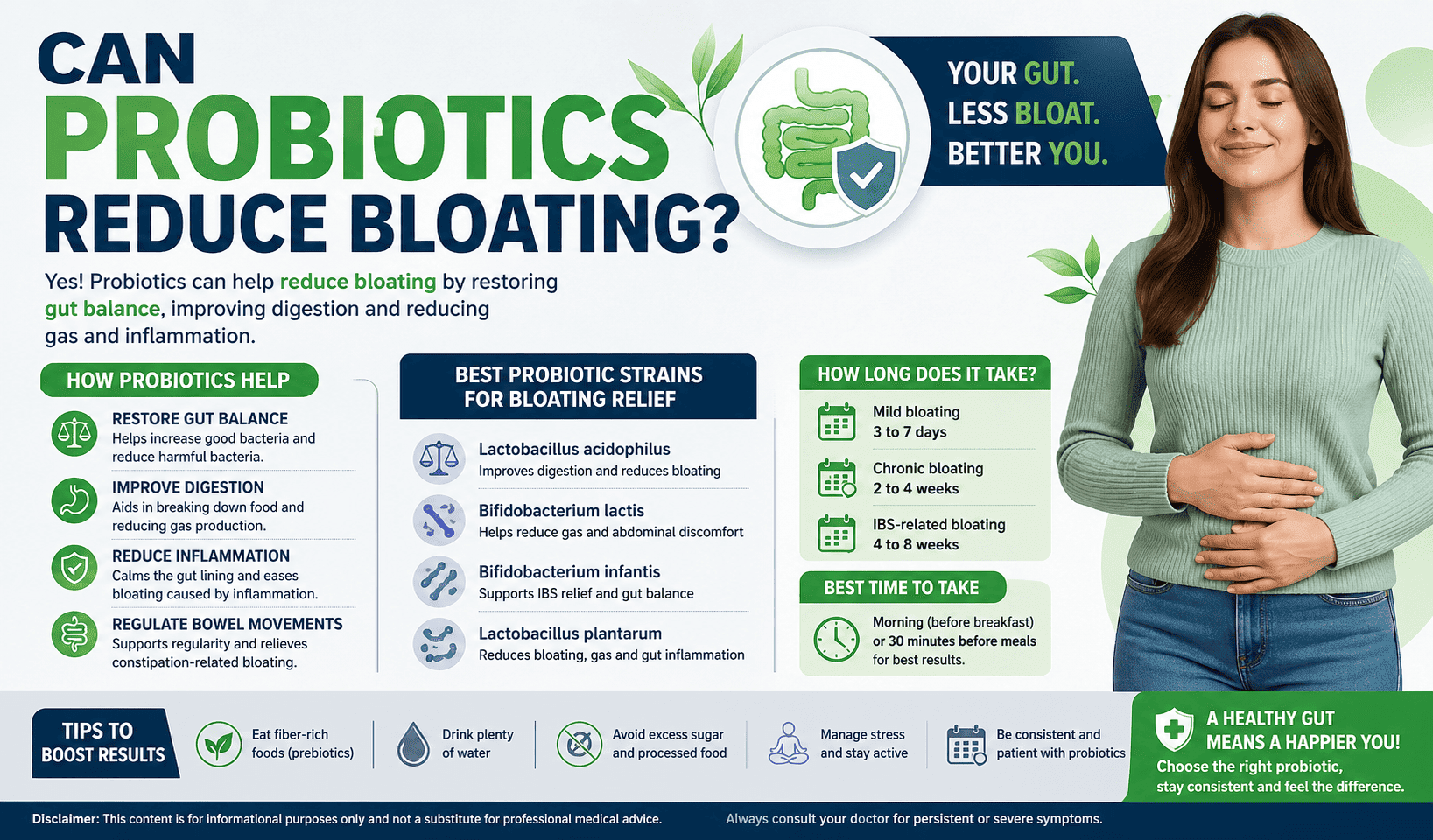
Bloating is one of the most common digestive complaints in the United States. If you often feel full, tight, or gassy after eating, you’re not alone—and many people are now turning to probiotics as a natural solution.
So the real question is:
👉 Can probiotics actually reduce bloating?
Short answer:
Yes, probiotics can reduce bloating—especially when the cause is linked to gut imbalance, IBS, or poor digestion. But the results depend on the strain, dosage, and your specific gut condition.
What Is Bloating?
Bloating happens when your abdomen feels:
- Swollen or distended
- Tight or uncomfortable
- Filled with gas
Common causes of bloating:
- Gas buildup in intestines
- Slow digestion
- Food intolerances (like lactose or gluten)
- Irritable bowel syndrome (IBS)
- Gut microbiome imbalance
What Are Probiotics?
Probiotics are live beneficial bacteria that support your gut health. They help maintain a healthy balance between good and bad bacteria in your digestive system.
You can get probiotics from:
- Yogurt
- Kefir
- Sauerkraut
- Kimchi
- Supplements
How Do Probiotics Help Reduce Bloating?
Probiotics target the root causes of bloating, not just the symptoms.
1. Restore Gut Balance
An imbalance of gut bacteria can cause excess gas production.
Probiotics help restore a healthy microbiome.
2. Improve Digestion
They help break down food more efficiently, reducing:
- Gas
- Fermentation
- Pressure in the gut
3. Reduce Inflammation
Some probiotic strains reduce intestinal inflammation, which is a major cause of bloating in IBS patients.
4. Regulate Bowel Movements
Constipation can cause bloating.
Probiotics help improve regularity, reducing that heavy feeling.
Best Probiotic Strains for Bloating
Not all probiotics work the same. These strains are commonly used in the USA for bloating relief:
- Lactobacillus acidophilus → Improves digestion
- Bifidobacterium lactis → Reduces gas and bloating
- Bifidobacterium infantis → Helpful for IBS symptoms
- Lactobacillus plantarum → Reduces abdominal pain and gas
👉 Multi-strain probiotics often work better than single-strain options.
How Long Do Probiotics Take to Work for Bloating?
- Mild bloating → 3 to 7 days
- Chronic bloating → 2 to 4 weeks
- IBS-related bloating → 4 to 8 weeks
Consistency is key. Skipping doses can delay results.
Do Probiotics Cause Bloating at First?
Yes, in some cases.
When you start probiotics, you might notice:
- Mild gas
- Temporary bloating
This usually lasts a few days while your gut adjusts.
If symptoms persist beyond 2 weeks, you may need a different strain.
Who Should Take Probiotics for Bloating?
Probiotics may help if your bloating is caused by:
- IBS (Irritable Bowel Syndrome)
- Antibiotic use
- Poor diet
- Stress-related digestion issues
- Gut imbalance
Who Should Avoid or Be Careful?
Consult a healthcare provider if you:
- Have a weakened immune system
- Have serious digestive diseases
- Recently had surgery
Best Time to Take Probiotics
- Morning (before breakfast)
or - 30 minutes before meals
This helps probiotics survive stomach acid and reach your intestines.
Tips to Boost Probiotic Effectiveness
To get better results:
✔ Eat fiber-rich foods (prebiotics)
✔ Drink enough water
✔ Avoid excessive sugar and processed food
✔ Manage stress
✔ Maintain a regular eating schedule
Natural Alternatives to Reduce Bloating
Along with probiotics, you can try:
- Peppermint tea
- Ginger
- Fennel seeds
- Low-FODMAP diet
- Walking after meals
Frequently Asked Questions
1. Can probiotics stop bloating completely?
They can significantly reduce bloating, but results vary depending on the cause.
2. Are probiotics better than digestive enzymes?
Probiotics improve long-term gut health, while enzymes provide quick relief. Both can be used together.
3. Which probiotic is best for gas and bloating?
Multi-strain probiotics with Bifidobacterium and Lactobacillus strains are often most effective.
Final Verdict
👉 Yes, probiotics can reduce bloating, especially if your symptoms are caused by gut imbalance or IBS.
However:
- Choose the right strain
- Give it time to work
- Support it with a healthy diet
If used correctly, probiotics can become a long-term solution for better digestion and less bloating.
Reviewed by: Dzarro Editorial Team
Fact-checked using trusted medical and scientific sources.

Sandip Choudhary is a Health & Wellness Researcher and Content Creator specializing in sleep, digestive health, preventive wellness, and evidence-based health education. He has been creating online content and researching health-related topics for several years, focusing on translating complex medical information into practical guidance for everyday readers.
With a strong background in SEO and content strategy, Sandip ensures that every article is optimized for both search engines and real users. His goal is to provide reliable, clear, and helpful information that supports healthier living.
Disclaimer: The content published is for informational purposes only and is not a substitute for professional medical advice.