
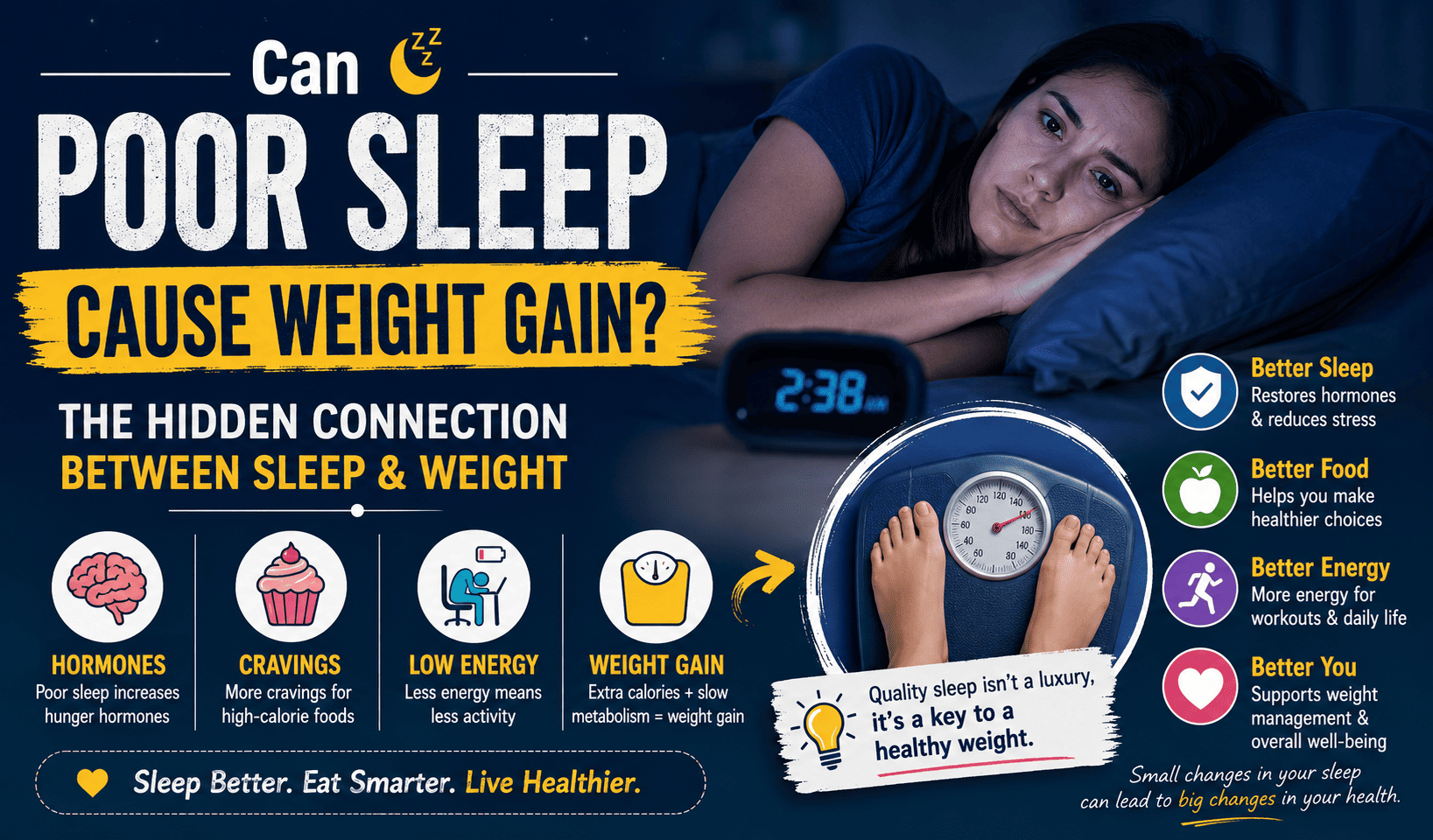
If you’ve been eating healthy and exercising but still struggle to lose weight, your sleep habits could be the missing piece of the puzzle. Many Americans focus on calories and workouts while overlooking one of the most important factors influencing body weight: sleep.
So, can poor sleep cause weight gain? The answer is yes. A growing body of scientific research shows that consistently getting too little sleep can increase appetite, slow metabolism, affect hormone balance, reduce energy levels, and make it more difficult to maintain a healthy weight. Poor sleep doesn’t automatically cause obesity, but it significantly raises the risk by influencing the body’s natural systems that regulate hunger, fullness, and energy use.
In this article, you’ll learn how sleep affects weight, why poor sleep can lead to overeating, and practical strategies to improve both your sleep quality and overall health.
The Connection Between Sleep and Body Weight
Sleep is far more than a period of rest. During sleep, your body repairs tissues, regulates hormones, supports immune function, processes memories, and restores energy. It also helps regulate the hormones responsible for controlling hunger and metabolism.
When you consistently sleep less than the recommended seven to nine hours for adults, your body begins experiencing hormonal changes that encourage eating more calories while burning fewer. These biological changes make weight gain much more likely, even if your eating habits haven’t changed dramatically.
Researchers have found that people who regularly sleep fewer than six hours per night are more likely to develop overweight or obesity compared to those who get adequate sleep. This relationship has been observed across different age groups, including children, teenagers, and adults.
How Poor Sleep Changes Hunger Hormones?
One of the biggest reasons poor sleep contributes to weight gain involves two important hormones called ghrelin and leptin.
Ghrelin is known as the hunger hormone because it signals your brain that it’s time to eat. Leptin is often called the fullness hormone because it tells your brain when you’ve had enough food.
After a night of poor sleep, ghrelin levels tend to increase while leptin levels decrease. This combination makes you feel hungrier throughout the day while making it harder to recognize when you’re full.
As a result, you may eat larger portions, snack more frequently, and crave calorie-dense foods.
Why Sleep Deprivation Increases Food Cravings?
Have you ever noticed craving pizza, cookies, or sugary coffee drinks after staying up late? That’s not just a lack of willpower.
Sleep deprivation affects the brain’s reward centers, making high-fat and high-sugar foods seem much more appealing. At the same time, the brain areas responsible for self-control become less active.
This creates a situation where unhealthy foods become harder to resist.
Studies have shown that people who don’t get enough sleep often consume several hundred additional calories the following day compared to when they are well-rested.
Most of these extra calories come from processed foods, sugary snacks, and fast food rather than fruits, vegetables, or lean proteins.
Poor Sleep Can Slow Your Metabolism
Although the effect isn’t enormous overnight, chronic sleep deprivation may reduce how efficiently your body processes energy.
Sleep loss can reduce insulin sensitivity, making it harder for cells to use glucose effectively. Over time, this increases the risk of weight gain, prediabetes, and type 2 diabetes.
Sleep also influences resting metabolic processes, muscle recovery, and hormone production. When these systems become disrupted, maintaining a healthy body composition becomes more difficult.
Lack of Sleep Reduces Physical Activity
Poor sleep affects much more than your appetite.
When you’re tired, you’re naturally less motivated to exercise or stay physically active throughout the day. Fatigue often leads to spending more time sitting, skipping workouts, and reducing overall calorie expenditure.
Even small decreases in daily movement can add up over weeks and months.
People who are sleep deprived often report lower exercise performance, reduced endurance, and slower recovery after physical activity.
Stress Hormones Play a Major Role
Poor sleep increases production of cortisol, commonly known as the stress hormone.
While cortisol is essential for many body functions, chronically elevated levels can encourage fat storage, particularly around the abdomen.
High cortisol levels may also increase emotional eating, making people more likely to reach for comfort foods during stressful situations.
When stress and poor sleep occur together, they create a cycle that’s difficult to break without addressing both issues.
Does Sleeping Too Much Cause Weight Gain?
Although inadequate sleep receives most attention, consistently sleeping far longer than recommended may also be associated with health problems.
Some observational studies have found links between sleeping more than nine or ten hours regularly and higher body weight.
However, excessive sleep is often a symptom rather than the direct cause. Medical conditions, depression, certain medications, chronic illness, or low physical activity may contribute to both longer sleep duration and weight gain.
For most healthy adults, seven to nine hours of quality sleep each night remains the recommended target.
Sleep Quality Matters as Much as Sleep Duration
Getting eight hours in bed isn’t always enough if your sleep is frequently interrupted.
Conditions like sleep apnea, restless legs syndrome, chronic pain, anxiety, and frequent nighttime awakenings can reduce sleep quality.
Poor-quality sleep may produce many of the same hormonal changes seen with short sleep duration.
Signs of poor sleep quality include waking up tired despite enough time in bed, frequent nighttime awakenings, loud snoring, daytime sleepiness, and difficulty concentrating.
If these symptoms occur regularly, discussing them with a healthcare provider is important.
Can Better Sleep Help with Weight Loss?
Improving sleep alone won’t guarantee weight loss, but it can make healthy eating and exercise much easier.
People who consistently get enough quality sleep often experience better appetite regulation, fewer cravings, improved mood, greater energy for exercise, and better overall metabolic health.
Some research suggests that individuals following weight-loss programs may achieve better long-term results when healthy sleep habits are included alongside nutrition and physical activity.
Think of sleep as one of the three pillars of healthy weight management, together with balanced nutrition and regular exercise.
Healthy Sleep Habits That May Support Weight Management
Improving sleep doesn’t require expensive equipment or complicated routines. Small, consistent changes often make the biggest difference.
Try maintaining the same bedtime and wake-up time every day, including weekends. Create a cool, quiet, and dark sleeping environment that encourages uninterrupted rest.
Limit caffeine during the afternoon and evening, especially if you’re sensitive to its effects. Reduce alcohol before bedtime since it can disrupt normal sleep cycles even if it initially makes you feel sleepy.
Avoid large meals immediately before going to bed and limit screen exposure during the hour before sleep because blue light may interfere with melatonin production.
Daily physical activity can also improve sleep quality, although intense exercise immediately before bedtime may not work well for everyone.
Practicing relaxation techniques such as deep breathing, reading a book, meditation, or gentle stretching before bed may also help you fall asleep more easily.
Who Is Most at Risk?
Certain groups may experience a stronger relationship between poor sleep and weight gain.
Shift workers often struggle because their sleep schedules conflict with natural circadian rhythms. Parents of young children frequently experience fragmented sleep, while college students and busy professionals may regularly sacrifice sleep due to demanding schedules.
Individuals with untreated sleep disorders, chronic stress, anxiety, depression, or demanding work hours may also face greater challenges maintaining a healthy weight.
Recognizing sleep as a health priority can help reduce these risks.
When to See a Healthcare Professional
Occasional poor sleep is normal. However, if sleep problems continue for several weeks or interfere with daily functioning, medical evaluation is recommended.
Persistent insomnia, loud snoring, gasping during sleep, excessive daytime fatigue, or unexplained weight changes may indicate underlying conditions requiring treatment.
Healthcare professionals can identify sleep disorders, evaluate contributing medical conditions, and recommend appropriate therapies.
Addressing sleep problems early may improve not only body weight but also heart health, mental well-being, blood sugar control, and overall quality of life.
The Bottom Line
So, can poor sleep cause weight gain? Current scientific evidence strongly suggests that it can. Poor sleep affects hormones that regulate hunger and fullness, increases cravings for high-calorie foods, reduces energy for physical activity, raises stress hormone levels, and may impair metabolism.
While sleep isn’t the only factor influencing body weight, it is an essential part of a healthy lifestyle. Combining seven to nine hours of quality sleep with balanced nutrition, regular exercise, and stress management offers the best opportunity for maintaining a healthy weight and improving long-term wellness.
If you’re trying to lose weight and haven’t considered your sleep habits, improving your nightly routine could be one of the most effective lifestyle changes you make.

Protein helps build muscle and boosts metabolism after meals.
Frequently Asked Questions (FAQ)
1. Can poor sleep cause weight gain even if I exercise regularly?
Yes. Regular exercise is important, but chronic sleep deprivation can increase hunger hormones, food cravings, and stress hormones while reducing recovery and energy levels, making weight management more challenging.
2. How many hours of sleep should adults get?
Most healthy adults should aim for 7 to 9 hours of quality sleep each night according to sleep medicine experts.
3. Does one night of poor sleep cause weight gain?
One night of poor sleep is unlikely to cause significant weight gain. However, repeated sleep deprivation over weeks or months can contribute to gradual weight gain through hormonal and behavioral changes.
4. Why do I crave sugary foods after poor sleep?
Sleep deprivation affects the brain’s reward system and increases ghrelin while lowering leptin, making sugary and high-fat foods more appealing and harder to resist.
5. Can improving sleep help me lose belly fat?
Better sleep may support healthy weight management by improving hormone balance, reducing stress, increasing exercise performance, and lowering unhealthy food cravings. However, long-term weight loss still requires a balanced diet and regular physical activity.
6. Is sleeping too much unhealthy?
Regularly sleeping much longer than recommended may be associated with certain health conditions, but excessive sleep is often a symptom of underlying medical issues rather than a direct cause of weight gain.
7. Can sleep disorders contribute to obesity?
Yes. Conditions such as insomnia and obstructive sleep apnea can interfere with healthy sleep patterns and may increase the risk of weight gain if left untreated.
8. What is the best bedtime for weight management?
There is no universal bedtime, but maintaining a consistent schedule that allows 7 to 9 hours of uninterrupted sleep is more important than the exact time you go to bed.
Reviewed by: Dzarro Editorial Team
Fact-checked using trusted medical and scientific sources.

Sandip Choudhary is a Health & Wellness Researcher and Content Creator specializing in sleep, digestive health, preventive wellness, and evidence-based health education. He has been creating online content and researching health-related topics for several years, focusing on translating complex medical information into practical guidance for everyday readers.
With a strong background in SEO and content strategy, Sandip ensures that every article is optimized for both search engines and real users. His goal is to provide reliable, clear, and helpful information that supports healthier living.
Disclaimer: The content published is for informational purposes only and is not a substitute for professional medical advice.
2 thoughts on “Can poor sleep cause weight gain?”
Comments are closed.