If you’re searching “what foods increase lifespan?”, you’re really asking how to eat in a way that helps you live longer, stay energetic, and avoid chronic disease.
The short answer: there’s no single “magic” food. Longevity comes from a pattern of eating—especially diets similar to the Mediterranean diet, consistently linked with longer life and lower risk of heart disease, diabetes, and cognitive decline in U.S. populations.
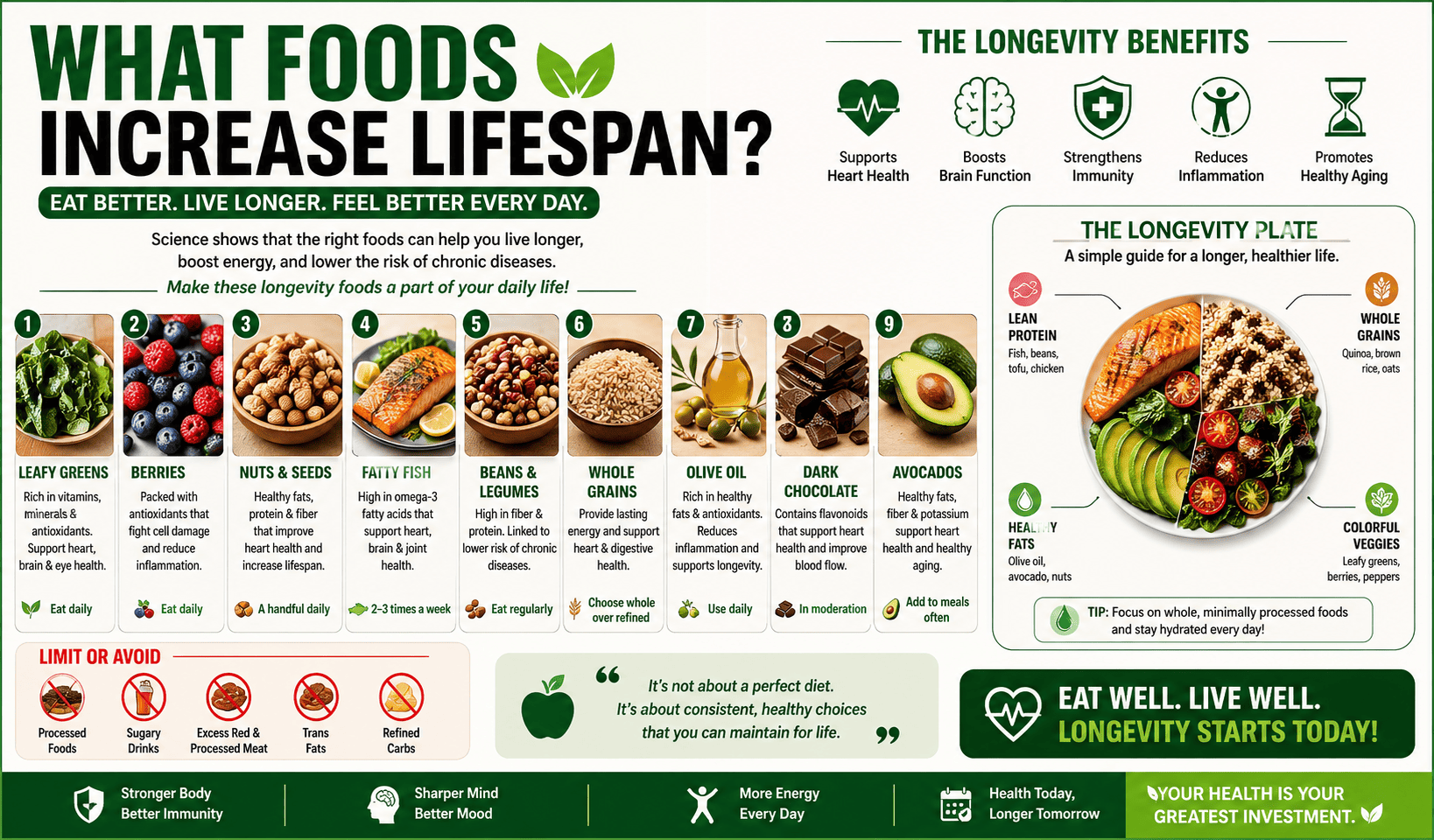
Below is a practical, evidence-based guide tailored for the USA audience—what to eat more of, why it works, and how to build a longevity plate.
1. Leafy Greens (Your Daily Longevity Base)
Examples: spinach, kale, arugula, collards
Why they matter
- High in vitamins A, C, K + folate
- Rich in antioxidants that reduce inflammation
- Support heart and brain health
Research insight: People who eat 1–2 cups of leafy greens daily show slower cognitive decline.
How to use
- Add to omelets, smoothies, or salads
- Swap iceberg lettuce for darker greens
2. Berries (Anti-Aging Powerhouse)
Examples: blueberries, strawberries, raspberries
Why they matter
- Loaded with anthocyanins (anti-aging compounds)
- Support brain function and heart health
- Help reduce oxidative stress
Pro tip: Frozen berries are just as nutritious—and cheaper in the U.S.
3. Nuts & Seeds (Small but Mighty)
Examples: almonds, walnuts, chia seeds, flaxseeds
Why they matter
- Healthy fats + plant protein
- Improve cholesterol levels
- Linked to reduced risk of heart disease
Evidence: Regular nut consumption is associated with longer lifespan and lower mortality risk.
Daily target: ~1 handful (about 28g)
4. Fatty Fish (Longevity Omega-3 Source)
Examples: salmon, sardines, mackerel
Why they matter
- High in omega-3 fatty acids
- Reduce inflammation
- Support heart and brain function
Tip for U.S. shoppers: Choose wild-caught salmon when possible for higher omega-3 content.
5. Beans & Legumes (The Longevity Staple)
Examples: lentils, chickpeas, black beans
Why they matter
- High fiber → better gut health
- Stabilize blood sugar
- Linked to lower risk of chronic diseases
Fun fact: In longevity “blue zone” regions, beans are eaten almost daily.
6. Whole Grains (Fuel for Long Life)
Examples: oats, quinoa, brown rice, whole wheat
Why they matter
- Support heart health
- Improve digestion
- Help maintain steady energy
Swap idea: Replace white bread/pasta with whole-grain versions.
7. Extra Virgin Olive Oil (Healthy Fat Upgrade)
Why it matters
- Rich in monounsaturated fats
- Reduces inflammation
- Core component of the Mediterranean diet
Usage tip: Use for salad dressings or low-heat cooking.
8. Dark Chocolate (Yes, Really!)
Why it matters
- Contains flavonoids that support heart health
- May improve blood flow
Rule: Choose 70%+ cocoa and keep portions small.
9. Avocados (American Favorite with Benefits)
Why they matter
- Healthy fats + potassium
- Support heart health and weight management
Easy add-on: Toast, salads, smoothies
What Actually Increases Lifespan? (Key Principle)
It’s not just one food—it’s a diet pattern:
✔ More plants
✔ Healthy fats
✔ Lean proteins
✔ Less processed food
This is why the Mediterranean diet consistently ranks as one of the best longevity diets in the U.S.
Foods That May Reduce Lifespan
To balance your diet, limit:
- Ultra-processed foods
- Sugary drinks
- Excess red/processed meat
- Trans fats
- Refined carbs
Sample “Longevity Plate”
Breakfast: Oatmeal + berries + chia seeds
Lunch: Salad with greens, chickpeas, olive oil
Snack: Almonds + apple
Dinner: Grilled salmon + quinoa + veggies
FAQs
1. What is the #1 food for longevity?
There’s no single food, but leafy greens and nuts are among the most consistently linked to longer life.
2. Can diet really increase lifespan?
Yes—healthy eating patterns can reduce risk of major diseases, which directly impacts lifespan.
3. How quickly does diet affect health?
Some benefits (like blood sugar control) improve in weeks, while longevity benefits build over years.
Final Thoughts
If you want to live longer, don’t chase trends—build a simple, consistent eating pattern:
👉 Eat more whole, plant-based foods
👉 Include healthy fats and lean proteins
👉 Avoid ultra-processed junk
Over time, these small daily choices can add healthy years to your life.