
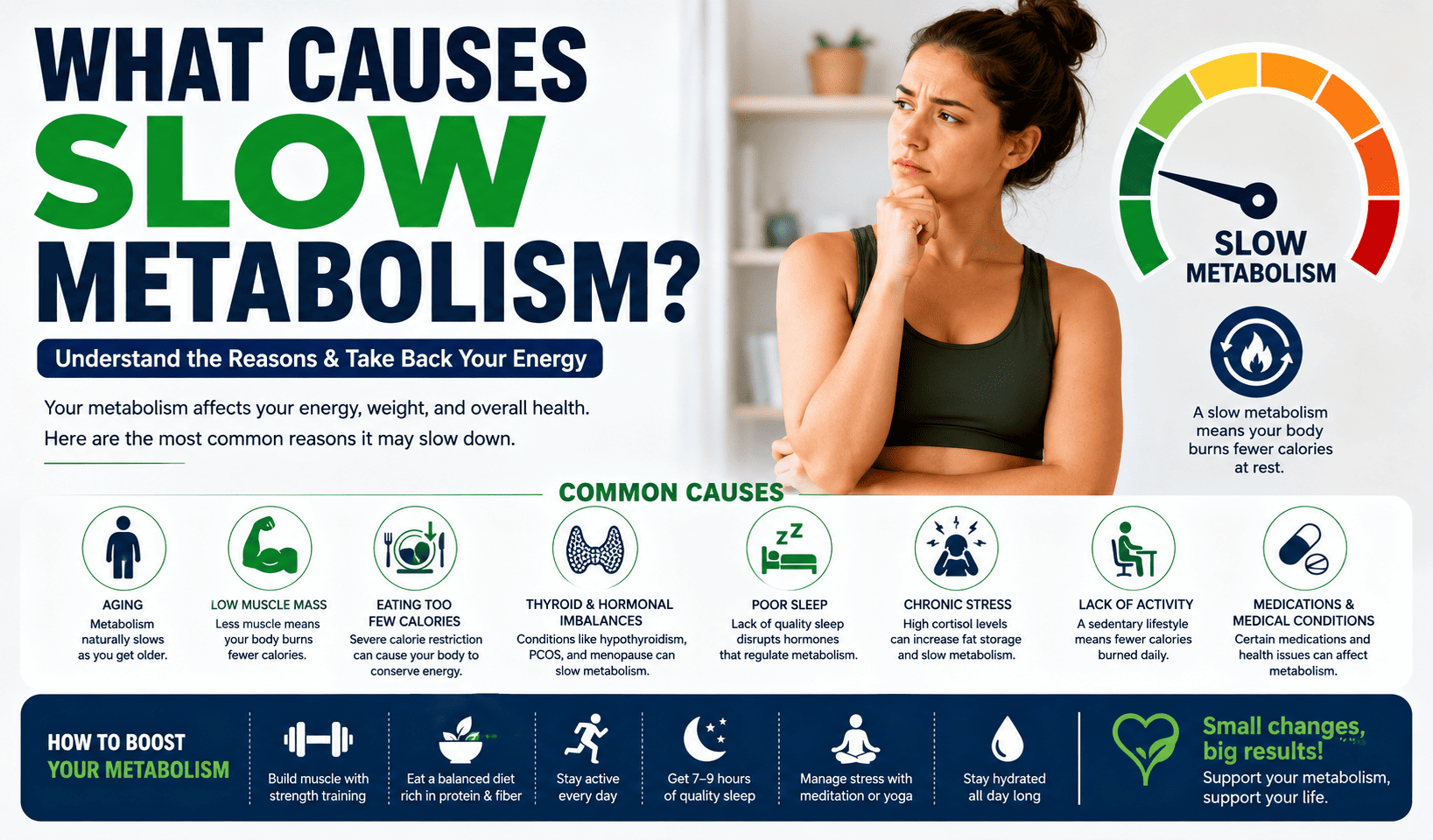
Many people wonder, what causes slow metabolism? If you feel tired all the time, struggle to lose weight despite eating healthy, or notice unexplained weight gain, your metabolism may be working more slowly than expected. However, metabolism is far more complex than simply burning calories. It is influenced by genetics, age, hormones, muscle mass, sleep quality, nutrition, medical conditions, medications, and daily activity levels.
Understanding the real reasons behind a slower metabolic rate can help you make informed decisions instead of relying on myths or quick-fix supplements. This guide explains the science behind metabolism, common causes of a slow metabolism, warning signs, and practical strategies supported by current health research.
What Is Metabolism?
Metabolism refers to all the chemical processes your body performs to stay alive. These processes convert food into energy used for breathing, circulation, digestion, repairing cells, maintaining body temperature, and supporting every organ in your body.
Most of the calories you burn each day come from your Basal Metabolic Rate (BMR), which is the amount of energy your body requires while at complete rest. Physical activity and digesting food account for the remaining calories burned.
Although metabolism naturally varies between individuals, it rarely becomes “slow” for no reason. Usually, multiple factors work together to reduce how efficiently the body uses energy.
What Causes Slow Metabolism?
Several biological, lifestyle, and medical factors can contribute to a slower metabolism. In many cases, more than one factor is involved.
Aging Naturally Slows Metabolism
One of the biggest reasons metabolism slows is aging. Beginning in adulthood, people gradually lose muscle mass unless they regularly perform strength training. Since muscle burns more calories than fat tissue, having less muscle means your body needs fewer calories each day.
Hormonal changes, lower activity levels, and changes in body composition also contribute to a gradual decline in metabolic rate as people age.
Low Muscle Mass
Muscle tissue is metabolically active. The more lean muscle you have, the more calories your body burns throughout the day, even while resting.
People who spend long periods sitting, avoid resistance exercise, or lose muscle during weight loss often experience a decrease in metabolism.
Strength training remains one of the most effective ways to maintain or improve metabolic health because it helps preserve lean muscle tissue.
Not Eating Enough Calories
Many people trying to lose weight drastically reduce calorie intake. While moderate calorie reduction can support healthy weight loss, eating far too little may cause the body to conserve energy.
This adaptive response, sometimes called adaptive thermogenesis, lowers calorie expenditure as the body attempts to preserve energy during periods of limited food intake.
Crash diets often result in temporary weight loss followed by weight regain once normal eating resumes.
Hypothyroidism
An underactive thyroid is among the most recognized medical causes of slow metabolism.
The thyroid gland produces hormones that regulate how quickly the body uses energy. When hormone production decreases, many bodily processes slow down.
Symptoms may include persistent fatigue, weight gain, dry skin, constipation, depression, sensitivity to cold temperatures, slower heart rate, and thinning hair.
Anyone experiencing these symptoms should consult a healthcare provider for proper thyroid testing instead of self-diagnosing.
Hormonal Changes
Hormones influence metabolism throughout life.
Changes associated with menopause, pregnancy, polycystic ovary syndrome (PCOS), insulin resistance, and certain endocrine disorders can affect how efficiently the body burns calories.
Hormonal imbalances may also influence appetite, fat storage, blood sugar regulation, and energy levels, making weight management more challenging.
Poor Sleep
Sleep plays a major role in regulating metabolism.
Consistently sleeping fewer than seven hours per night may disrupt hormones that control hunger and fullness, including ghrelin and leptin. Poor sleep can also increase cortisol levels, making healthy eating and weight management more difficult.
People who regularly experience sleep deprivation often report increased cravings for high-calorie foods and lower daytime energy expenditure.
Chronic Stress
Stress does more than affect mental health.
Long-term stress increases cortisol production. Elevated cortisol levels may encourage fat storage, increase appetite, reduce motivation for exercise, and interfere with healthy sleep patterns.
Although stress itself does not completely “shut down” metabolism, it creates conditions that make maintaining a healthy body weight more difficult.
Physical Inactivity
Daily movement significantly affects total calorie expenditure.
Modern lifestyles involving desk jobs, prolonged sitting, and limited exercise reduce overall energy use.
Even simple activities like walking, climbing stairs, standing more frequently, gardening, or household chores contribute to calorie burning throughout the day.
Certain Medications
Some prescription medications may contribute to weight gain or changes in metabolism.
Examples include certain antidepressants, corticosteroids, beta blockers, antipsychotic medications, and some diabetes medications.
Patients should never discontinue prescription medication without discussing concerns with their healthcare provider.
Genetics
Genetics influence body size, muscle composition, hormone regulation, and metabolic efficiency.
Some individuals naturally burn calories slightly faster than others. However, genetic differences alone rarely explain significant weight gain. Lifestyle habits remain important regardless of inherited metabolic rate.
Dehydration
Water is essential for nearly every metabolic reaction in the body.
Even mild dehydration may reduce physical performance and temporarily affect calorie-burning efficiency. Drinking enough water supports normal metabolic processes, digestion, and exercise performance.
Nutrient Deficiencies
Certain vitamin and mineral deficiencies may indirectly affect energy production.
Iron deficiency can reduce oxygen delivery to tissues, while deficiencies in vitamin B12, vitamin D, magnesium, or iodine may contribute to fatigue and reduced physical performance.
Healthcare professionals may recommend testing when deficiency symptoms are present.
Medical Conditions
Several health conditions beyond thyroid disease may influence metabolism.
These include Cushing syndrome, diabetes, chronic kidney disease, severe infections, liver disease, and certain hormonal disorders.
Persistent fatigue, unexplained weight changes, or multiple symptoms should always be evaluated by a qualified healthcare professional.
Can Dieting Permanently Damage Metabolism?
This is a common misconception.
Research suggests that repeated crash dieting can temporarily reduce metabolic rate while calorie intake remains very low. However, metabolism often improves when healthy eating patterns, resistance exercise, and adequate calorie intake are restored.
The body is remarkably adaptable, making long-term healthy habits more effective than restrictive diets.
Signs You May Have a Slow Metabolism
People often assume every weight-loss challenge indicates a slow metabolism, but symptoms vary.
Possible signs include persistent fatigue, feeling unusually cold, gradual weight gain, difficulty losing weight, constipation, dry skin, thinning hair, reduced energy, slower heart rate, and decreased physical endurance.
Because many medical conditions share these symptoms, proper medical evaluation is important before assuming metabolism is the primary issue.
How to Naturally Improve Metabolism?
Improving metabolism is generally more about supporting overall health than finding a single “metabolism booster.”
Strength training several times each week helps build lean muscle, increasing daily calorie expenditure over time. Regular walking, cycling, swimming, and other aerobic activities improve cardiovascular health while increasing total energy use.
Eating enough high-quality protein supports muscle maintenance and has a slightly higher thermic effect compared with carbohydrates or fats, meaning digestion itself requires more energy.
Getting seven to nine hours of quality sleep each night supports healthy hormone regulation. Managing stress through relaxation techniques, meditation, regular exercise, or counseling may help reduce chronic cortisol elevation.
Staying hydrated, avoiding crash diets, maintaining consistent meal patterns, and addressing underlying medical conditions also support healthy metabolic function.
Rather than searching for miracle foods or supplements, focus on sustainable habits that improve overall metabolic health.
Foods That Support Healthy Metabolism
No single food dramatically increases metabolism, but certain dietary choices support overall energy balance.
Protein-rich foods such as lean poultry, fish, eggs, beans, Greek yogurt, and tofu help preserve muscle mass.
Whole grains provide steady energy and dietary fiber.
Fruits and vegetables supply vitamins, minerals, antioxidants, and fiber that support overall health.
Healthy fats from avocados, olive oil, nuts, and seeds contribute to hormone production and long-lasting satiety.
Green tea and coffee may provide a modest temporary increase in calorie burning because of caffeine, although the effect is relatively small.
Metabolism Myths
Many popular beliefs about metabolism are misleading.
Eating frequent small meals does not significantly increase metabolism compared with consuming the same total calories across fewer meals.
Detox teas, fat-burning pills, and miracle supplements generally do not create meaningful long-term metabolic improvements.
Most people who struggle with weight do not have an extremely slow metabolism. Instead, a combination of calorie intake, activity level, sleep, stress, muscle mass, and medical conditions usually explains the challenge.
When Should You See a Doctor?
You should consider speaking with a healthcare provider if you experience sudden unexplained weight gain, persistent fatigue, constipation, depression, cold intolerance, irregular menstrual cycles, significant hair loss, swelling in the neck, or other symptoms suggesting a thyroid or hormonal disorder.
Medical evaluation may include blood tests to assess thyroid function, blood sugar, nutrient deficiencies, hormone levels, and other potential underlying causes.
Final Thoughts
Understanding what causes slow metabolism requires looking beyond common myths. While aging, genetics, and hormones influence metabolic rate, lifestyle factors such as muscle mass, sleep quality, nutrition, physical activity, and stress management play an equally important role.
For most adults, improving metabolic health involves building lean muscle, eating enough nutrient-rich foods, staying physically active, sleeping well, and addressing any underlying medical conditions. Instead of chasing quick fixes, focusing on sustainable habits offers the best opportunity for long-term health and healthy weight management.

Fiber keeps you full longer and supports healthy digestion.
Frequently Asked Questions (FAQs)
1. What causes slow metabolism the most?
The most common contributors include aging, reduced muscle mass, physical inactivity, inadequate calorie intake, poor sleep, hormonal disorders such as hypothyroidism, and certain medications.
2. Can you speed up your metabolism naturally?
Yes. Regular strength training, adequate protein intake, quality sleep, staying active, proper hydration, and avoiding crash diets can support a healthy metabolism over time.
3. Does drinking water increase metabolism?
Drinking enough water supports normal metabolic processes. Cold water may temporarily increase calorie burning slightly, but the overall effect is modest.
4. Can stress slow metabolism?
Chronic stress can indirectly affect metabolism by increasing cortisol levels, disrupting sleep, promoting overeating, and reducing physical activity.
5. Is slow metabolism always caused by thyroid problems?
No. Although hypothyroidism is a well-known cause, many people with slower metabolism have other contributing factors such as aging, low muscle mass, poor lifestyle habits, or medication use.
6. Can metabolism recover after dieting?
In many cases, yes. Gradually increasing calorie intake, rebuilding muscle through resistance training, improving sleep, and maintaining consistent healthy habits can help restore metabolic function.
7. Are metabolism supplements effective?
Most over-the-counter metabolism supplements have limited scientific evidence supporting meaningful long-term weight loss. A balanced diet and healthy lifestyle remain the safest and most effective approach.
8. How can I tell if I have a slow metabolism?
Symptoms such as fatigue, difficulty losing weight, feeling cold frequently, constipation, and dry skin may suggest a slower metabolism, but these symptoms can also indicate medical conditions. Consult a healthcare provider for an accurate evaluation.
Reviewed by: Dzarro Editorial Team
Fact-checked using trusted medical and scientific sources.

Sandip Choudhary is a Health & Wellness Researcher and Content Creator specializing in sleep, digestive health, preventive wellness, and evidence-based health education. He has been creating online content and researching health-related topics for several years, focusing on translating complex medical information into practical guidance for everyday readers.
With a strong background in SEO and content strategy, Sandip ensures that every article is optimized for both search engines and real users. His goal is to provide reliable, clear, and helpful information that supports healthier living.
Disclaimer: The content published is for informational purposes only and is not a substitute for professional medical advice.
1 thought on “What causes slow metabolism?”
Comments are closed.