
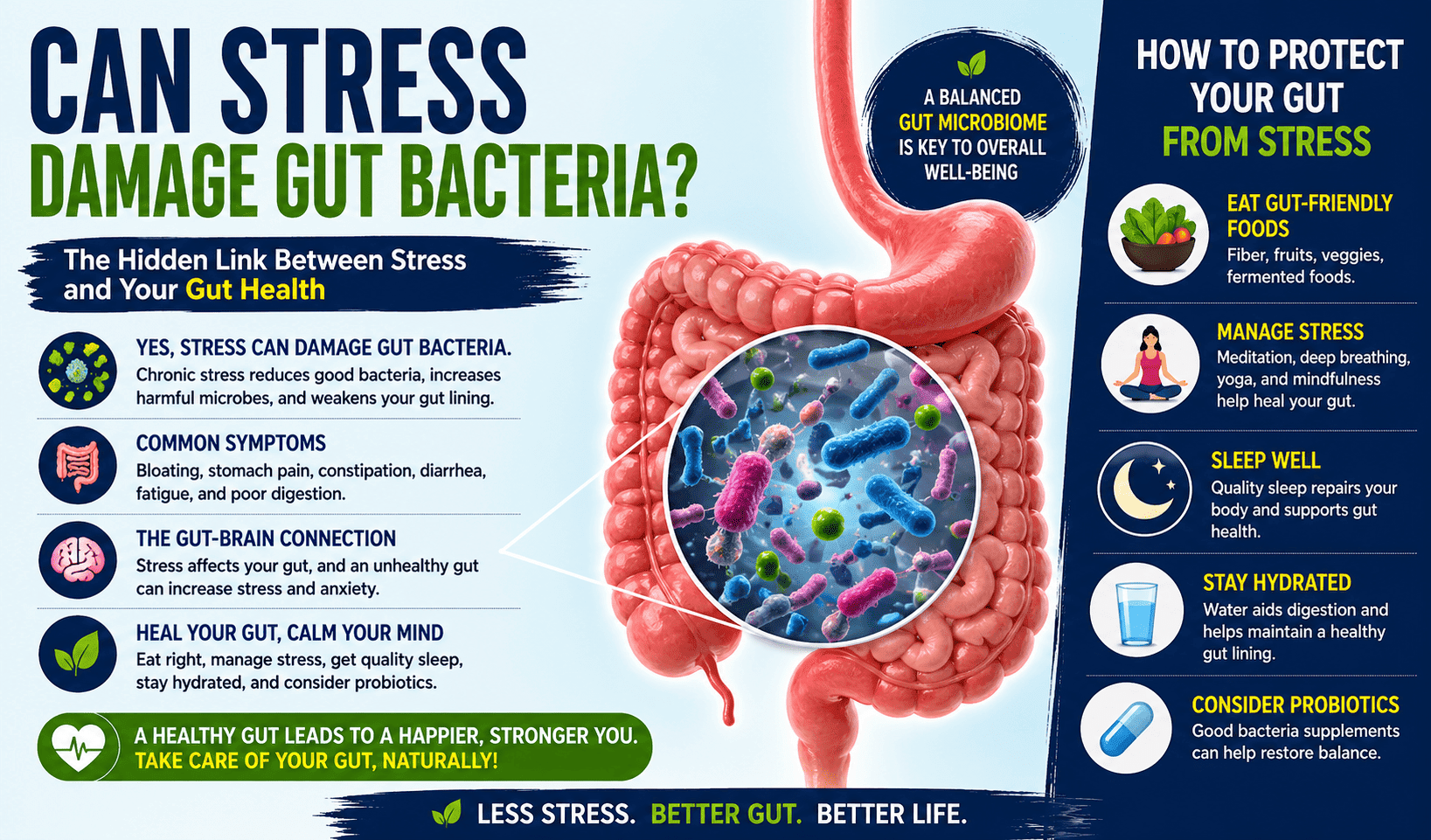
Stress doesn’t just affect your mood—it can directly impact your gut. If you’ve ever had stomach pain, bloating, or irregular digestion during stressful periods, you’re not imagining it. Research shows that chronic stress can alter the balance of gut bacteria, weaken digestion, and even trigger long-term gut issues.
This article explains how stress affects your gut microbiome, the symptoms to watch for, and what you can do to restore balance.
Quick Answer
Yes, stress can damage gut bacteria. Chronic stress reduces beneficial bacteria, increases harmful microbes, and disrupts the gut lining, leading to issues like bloating, inflammation, and poor digestion.
What Is Gut Bacteria (Gut Microbiome)?
Your gut contains trillions of bacteria—both good and bad—collectively called the gut microbiome. These bacteria help with:
- Digestion of food
- Nutrient absorption
- Immune system support
- Mental health regulation
A healthy gut has a balanced mix of beneficial and harmful bacteria. Stress can disturb this balance.
How Stress Affects Gut Bacteria
1. Reduces Good Bacteria
Chronic stress lowers levels of beneficial bacteria like Lactobacillus and Bifidobacteria. These are essential for digestion and gut protection.
2. Increases Harmful Bacteria
Stress hormones can promote the growth of harmful microbes, leading to gut imbalance (dysbiosis).
3. Weakens the Gut Lining
Stress can damage the intestinal barrier, sometimes called “leaky gut,” allowing toxins and bacteria to pass into the bloodstream.
4. Slows Digestion
Stress affects the gut-brain connection, slowing or speeding up digestion, which can cause constipation or diarrhea.
Common Symptoms of Stress-Related Gut Issues
- Bloating and gas
- Stomach pain or cramps
- Acid reflux
- Irregular bowel movements
- Loss of appetite or overeating
- Nausea
- Feeling of “tight” stomach
If these symptoms worsen during stressful periods, your gut bacteria may be affected.
Can Stress Cause Long-Term Gut Problems?
Yes. Chronic stress can lead to:
- Irritable Bowel Syndrome (IBS)
- Increased gut inflammation
- Weakened immune system
- Persistent digestive issues
Long-term imbalance in gut bacteria can also impact mental health, creating a cycle between stress and gut problems.
The Gut-Brain Connection Explained
Your gut and brain communicate through the “gut-brain axis.” When you’re stressed:
- Your brain sends signals to the gut
- Stress hormones like cortisol are released
- Gut bacteria composition changes
This is why emotional stress can quickly lead to physical gut symptoms.
How to Restore Gut Bacteria After Stress
1. Improve Diet
Eat gut-friendly foods:
- Yogurt and fermented foods
- Fiber-rich vegetables
- Whole grains
- Fruits
Avoid:
- Processed foods
- Excess sugar
- Alcohol
2. Take Probiotics (If Needed)
Probiotics can help restore good bacteria balance. Look for clinically tested strains.
3. Manage Stress Daily
- Deep breathing
- Meditation
- Walking
- Yoga
Even 10–15 minutes daily can improve gut health.
4. Sleep Better
Poor sleep increases stress and worsens gut imbalance. Aim for 7–8 hours of quality sleep.
5. Stay Hydrated
Water helps digestion and supports healthy gut function.
How Long Does It Take to Heal Gut Bacteria?
Recovery time varies:
- Mild imbalance: 2–4 weeks
- Moderate issues: 1–3 months
- Chronic gut problems: several months
Consistency in diet and stress management is key.
When Should You See a Doctor?
Consult a healthcare professional if you have:
- Severe stomach pain
- Difficulty swallowing
- Persistent acid reflux
- Blood in stool
- Unexplained weight loss
These could indicate underlying conditions beyond stress.
Final Thoughts
Stress can significantly damage gut bacteria, but the good news is that your gut can heal. By improving your diet, managing stress, and supporting your microbiome, you can restore balance and improve both your digestive and overall health.
Taking care of your mind is one of the most powerful ways to take care of your gut.
Reviewed by: Dzarro Editorial Team
Fact-checked using trusted medical and scientific sources.

Sandip Choudhary is a Health & Wellness Researcher and Content Creator specializing in sleep, digestive health, preventive wellness, and evidence-based health education. He has been creating online content and researching health-related topics for several years, focusing on translating complex medical information into practical guidance for everyday readers.
With a strong background in SEO and content strategy, Sandip ensures that every article is optimized for both search engines and real users. His goal is to provide reliable, clear, and helpful information that supports healthier living.
Disclaimer: The content published is for informational purposes only and is not a substitute for professional medical advice.
I like how you broke everything down step by step—super helpful.