
If you’re in the U.S. and struggling with sleep, you’re not alone. Millions rely on prescription or over-the-counter sleep aids—but many are now looking for natural alternatives that don’t cause grogginess, dependence, or long-term side effects.
This guide explains science-backed, natural ways to improve sleep, how they compare to pills, and when to consider medical help.
Why Look Beyond Sleeping Pills?
Common medications like Ambien or Benadryl can help short-term—but often come with:
- Daytime drowsiness
- Tolerance (you need more over time)
- Dependence or rebound insomnia
- Memory or focus issues
👉 That’s why many Americans are shifting toward natural sleep solutions that support the body’s own rhythm.
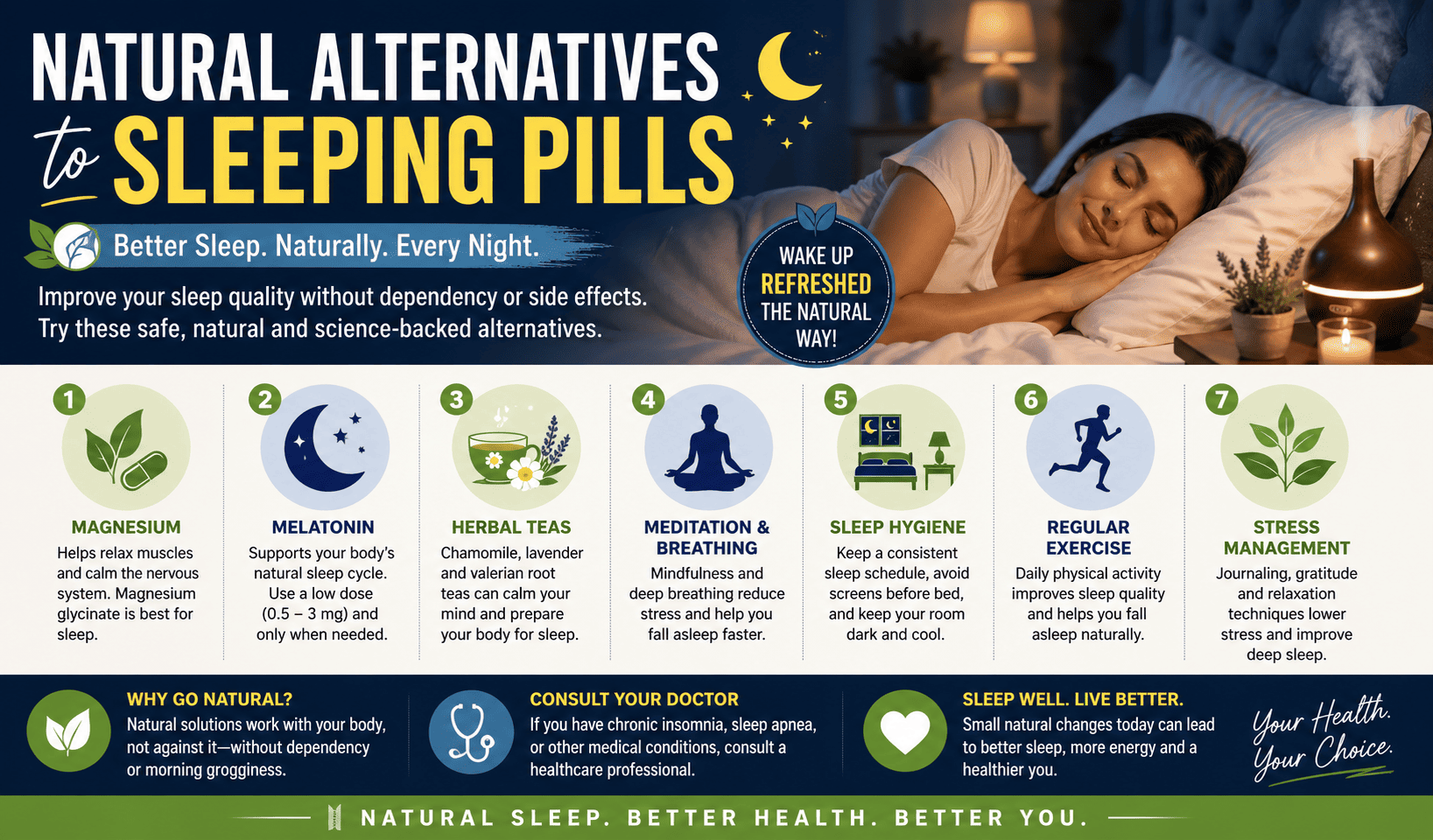
7 Natural Alternatives to Sleeping Pills
1. Magnesium (Most Recommended)
Magnesium helps relax the nervous system and regulate melatonin.
Best forms:
- Magnesium glycinate (calming)
- Magnesium citrate (also helps digestion)
✔ Helps with:
- Sleep quality
- Anxiety
- Muscle relaxation
👉 Typical U.S. dosage: 200–400 mg before bed
2. Melatonin (Hormone Support)
Melatonin is the hormone that tells your body it’s time to sleep.
✔ Works best for:
- Jet lag
- Shift workers
- Irregular sleep schedules
⚠️ Don’t overuse—start low (0.5–3 mg)
3. Herbal Teas
Natural herbs calm the mind and body.
Top options:
- Chamomile
- Lavender
- Valerian root
✔ Helps with:
- Mild insomnia
- Night anxiety
👉 Best used 30–60 minutes before bed
4. Cognitive Behavioral Therapy for Insomnia (CBT-I)
Cognitive Behavioral Therapy for Insomnia is considered the gold standard treatment for chronic insomnia in the U.S.
✔ Works by:
- Changing negative sleep thoughts
- Resetting sleep patterns
📊 More effective than pills long-term
5. Sleep Hygiene (Most Underrated)
Simple habits can dramatically improve sleep.
✔ Key rules:
- Fixed sleep/wake time
- No screens 1 hour before bed
- Dark, cool bedroom (65–68°F ideal in the U.S.)
- Avoid caffeine after 2 PM
6. Meditation & Breathing
Practices like mindfulness reduce stress hormones.
✔ Try:
- 4-7-8 breathing
- Body scan meditation
👉 Just 10 minutes can improve sleep onset
7. Exercise (Natural Sleep Booster)
Regular physical activity improves deep sleep.
✔ Best types:
- Walking
- Strength training
- Yoga
⚠️ Avoid intense workouts right before bed
Also Read : What causes sleep anxiety at night?
Natural vs Sleeping Pills (Quick Comparison)
| Factor | Natural Methods | Sleeping Pills |
|---|---|---|
| Dependency | ❌ No | ⚠️ Possible |
| Long-term use | ✅ Safe | ❌ Not recommended |
| Side effects | Minimal | Moderate |
| Root cause fix | ✅ Yes | ❌ No |
When to See a Doctor
Natural remedies help most people—but consult a doctor if you have:
- Severe insomnia lasting 3+ weeks
- Loud snoring or pauses in breathing (possible Sleep Apnea)
- Chronic fatigue despite sleep
Pro Tip (Important for USA Readers)
Combine methods for best results:
👉 Example routine:
- Magnesium supplement
- Chamomile tea
- No screens after 10 PM
- Fixed sleep schedule
➡️ This “stack” works better than any single solution.
👉 A healthy sleep routine supports mental clarity and overall health.
Final Thoughts
Natural alternatives to sleeping pills aren’t just safer—they often work better long-term by fixing the root cause of poor sleep.
If you stay consistent with:
- Supplements
- Sleep habits
- Stress management
👉 You can improve sleep without relying on medication.
Medically reviewed information sourced from trusted health organizations.
References
- National Institutes of Health (NIH). Sleep and Sleep Disorders.
https://www.nhlbi.nih.gov/health/sleep - Sleep Foundation. Sleep Health Resources.
https://www.sleepfoundation.org/ - Centers for Disease Control and Prevention (CDC). Sleep and Sleep Disorders.
https://www.cdc.gov/sleep/ - Mayo Clinic. Sleep Disorders Overview.
https://www.mayoclinic.org/
Reviewed by: Dzarro Editorial Team
Fact-checked using trusted medical and scientific sources.
Last Updated: June 13, 2026

Sandip Choudhary is a Health & Wellness Researcher and Content Creator specializing in sleep, digestive health, preventive wellness, and evidence-based health education. He has been creating online content and researching health-related topics for several years, focusing on translating complex medical information into practical guidance for everyday readers.
With a strong background in SEO and content strategy, Sandip ensures that every article is optimized for both search engines and real users. His goal is to provide reliable, clear, and helpful information that supports healthier living.
Disclaimer: The content published is for informational purposes only and is not a substitute for professional medical advice.